Surfside · Miami new construction · closing costs · long-term appreciation · Bal Harbour · preconstruction investing
Miami New-Development Buyer Guide: Long-Term Appreciation in Surfside & What to Budget for Closing Costs
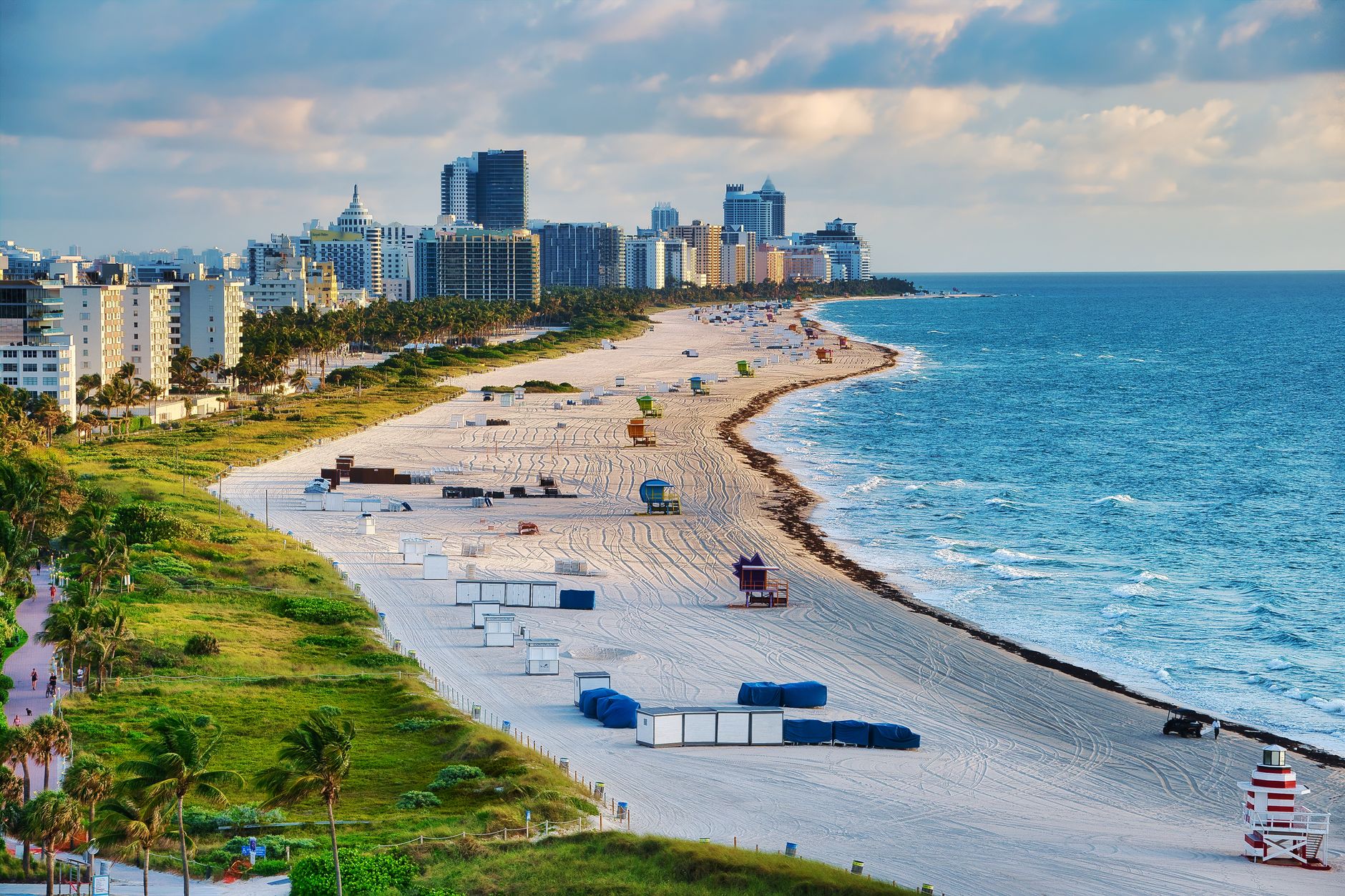
Rivage Bal Harbour — Surfside, Miami.
For investors targeting lasting capital growth along Miami's northern beachfront corridor, Surfside offers a rare combination of scarcity, prestige, and evolving luxury supply. This guide breaks down every closing cost line item you should budget before committing to a new-construction purchase in or near Surfside.
Why Surfside Is One of Miami's Most Compelling Long-Term Appreciation Markets
Surfside occupies roughly one square mile between Bal Harbour to the north and Miami Beach to the south, making it one of the most land-constrained municipalities on Florida's Atlantic coast. That geographic scarcity is a foundational driver of long-term value: when supply cannot meaningfully expand, each new luxury tower that does receive approval commands a structural premium. Investors who understand this dynamic have consistently outperformed those chasing higher-volume corridors like Brickell or Edgewater, where the development pipeline is far deeper and competition for buyers is far greater.
The 2021 Champlain Towers South collapse reshaped the regulatory and buyer-sentiment landscape in Surfside in ways that, counterintuitively, benefit long-term investors. Stricter recertification requirements and enhanced engineering standards have accelerated the retirement of older, lower-quality inventory and concentrated demand into newly constructed, code-compliant buildings. Buyers willing to purchase in the immediate aftermath of that tragedy at a time of uncertainty have, in many cases, seen significant value recovery as confidence returned and the premium for verified, modern construction became broadly understood.
Surfside's walkability, proximity to the Bal Harbour Shops, and a relatively quiet residential character compared to South Beach attract a high-net-worth, owner-occupier buyer base that historically stabilizes values during broader market downturns. For investors, this means rental demand, while not as deep as in Brickell, tends to skew toward longer-term, higher-quality tenants — a profile that protects both asset condition and income continuity.
Understanding Miami New-Construction Closing Costs: The Full Budget Picture
Closing costs on a Miami new-development purchase are meaningfully different from a resale transaction, and first-time buyers in this market consistently underestimate their total out-of-pocket exposure. As a general rule, buyers should budget between 3% and 5% of the gross purchase price above and beyond their deposit schedule to cover all closing-related obligations. On an ultra-luxury purchase in the $3M–$10M range — the price tier now common in Surfside and Bal Harbour — that translates to an additional $90,000 to $500,000 that must be liquid and accessible at or before closing.
The largest individual line item is typically the Florida Documentary Stamp Tax on the deed, commonly called the doc stamp, which is assessed at $0.70 per $100 of purchase price in Miami-Dade County (note that Miami-Dade has its own surtax structure that differs from other Florida counties). On a $5 million purchase, that alone approaches $35,000. Simultaneously, buyers pay an Intangible Tax on any new mortgage at $0.002 per dollar of loan value — so a $3 million mortgage carries a $6,000 intangible tax obligation. Title insurance, which is strongly advisable on any new-construction purchase, adds another layer: owner's title policies in Florida are typically calculated on a promulgated rate that scales with purchase price.
Denis Smykalov, broker at Wolsen Developments, points out that 'in Surfside and the Bal Harbour corridor specifically, buyers also need to account for developer-assigned closing costs that are written into preconstruction contracts — items like their share of the building's initial reserve fund contribution and HOA document preparation fees — which can add $10,000 to $30,000 on top of the standard government-assessed charges that buyers typically research in advance.' Beyond those items, buyers should budget for attorney fees (Florida does not require an attorney at closing but engaging one is strongly advisable on preconstruction deals), wire transfer fees, and any prorated HOA dues or building assessments that become due at the moment of title transfer.
Deposit Structures, Escrow Rules, and Preconstruction Contract Specifics in Florida
Florida's Condominium Act provides preconstruction buyers with meaningful statutory protections that set the state apart from many other U.S. markets. Developers are required to place buyer deposits into escrow accounts, and buyers typically have a right of rescission within a defined window after signing a purchase agreement — a provision that allows investors time to complete due diligence without immediately placing capital at irrecoverable risk. Understanding these statutory protections, and verifying that a specific project's purchase agreement complies with them fully, is one of the most important steps a buyer can take before committing.
Typical preconstruction deposit structures in Miami's luxury segment are tiered across the construction timeline: an initial deposit at contract execution (often 10–20%), a second deposit at groundbreaking or a defined construction milestone (another 10%), and sometimes a third deposit as the building approaches completion. The balance is due at closing when the Certificate of Occupancy is issued. For investors modeling returns, this phased capital deployment is actually a significant advantage — money not yet deposited can be deployed elsewhere or continue earning interest during what can be a multi-year construction period.
Investors should also understand the developer's assignment clause — whether the contract can be transferred to a third party before closing. In some Surfside and Bal Harbour projects, assignment is permitted with developer consent and a fee; in others, it is restricted or prohibited. This single contractual detail can dramatically affect an investor's exit flexibility before the building delivers, and it is a clause that deserves careful negotiation or at minimum careful reading before execution.
Rivage Bal Harbour: A Case Study in Scarcity-Driven Luxury Development
Just north of Surfside's municipal boundary, Rivage Bal Harbour exemplifies the type of ultra-low-density, ultra-high-finish development that defines the appreciation thesis for this corridor. Positioned on a rare oceanfront site in Bal Harbour — a village that permits almost no new large-scale construction — Rivage offers a limited number of residences designed to compete with the finest residential product in the world. For investors focused on long-term appreciation rather than short-term cash flow, developments at this tier offer something that high-volume markets cannot: true unit scarcity, a permanently irreproducible location, and a buyer profile that includes the world's wealthiest individuals.
From a closing-cost budgeting perspective, a purchase at Rivage Bal Harbour requires particularly careful financial modeling. At price points that can reach into the tens of millions of dollars, the percentage-based closing costs — doc stamps, intangible taxes, title insurance — translate into absolute dollar figures that can surprise even sophisticated buyers who have purchased luxury real estate in other states or countries. Engaging a Miami real estate attorney and a CPA familiar with Florida's tax treatment of foreign and domestic buyers is essential before executing any purchase agreement at this level.
The Rivage project also illustrates a broader principle that applies across Surfside and Bal Harbour: the most enduring value is created in buildings where the land cost, construction quality, and amenity level make future replication economically or physically impossible. When a buyer acquires a residence in a building that cannot be replicated — because the site no longer exists, because the zoning has since changed, or because construction costs have made comparable new development unviable — they own something genuinely irreplaceable. That irreplaceability is the foundation of long-term appreciation at the luxury tier.
Tax Considerations for Miami New-Development Investors: What to Know Before You Close
Florida's absence of a state income tax is frequently cited as an advantage for investors, and it is — but the tax picture for a Miami new-development purchase involves several other layers that require advance planning. Property taxes in Miami-Dade County are assessed annually based on the county property appraiser's determination of just value. For new construction, buyers should be aware that the assessed value often resets significantly upon title transfer and the issuance of a new Certificate of Occupancy, meaning the property tax bill in Year 1 of ownership may be substantially higher than what any predecessor occupant paid. Modeling this accurately requires reviewing current millage rates and consulting with a local property tax advisor.
Foreign national buyers face an additional layer of complexity around FIRPTA — the Foreign Investment in Real Property Tax Act — which requires withholding of a portion of the gross sales price when a foreign person later sells U.S. real estate. While FIRPTA is a selling-side consideration rather than a closing-cost at purchase, it is a material factor in an international investor's total-return analysis and should be understood before acquisition, not after. Additionally, Florida's Homestead Exemption — which provides a meaningful reduction in assessed value and caps annual assessment increases for primary residents — is not available to investors who do not use the property as their primary residence, a detail that affects the long-term carrying cost comparison between owner-occupiers and pure investors.
Estate planning implications are equally important, particularly for international buyers acquiring high-value Miami real estate. U.S. situs assets — which include Florida real estate — are subject to U.S. federal estate tax for non-resident aliens above relatively low exemption thresholds. Structure decisions (whether to purchase in individual name, through a U.S. LLC, a foreign corporation, or a trust) should be made in consultation with an international tax attorney before closing, as restructuring after purchase can be costly and complex. This is a dimension of the Miami new-construction buying process that is rarely covered in standard broker conversations but is critically important for investors with non-U.S. domicile.
Building Your Advisory Team and Timeline for a Surfside New-Development Purchase
A successful new-construction purchase in Surfside or the Bal Harbour corridor is rarely the product of a single transaction relationship. Sophisticated buyers assemble a team that typically includes a buyer's real estate broker experienced specifically in Miami preconstruction (not merely general residential sales), a Florida real estate attorney to review and negotiate the purchase agreement, a CPA or international tax advisor to model the ownership structure and carrying costs, and a wealth manager or private banker capable of coordinating the capital deployment across the phased deposit schedule. Each of these professionals brings a distinct expertise, and attempting to consolidate these functions into fewer relationships is one of the most common — and costly — mistakes that first-time Miami luxury buyers make.
The timeline for a preconstruction purchase in this market is longer than buyers accustomed to traditional resale transactions typically expect. From the execution of a purchase agreement to the receipt of a Certificate of Occupancy, construction timelines in Miami's luxury segment commonly run two to four years, with additional time required for punch-list completion and, in some cases, regulatory final approvals. Buyers should model this timeline explicitly in their return analysis: a purchase made today at a preconstruction price may not close and begin generating rental income or reflecting realized appreciation until several years from now.
For investors with a genuine long-term horizon — five to ten years or beyond — the Surfside and Bal Harbour corridor has historically rewarded patience more than almost any other Miami submarket. The combination of supply constraint, a wealthy and globally connected buyer base, proximity to international financial hubs via Miami International Airport, and Florida's favorable tax environment creates a structural case for appreciation that does not depend on any single macroeconomic cycle going the right way. Working with advisors who understand these dynamics at a granular level, and budgeting accurately for every cost from deposit to closing and beyond, is how investors in this market position themselves to capture that long-term upside.
Frequently Asked Questions
What are the total closing costs a buyer should budget for a new-construction purchase in Surfside or Bal Harbour, Miami?
Buyers should generally budget between 3% and 5% of the gross purchase price above their deposit obligations to cover closing costs. This includes Florida documentary stamp taxes, intangible taxes on any mortgage, title insurance, attorney fees, and developer-assigned charges such as reserve fund contributions and HOA document fees.
What is the Florida Documentary Stamp Tax and how is it calculated for Miami-Dade County buyers?
The Florida Documentary Stamp Tax on the deed is assessed at $0.70 per $100 of purchase price in Miami-Dade County, which applies its own surtax structure. On a $5 million purchase, this tax alone approaches $35,000 and is one of the largest individual closing cost line items for Miami buyers.
Are preconstruction deposits in Florida protected by law?
Yes. Florida's Condominium Act requires developers to hold buyer deposits in escrow accounts and typically grants buyers a statutory right of rescission within a defined period after contract execution. Buyers should verify that any specific project's purchase agreement complies fully with these statutory protections before signing.
Why is Surfside considered a strong long-term appreciation market in Miami?
Surfside occupies roughly one square mile and is geographically constrained by Bal Harbour to the north and Miami Beach to the south, severely limiting new supply. Combined with stricter post-2021 building standards that have accelerated the retirement of older inventory, demand is increasingly concentrated in a small stock of modern, code-compliant luxury residences.
What is a typical preconstruction deposit structure for a luxury Miami new-development purchase?
Most Miami luxury preconstruction projects use a tiered deposit schedule: an initial deposit of 10–20% at contract signing, a second deposit at a defined construction milestone, and sometimes a third deposit closer to completion, with the remaining balance due at closing when the Certificate of Occupancy is issued.
Do foreign buyers in Miami face additional tax obligations when purchasing new-construction real estate?
Yes. Foreign national buyers should be aware of FIRPTA withholding obligations upon eventual sale, U.S. federal estate tax exposure on U.S. situs assets for non-resident aliens, and the importance of selecting the correct ownership structure — individual, LLC, foreign corporation, or trust — before closing to optimize their tax position.
What is the Homestead Exemption in Florida and does it apply to investment properties in Surfside?
Florida's Homestead Exemption reduces assessed value and caps annual assessment increases for properties used as a primary residence. It does not apply to investors who do not occupy the property as their primary home, meaning pure investors carry higher ongoing property tax costs than owner-occupiers in the same building.
Why is Rivage Bal Harbour considered a significant development for long-term investors in the Surfside-Bal Harbour corridor?
Rivage Bal Harbour is situated on a rare oceanfront site in Bal Harbour, a village with extremely limited new-construction capacity. Its ultra-low unit count, highest-tier finishes, and irreproducible location make it representative of the scarcity-driven appreciation thesis that defines long-term investment in this corridor.
How long does it typically take from purchasing a preconstruction unit in Miami to receiving the Certificate of Occupancy?
Construction timelines for Miami luxury new-development projects commonly run two to four years from groundbreaking, with additional time for punch-list completion and final regulatory approvals. Investors should model this timeline explicitly when projecting returns and capital deployment schedules.
What professionals should a buyer engage when purchasing a new-construction property in Surfside or Bal Harbour?
A complete advisory team for a Miami luxury preconstruction purchase typically includes a buyer's broker experienced in Miami new-development, a Florida real estate attorney to review the purchase agreement, a CPA or international tax advisor to structure ownership, and a private banker to coordinate the phased deposit schedule.
Ready to Take the Next Step?