Key Biscayne · Brickell · Edgewater · Miami pre-construction · remote work Miami · luxury condos Miami
Miami New-Development Buyer Guide for Remote Workers: Key Biscayne, Brickell, and Edgewater Compared
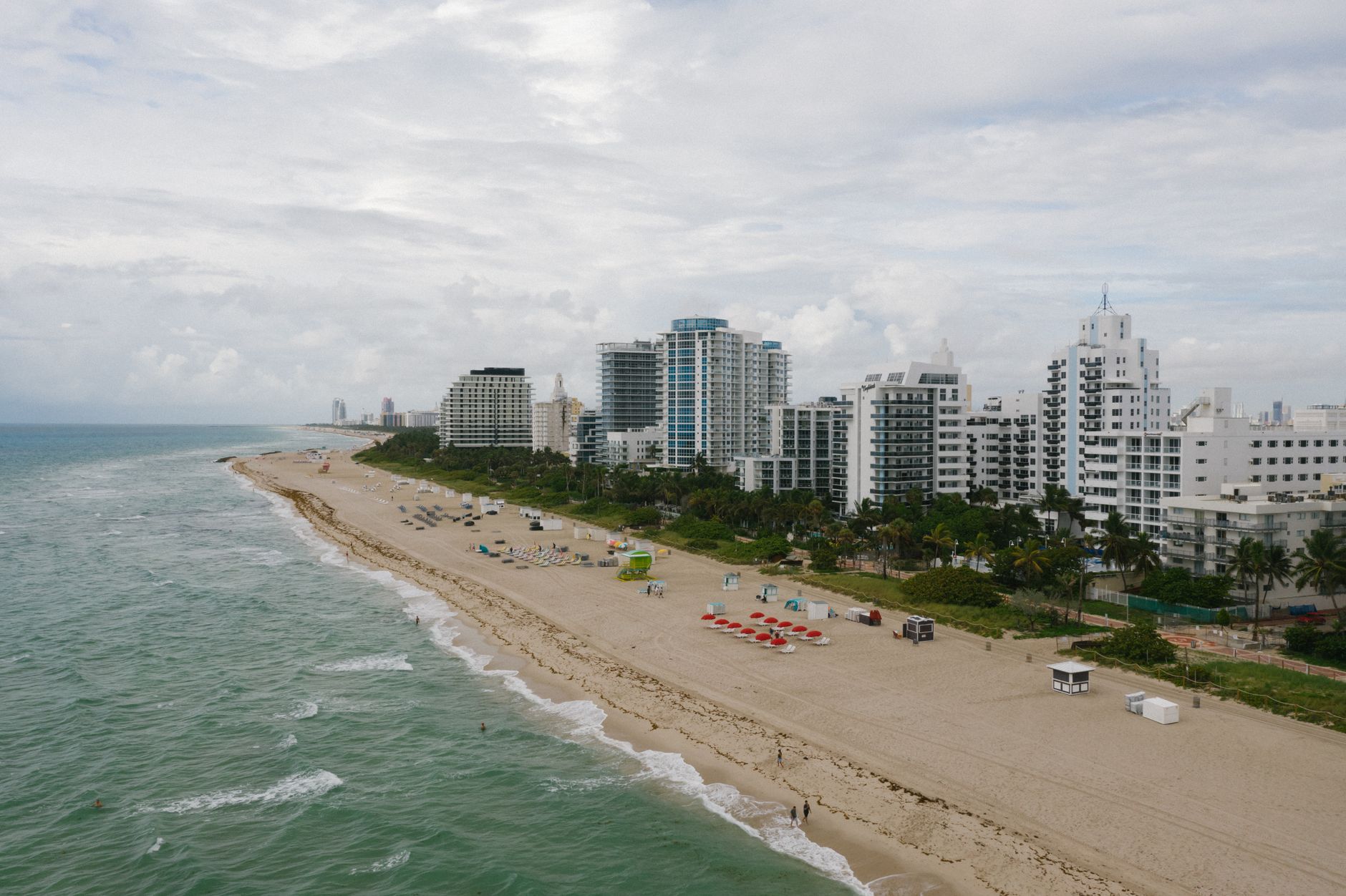
Rosewood Residences Hillsboro Beach — Key Biscayne, Miami.
If you're a remote worker making Miami your permanent home base, choosing the right neighborhood and new-construction building is the single most consequential decision you'll make. This guide breaks down Key Biscayne, Brickell, and Edgewater so you can match your lifestyle, workflow, and investment goals to the right address.
Why Miami Has Become a Top Destination for Location-Independent Professionals
Miami's appeal to remote workers has grown from a pandemic-era experiment into a sustained migration trend. No state income tax, a warm climate that makes outdoor work genuinely productive year-round, a rapidly expanding base of co-working spaces and private members' clubs, and direct flight connectivity to every major U.S. city and most of Latin America have turned South Florida into a credible rival to San Francisco, New York, and Austin for technology, finance, and creative professionals who can live anywhere.
What has changed most dramatically in recent years is the quality of new residential construction. Miami's pre-construction pipeline now includes residences with dedicated home-office rooms, gigabit fiber infrastructure, soundproofed wall assemblies, and business-center lounges that feel more like boutique hotels than conventional amenity floors. For a remote worker spending forty or more hours a week at home, these specifications are not lifestyle extras — they are functional requirements. Buying into the right building at the pre-construction stage, before the developer raises prices through the construction cycle, remains one of the most efficient ways to secure both a high-quality workspace and a sound real estate investment.
The three neighborhoods most frequently considered by incoming remote professionals — Key Biscayne, Brickell, and Edgewater — occupy very different positions on the spectrum between urban density and residential calm. Understanding what each one actually delivers on a Tuesday afternoon at two o'clock is more useful than any marketing brochure, which is exactly what the sections below are designed to provide.
Key Biscayne: The Island Enclave Built for Deep Work and Effortless Weekends
Key Biscayne is a barrier island connected to the mainland by the Rickenbacker Causeway, and that single geographic fact shapes everything about daily life there. The island's residential inventory is predominantly low-rise condominiums, single-family homes, and a small number of boutique mid-rise buildings, all set within a community of roughly thirteen thousand permanent residents. There are no nightlife corridors, no convention hotels, and no construction cranes blocking the horizon — just two state parks, miles of protected shoreline, a compact village center with grocery stores and independent restaurants, and a pervasive quietness that is genuinely rare in a major American city.
For a remote worker, Key Biscayne's defining advantage is the quality of its cognitive environment. Interruption is low, natural light is abundant, and the density of green and blue space makes it easy to decompress between calls and sustain deep focus across a full workday. Residents who have relocated from Manhattan or San Francisco consistently describe the same phenomenon: they expected to feel cut off, but within weeks they realized they were simply less distracted. The commute to downtown Brickell by car or bike along the causeway is roughly fifteen to twenty minutes — close enough for an occasional in-person meeting, far enough to preserve the island's character.
New-construction inventory on Key Biscayne is deliberately limited by the island's land area and its strict zoning protections, which means that when a notable pre-construction opportunity emerges, it represents a fundamentally different proposition than buying in a neighborhood where another tower will be completed next door eighteen months later. Buyers considering the island should expect a tight market, significant price appreciation over typical hold periods, and a resident community that skews toward successful professionals and families who have self-selected for exactly the kind of environment Key Biscayne provides.
Brickell: The Urban Core for Remote Workers Who Want City Infrastructure on Demand
Brickell is Miami's financial district and its densest residential neighborhood, and it functions as the obvious choice for remote workers whose professional identity is tied to proximity to capital, clients, and industry events — even if day-to-day work happens from home. The neighborhood's walkability is genuine: Whole Foods, multiple co-working options, a Metromover stop, dozens of restaurants at every price point, and a concentrated network of art galleries, rooftop bars, and private member clubs are all accessible on foot. For someone whose Zoom calendar clears unexpectedly and who wants spontaneous options within five minutes, Brickell delivers.
The new-construction pipeline in Brickell is aggressive and varied. Buyers can choose from ultra-luxury branded residences with hotel-service programs, mid-range towers with solid amenity packages, and everything in between. Floor plans in the most recent generation of buildings increasingly include flex rooms that function as proper home offices, and many buildings offer dedicated business lounges and private conference rooms that can be reserved by residents for client-facing meetings. Gigabit internet infrastructure is now a standard developer specification rather than an upgrade in most Brickell pre-construction projects.
The trade-offs relative to Key Biscayne are real. Construction noise from adjacent projects is a fact of life in an actively developing neighborhood, views can be compromised by the next building that rises, and the density that makes Brickell convenient also makes it louder, more congested, and more susceptible to the kind of ambient stimulation that can erode focus over a long workday. Buyers who thrive in urban environments and who draw energy from proximity to activity will find Brickell highly effective; buyers who need genuine quiet to do their best work should weigh the trade-offs carefully.
Edgewater: The Creative Middle Ground Between Density and Breathing Room
Edgewater sits directly north of Brickell along Biscayne Bay, and its character is best understood as Brickell's calmer, more artistically inflected neighbor. The neighborhood is anchored by Margaret Pace Park on the waterfront, a growing concentration of design showrooms and independent restaurants along Biscayne Boulevard, and a residential building stock that has been almost entirely replaced by new construction over the past decade. Wynwood, Miami's primary arts district, is a walkable ten minutes to the north, and the Design District is similarly close.
For remote workers whose professional output is visual — architecture, advertising, fashion, product design, film — Edgewater's creative adjacency is a tangible professional asset. The neighborhood draws a community of designers, agency founders, content creators, and early-stage founders who are present enough to be encountered at the coffee shop or the park, but the neighborhood lacks Brickell's finance-industry density. If your professional network is in creative industries and you want to build local relationships organically, Edgewater's social fabric is genuinely different from Brickell's.
Pre-construction pricing in Edgewater has risen substantially over the past several years as buyers have recognized the neighborhood's bayfront views, its proximity to multiple cultural attractors, and its relative affordability compared to Brickell's top-tier inventory. Buyers who enter Edgewater at the pre-construction stage in a well-located building with unobstructed bay views have historically experienced meaningful appreciation through the construction cycle and beyond. That said, buyers should underwrite each building individually: Edgewater's zoning allows for significant additional development, and view protection is not guaranteed by geography the way it is on Key Biscayne.
What to Look for in a Miami Pre-Construction Building as a Remote Worker
Amenity marketing language in Miami new-construction is superlative by default, which means buyers need to develop a more granular checklist. For remote workers specifically, the most important building-level specifications to verify before signing a purchase contract are: upload and download internet speeds guaranteed by the building's infrastructure agreement (not just an estimate), acoustic wall assemblies between units expressed in STC ratings, the presence and reservation policy for private conference and meeting rooms, ceiling heights and window area in the specific unit being purchased, and the building's generator coverage for residential floors in the event of a power outage.
Branded residence programs — where a luxury hospitality group manages the building's services and, in some cases, a hotel-style rental program — have become increasingly common in Miami's top-tier new construction. For remote workers who travel frequently and want to monetize their residence during extended absences, these programs can be genuinely valuable, but buyers should read the rental management agreements carefully, including the fee structures and the restrictions on personal-use windows. Buildings that also reference proximity to other high-profile luxury projects, such as Rosewood Residences Hillsboro Beach, can give buyers a useful benchmark for the quality standards and service culture they might expect from similarly positioned branded developments elsewhere in South Florida.
Finally, remote workers should assess a building's guest suite availability and policy. If your professional model involves hosting colleagues, clients, or collaborators who visit for multi-day sprints, a building with reservable furnished guest suites eliminates the awkwardness of recommending a nearby hotel and keeps your professional interactions within the controlled environment of your home base. This amenity is common in the top tier of Miami new construction and far less common in mid-market buildings, even those that market themselves as luxury.
Making the Final Decision: Key Biscayne, Brickell, or Edgewater
The cleanest way to differentiate between the three neighborhoods is to be honest about where your focus comes from. If you produce your best work in silence, with natural surroundings that reset your nervous system during breaks, and you have the discipline to maintain professional relationships primarily through scheduled communication rather than ambient proximity, Key Biscayne will consistently outperform the alternatives as a home base. The island's limited new-construction supply also means that well-purchased units there carry a structural scarcity premium that tends to support values through market cycles.
If you draw energy from urban proximity, if your professional life requires frequent in-person presence or client entertainment in a downtown setting, and if the city's pace is a source of motivation rather than distraction, Brickell is the more natural fit. Its infrastructure, walkability, and concentration of professional amenities are difficult to match anywhere else in Miami. Edgewater is the best choice for buyers who want bayfront living with creative adjacency at a price point that, in many buildings, remains more accessible than comparable Brickell inventory — and who are willing to accept the neighborhood's continuing development as a long-term appreciation driver rather than a short-term inconvenience.
Whichever neighborhood fits your working style, the pre-construction stage is almost always the most advantageous entry point: pricing is typically lowest, unit selection is broadest, and the buyer has the longest runway for the asset to appreciate before delivery. For current pre-construction pricing, availability, and access to off-market units in Key Biscayne, contact Denis Smykalov at Wolsen Developments — denis@wolsenre.com or (305) 333-1122.
Frequently Asked Questions
Is Key Biscayne a good place for remote workers to live in Miami?
Yes. Key Biscayne's low density, abundant green and blue space, and near-absence of urban noise make it one of the best environments in Miami for sustained focus and deep work. The island is roughly fifteen to twenty minutes from downtown Brickell by car, close enough for occasional in-person meetings while preserving the community's quiet character.
How does Brickell compare to Key Biscayne for a remote worker buying a new-construction condo in Miami?
Brickell offers superior walkability, urban infrastructure, and proximity to co-working spaces, restaurants, and professional networks, making it better suited to remote workers who need frequent in-person city access. Key Biscayne offers quieter living conditions and protected natural surroundings that support deep focus, at the cost of a short causeway commute to the urban core.
What is Edgewater Miami, and is it worth considering for a remote worker?
Edgewater is a waterfront neighborhood north of Brickell along Biscayne Bay, known for bayfront views, proximity to Wynwood and the Design District, and a creative professional community. It is a strong choice for remote workers in visual or creative industries who want a calmer alternative to Brickell at a price point that has historically offered good pre-construction appreciation.
What should remote workers look for in Miami pre-construction condo amenities?
Remote workers should prioritize buildings with guaranteed gigabit internet infrastructure, high acoustic STC ratings between units, private conference rooms reservable by residents, tall ceilings and large windows in the specific unit purchased, and generator coverage for residential floors. Guest suite availability is also valuable for buyers who host visiting collaborators.
Is new-construction inventory limited on Key Biscayne?
Yes. Key Biscayne's land area is fixed and its zoning is protective of low-density residential character, which means new-construction opportunities are rare compared to mainland Miami neighborhoods. This structural scarcity has historically supported property values through market cycles and makes pre-construction entry particularly significant when opportunities arise.
What is a branded residence and does it benefit remote workers who travel frequently?
A branded residence is a condominium building managed under a luxury hospitality brand, often with hotel-level services and an optional short-term rental program. For remote workers who travel frequently and want to generate income during absences, these programs can be valuable, but buyers should review the management fee structures and personal-use restrictions in the rental agreement before purchasing.
Why is buying at the pre-construction stage advantageous in Miami?
Pre-construction buyers typically access the lowest available pricing, the widest unit selection, and the longest appreciation runway before a building is delivered. Miami's most in-demand neighborhoods — including Key Biscayne, Brickell, and Edgewater — have historically seen meaningful price increases from the pre-construction stage through completion.
How far is Key Biscayne from downtown Miami?
Key Biscayne is approximately fifteen to twenty minutes from downtown Miami and Brickell by car via the Rickenbacker Causeway under normal traffic conditions. The causeway is also accessible by bicycle, making it a practical commute option for occasional in-person meetings.
Does Miami have good internet infrastructure in new-construction buildings for remote work?
The most recent generation of Miami new-construction buildings, particularly in the luxury and ultra-luxury tiers, typically includes gigabit fiber internet infrastructure as a standard specification. Buyers should confirm the specific upload and download speeds guaranteed by the building's infrastructure agreement before signing a purchase contract.
Is Florida's lack of state income tax a significant financial benefit for remote workers relocating to Miami?
For high-income remote workers relocating from states with significant income taxes — such as California, New York, or New Jersey — Florida's zero state income tax can represent a substantial annual savings that effectively subsidizes higher housing costs. This financial dynamic is one of the primary drivers of professional migration to Miami.
Ready to Take the Next Step?