La Gorce Island · professional athlete real estate · Miami luxury new construction · Florida tax advantages · Six Fisher Island · Miami primary residency
La Gorce Island Miami Real Estate Guide for Professional Athletes: Tax Advantages, Privacy & New-Construction Opportunities
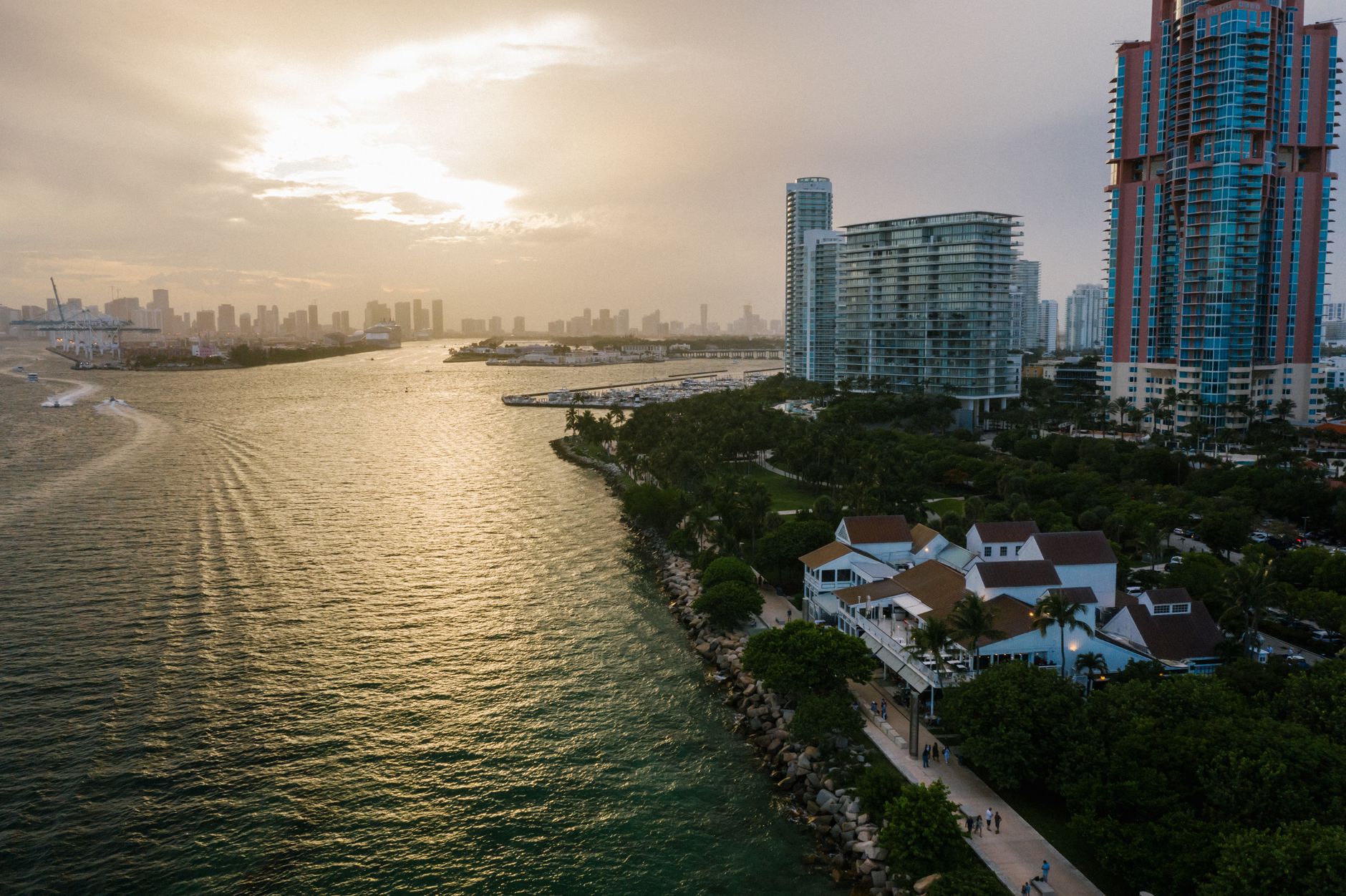
Six Fisher Island — La Gorce Island, Miami.
A comprehensive buyer guide for professional athletes considering a primary residence on La Gorce Island, Miami — covering Florida's tax advantages, privacy infrastructure, lifestyle fit, and comparisons to ultra-luxury alternatives like Six Fisher Island.
Why Miami Is the Smartest Primary Residence Decision a Professional Athlete Can Make
This guide draws on the market expertise of Denis Smykalov, Founder of Wolsen Developments, who has guided buyers through Miami's luxury new-construction market since 2012 and completed more than $500M in transactions — including some of the city's earliest cryptocurrency-settled deals. His firsthand experience working with high-net-worth athletes, entertainers, and global executives gives this guide a grounded, transaction-tested perspective that goes beyond surface-level real estate advice.
For professional athletes navigating a finite earning window, the decision of where to establish primary residency is one of the highest-leverage financial moves available. Miami has emerged as the dominant destination not by accident, but because Florida's legal and tax framework is structurally favorable in ways that other top-tier sports cities — Los Angeles, New York, Chicago — simply cannot match. No state income tax, no estate tax, and robust homestead protections create a compounding advantage that grows more significant as an athlete's earnings and asset base increase.
Beyond the numbers, Miami offers a lifestyle ecosystem that resonates with elite athletes: world-class training facilities, a year-round warm climate that supports active recovery, direct flights to virtually every major U.S. city and international sports market, and a cultural energy that attracts peers at the same level of success. Establishing a genuine primary residence here — not just a vacation address — is both a financial strategy and a quality-of-life upgrade.
La Gorce Island: Miami's Most Private Address for High-Profile Residents
La Gorce Island is a gated, guard-monitored island community in Miami Beach that sits quietly between the bustle of South Beach and the understated affluence of Bal Harbour. Unlike many luxury neighborhoods where prestige is performed loudly, La Gorce Island operates on a different register — discretion is the default, not an afterthought. The island's private bridge access, 24-hour security, and low density of homes create a living environment that professional athletes specifically value: the ability to exist outside the public eye while remaining minutes from everything Miami offers.
The residential fabric of La Gorce Island is defined by deep waterfront lots, mature tropical landscaping, and homes that range from meticulously restored mid-century estates to contemporary new-construction builds that push the boundaries of residential architecture. For an athlete whose schedule demands seamless transitions between training, travel, and recovery, the island's compact geography — everything within reach, nothing intrusive — is a genuine operational advantage. Many residents maintain their own private docks, enabling direct boating access to Biscayne Bay and the broader Intracoastal waterway system.
The social environment on La Gorce Island skews toward a demographic that professional athletes will find familiar: fellow high-net-worth individuals who prioritize privacy over visibility, who travel frequently, and who have structured their lives around performance — financial, creative, or athletic. There is an unspoken understanding among residents that public profiles are left at the gate. For a professional athlete managing media exposure and personal security simultaneously, this cultural norm is as valuable as any architectural feature.
Florida Tax Advantages of Establishing Primary Residency on La Gorce Island
Florida's tax framework is not merely athlete-friendly — it is structurally designed in ways that reward high earners who establish genuine legal domicile. The absence of a state income tax means that an athlete earning at the upper tier of a professional sports contract retains a materially larger share of their compensation compared to counterparts domiciled in California, New York, or New Jersey. Over the course of a multi-year contract, this differential compounds into seven-figure outcomes. But the income tax advantage is only one layer of a broader picture.
Florida's Homestead Exemption provides La Gorce Island primary residents with a meaningful reduction in their assessed property value for tax purposes, along with the Save Our Homes cap, which limits annual increases in assessed value to a maximum of 3% — or the rate of inflation, whichever is lower. For an athlete purchasing an estate-level property and planning to hold it as a primary residence through their playing career and into retirement, this cap provides long-term predictability that is genuinely rare in luxury real estate markets. It also creates a structural incentive to purchase sooner rather than later, as the base assessment is locked in at the time of establishment.
Florida's asset protection laws add another dimension that matters specifically to professional athletes, who can be targets for litigation. The Florida Constitution provides unlimited homestead protection from most creditor claims on a primary residence — meaning the equity in a La Gorce Island estate, regardless of its value, is generally protected in ways that a comparable asset in most other states would not be. This is not a fringe benefit; it is a cornerstone of why financial advisors who specialize in athlete wealth management consistently recommend Florida domicile as a baseline strategy.
Establishing Legal Domicile: What Professional Athletes Need to Understand
Owning a property in Florida is not the same as establishing Florida as your legal domicile, and for professional athletes — who spend significant time in multiple states due to game schedules, training camps, and endorsement obligations — this distinction has real financial consequences. To successfully claim Florida residency and capture the associated tax benefits, buyers must satisfy a series of documented requirements: spending more than half the calendar year in Florida, obtaining a Florida driver's license, registering vehicles in Florida, updating voter registration, and filing a Declaration of Domicile with Miami-Dade County. These steps must be executed carefully and documented thoroughly.
Athletes who are audited by high-tax states attempting to recapture income tax — a practice that California and New York pursue aggressively and which has resulted in significant tax disputes — must be able to demonstrate not just physical presence in Florida, but genuine integration of their life into the state. This means that the La Gorce Island residence must function as a true home: where personal records are kept, where family life is centered, where healthcare providers are based, and where the athlete's professional and legal correspondence is directed. A property that reads as a second home or vacation retreat, rather than a primary domicile, is a vulnerability.
Working with legal and financial counsel who specialize in athlete tax planning is not optional — it is foundational to realizing the financial benefits that make a La Gorce Island purchase so compelling. The good news is that Miami has developed a robust ecosystem of attorneys, CPAs, and wealth managers who work specifically with high-net-worth athletes and entertainers, many of whom have themselves relocated to the area. The infrastructure to establish, maintain, and defend Florida domicile is well-developed and readily accessible from La Gorce Island.
Six Fisher Island: The Ultra-Luxury Alternative Worth Understanding
While La Gorce Island offers a compelling combination of privacy, neighborhood character, and tax-advantaged primary residency, sophisticated buyers exploring Miami's top tier of residential real estate will inevitably encounter Six Fisher Island as a point of comparison. Fisher Island — accessible only by ferry or private boat — is consistently ranked among the wealthiest zip codes in the United States, and Six Fisher Island represents the most curated new-construction offering on the island. For an athlete whose priorities center on absolute exclusivity, resort-caliber on-site amenities, and a condominium format that minimizes maintenance obligations during a demanding travel schedule, the project warrants serious evaluation.
Six Fisher Island offers a different ownership proposition than a La Gorce Island estate: managed luxury rather than sovereign private property. The building's amenity program, concierge infrastructure, and security systems are handled institutionally, which can be a significant advantage for an athlete who spends half the year away from Miami. The trade-off is the inherent density of a condominium structure — even a boutique one — versus the complete autonomy of an island estate. Both deliver privacy at a high level; they deliver it differently.
From a tax-advantaged primary residency perspective, Fisher Island condominium ownership is fully eligible for Florida Homestead Exemption, provided the buyer meets the same legal domicile requirements applicable to any Florida property. The practical difference is that the Save Our Homes cap applies to the assessed value of the condominium unit rather than a freestanding estate, which in some cases produces a different long-term tax trajectory. Athletes comparing the two options should model both scenarios with their tax advisors using current Miami-Dade assessment data rather than relying on general assumptions.
Working With the Right Brokerage: What Athletes Should Expect From Their Buyer Representation
Purchasing a primary residence on La Gorce Island — or anywhere in Miami's ultra-luxury market — is a transaction that involves far more complexity than a standard residential purchase. Title considerations, HOA and island governance structures, dock rights, historic designation issues where applicable, and the negotiation dynamics of an off-market or pre-market estate sale all require a brokerage team with direct experience in these specific asset classes. For a professional athlete, the added dimension of managing the transaction with discretion — keeping the buyer's identity and financial terms out of public discourse — is equally important.
The right buyer's representative in this context functions less like a traditional real estate agent and more like a transaction quarterback: coordinating attorneys, financial advisors, inspectors, architects, and design consultants while managing the seller relationship and protecting the buyer's negotiating position throughout. In a market where the best properties on La Gorce Island rarely appear on public listing platforms, having a brokerage with genuine off-market access — built through years of relationships with island residents, estate attorneys, and family offices — is the difference between seeing the full inventory and seeing only what others have passed on.
Athletes who are in-season or managing demanding travel schedules should also prioritize brokerage teams capable of executing significant portions of the due diligence and transaction process remotely, with clear communication structures and the ability to leverage technology for virtual site visits, digital document execution, and real-time deal updates. Miami's luxury new-construction and estate market has adapted significantly to serve buyers whose primary constraint is time, not capital. The best teams in the market have built their workflows around exactly this dynamic.
Frequently Asked Questions
Does owning a home on La Gorce Island qualify a professional athlete for Florida's Homestead Exemption?
Yes, provided the athlete establishes La Gorce Island as their legal primary domicile — meaning they satisfy Florida's residency requirements, including spending the majority of the year in the state, obtaining a Florida driver's license, and filing a Declaration of Domicile with Miami-Dade County. Ownership alone is not sufficient; documented intent and physical presence are required.
How much can a professional athlete save in state income tax by establishing Florida as their primary residence?
Florida has no state income tax, compared to rates as high as 13.3% in California and 10.9% in New York. For an athlete on a top-tier contract, the annual tax differential can reach seven figures, compounding substantially over a multi-year deal. Athletes should model their specific savings with a CPA who specializes in athlete tax planning.
What is the Save Our Homes cap and how does it benefit La Gorce Island homeowners?
Florida's Save Our Homes amendment limits annual increases in the assessed value of a homesteaded property to 3% or the rate of inflation, whichever is lower. For a La Gorce Island estate purchased at a high value, this cap prevents runaway property tax increases over time, providing long-term cost predictability that is especially valuable for long-term primary residents.
Is La Gorce Island accessible to the public, and how is security managed?
La Gorce Island is a gated community accessible only via a private bridge with 24-hour guard security. There is no public through-traffic, which makes it one of Miami Beach's most privacy-controlled residential addresses — a significant factor for professional athletes managing personal security and public exposure.
How does Six Fisher Island compare to La Gorce Island for professional athlete buyers?
Six Fisher Island offers a managed luxury condominium format on a ferry-access-only island, providing absolute exclusivity and institutional-grade amenities with minimal maintenance obligations. La Gorce Island offers freestanding estate ownership with greater autonomy, private dock potential, and a neighborhood character distinct from a condominium building. Both are eligible for Florida Homestead Exemption as primary residences.
Can high-tax states like California or New York audit an athlete who claims Florida residency?
Yes. California and New York are known to aggressively audit high-earning individuals who claim to have changed their domicile to a no-income-tax state. Athletes must maintain thorough documentation of their Florida presence, lifestyle integration, and legal domicile steps to successfully defend their residency claim. Working with an attorney experienced in multi-state athlete tax issues is strongly recommended.
Does Florida's homestead protection shield a La Gorce Island estate from creditor claims?
Florida's Constitution provides broad homestead protection from most creditor claims for a primary residence, with no cap on the value of the protected property. This is a significant asset-protection advantage for professional athletes, who can be targets for civil litigation, though certain exceptions — such as mortgage liens and HOA assessments — do apply.
Are there waterfront and private dock options available on La Gorce Island?
Yes, many La Gorce Island properties feature direct waterfront access on Biscayne Bay or the Intracoastal Waterway, and select estates include private docks capable of accommodating substantial vessels. Dock rights and seawall conditions vary by property and should be reviewed as part of due diligence during the purchase process.
What should a professional athlete prioritize when selecting a buyer's agent for a La Gorce Island purchase?
Athletes should prioritize agents with demonstrated off-market access to La Gorce Island and comparable luxury estates, experience managing discrete high-profile transactions, and the ability to coordinate a multi-professional team — including attorneys and wealth managers — within a compressed or travel-constrained timeline. Track record in ultra-luxury Miami real estate is a more reliable indicator than general production volume.
Can a professional athlete purchase a La Gorce Island property using cryptocurrency or alternative assets?
While traditional financing and wire transfers remain the most common closing mechanisms, some Miami luxury transactions have been structured to accommodate cryptocurrency proceeds, typically by converting to fiat prior to closing or through specialized transaction structures. Buyers interested in this approach should discuss it early in the process with their legal and financial teams.
Ready to Take the Next Step?