Bal Harbour · family office real estate · Miami luxury condo · new construction Miami · LLC vs personal name condo · Rivage Bal Harbour
Family Office Real Estate Diversification Guide: Buying a Luxury Condo in Bal Harbour, Miami — LLC vs Personal Name and What to Know About Rivage Bal Harbour
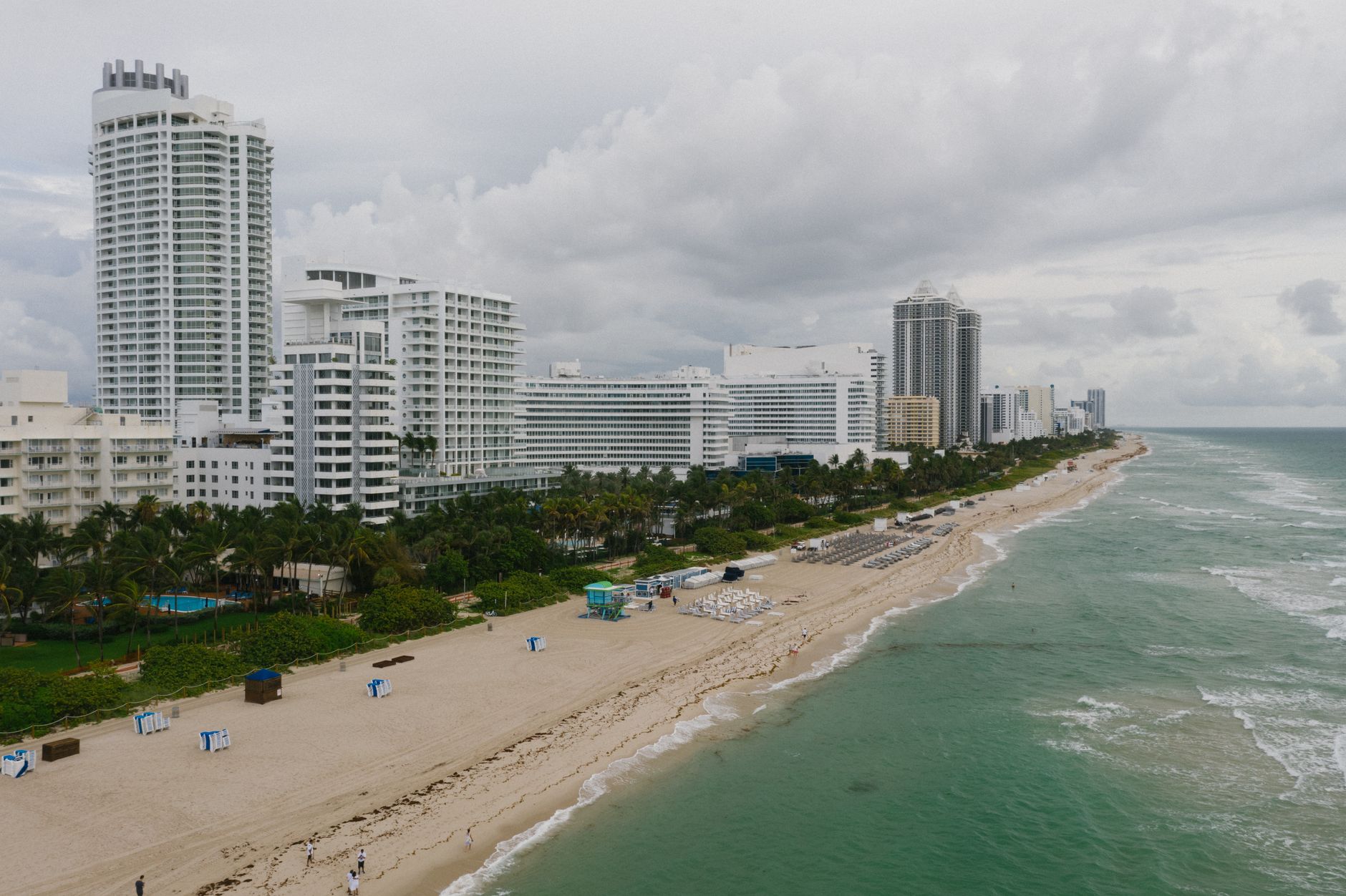
Rivage Bal Harbour — Bal Harbour, Miami.
A sophisticated buyer guide for family offices and institutional-grade private investors entering Miami's ultra-luxury new-development market through Bal Harbour, covering entity structuring, due diligence, and why projects like Rivage Bal Harbour represent a compelling allocation.
Why Family Offices Are Allocating to Miami New Construction
Over the past several years, Miami has shifted from a seasonal resort market into a recognized global wealth hub. The relocation of major financial firms, hedge funds, and family offices to South Florida has fundamentally altered the demand profile for ultra-luxury real estate. For diversified family offices that have historically concentrated real estate exposure in gateway markets like New York, London, or San Francisco, Miami now offers a compelling combination of no state income tax, strong international liquidity, and a supply-constrained luxury segment that has demonstrated resilience across multiple economic cycles.
New construction, specifically, carries strategic advantages for institutional-quality buyers. Pre-construction pricing in Miami's top-tier coastal markets has historically allowed buyers to acquire at a discount to delivery value, with the asset appreciating during the construction period — a dynamic that can compress effective holding costs while enhancing mark-to-market returns. For a family office managing across asset classes, a luxury condo in a marquee development functions simultaneously as a hard asset hedge, a potential income-producing vehicle, and a lifestyle asset available to principals and their families.
Bal Harbour, in particular, occupies a rare position in the Miami market. Its barrier-island geography, strict zoning, and limited land inventory create structural supply constraints that are difficult to replicate elsewhere in South Florida. This scarcity premium has supported values even during broader market softening, making the submarket a natural focus for capital-preservation-oriented family office mandates.
Bal Harbour as a Target Market: Scarcity, Status, and Liquidity
Bal Harbour is a small incorporated village on the northern tip of Miami Beach, encompassing roughly a third of a square mile. That geographic constraint is not incidental — it is the market's primary value driver. Unlike Brickell, Edgewater, or even parts of Miami Beach proper, Bal Harbour cannot simply absorb a wave of new development towers without displacing existing product. Every new project built there comes at the cost of what was previously standing, meaning true net supply additions are extremely limited. This dynamic is well understood by the global wealth community and is one reason why Bal Harbour has consistently commanded among the highest per-square-foot pricing in Florida.
The village is anchored by Bal Harbour Shops, widely recognized as one of the highest-grossing retail properties per square foot in the United States and home to flagship boutiques for Chanel, Hermès, Prada, and similar houses. This concentration of luxury retail directly supports residential values by creating a walkable, curated lifestyle environment that resonates with buyers from Latin America, Europe, and the northeastern United States — the three primary feeder markets for Bal Harbour luxury real estate. International buyers in particular view this kind of infrastructure as a proxy for market quality and long-term demand.
From a liquidity standpoint, Bal Harbour condos in the upper price bands tend to transact among a narrow but highly motivated pool of buyers, meaning that while days-on-market can be extended compared to more liquid price points, when a transaction closes it tends to do so at or near asking price. For family offices concerned with exit optionality, this dynamic — combined with the village's international brand recognition — suggests that well-chosen acquisitions should retain resale depth over a medium-to-long holding horizon.
Rivage Bal Harbour: Ultra-Luxury New Construction in Context
Rivage Bal Harbour represents the caliber of project that has defined the current generation of ultra-luxury new development in South Florida. Positioned on the oceanfront in Bal Harbour, Rivage is designed to deliver a limited number of exceptionally large residences — a deliberate product strategy that targets the segment of the market where supply is most constrained globally. For a family office buyer, this type of low-unit-count, high-finish development is structurally different from a conventional condominium tower: ownership feels closer to a private estate than a stacked residential product, and the amenity programming reflects that intent.
The development team and design collaborators behind Rivage Bal Harbour reflect the level of institutional credibility that sophisticated buyers require before committing capital at this price point. Architecture and interiors at this level of the market are not decorative choices — they are signals of long-term value maintenance. Projects with globally recognized design provenance tend to hold buyer attention across market cycles because they speak a universal language of quality that transcends local real estate conditions. This is a consideration that should be part of any family office underwriting conversation around a specific project.
Pre-construction commitments to projects like Rivage Bal Harbour typically require substantial deposits structured over a development timeline, which is an important cash-flow and liquidity consideration for family offices managing across multiple commitments simultaneously. Understanding the deposit schedule, the developer's capitalization structure, and the contractual protections available to buyers under Florida's condominium statute should be part of the due diligence process before any reservation or purchase agreement is executed.
LLC vs Personal Name: Entity Structure for Miami Luxury Condo Acquisitions
One of the most consequential decisions a family office buyer makes when acquiring Miami real estate is not which unit to purchase, but in whose name to take title. The choice between a limited liability company (LLC), a trust, another corporate entity, or personal name carries implications across liability exposure, estate planning, privacy, financing, and tax treatment. There is no universally correct answer, and the right structure depends heavily on the buyer's domicile, citizenship, overall estate plan, and intended use of the asset — all considerations that require coordination between the buyer's legal and tax advisors before contract execution.
Holding a luxury condo in a single-member LLC is a common approach among high-net-worth buyers for several reasons. First, it creates a liability shield that insulates other family assets from any claim arising from the property — relevant in a rental or hospitality context where third-party exposure is possible. Second, it offers a layer of privacy, since the beneficial owner's name does not appear in public property records; instead, the LLC name is listed, and ownership of the LLC is a separate (and typically non-public) matter. Third, for estate planning purposes, LLC membership interests can be transferred incrementally to heirs or trusts as part of a broader gifting strategy, potentially with applicable valuation discounts. Importantly, the Financial Crimes Enforcement Network (FinCEN) has implemented beneficial ownership reporting requirements that apply to many LLCs, so buyers should work with counsel to understand current federal transparency obligations before assuming that LLC ownership provides complete anonymity.
For foreign nationals — a significant segment of Bal Harbour buyers — entity structuring is even more nuanced. A foreign person or family holding U.S. real estate directly may be subject to the Foreign Investment in Real Property Tax Act (FIRPTA) withholding on sale, as well as U.S. estate tax on the value of U.S. situs assets above a relatively modest exemption threshold. Various structures using foreign corporations, U.S. LLCs, or trusts are commonly employed to address these exposures, but each carries its own trade-offs in terms of U.S. income tax treatment and annual compliance burden. The takeaway for a family office is not to select a structure based on real estate broker guidance — including this article — but to engage qualified U.S. tax counsel with cross-border expertise well in advance of signing any purchase agreement.
Due Diligence Framework for Family Office Condo Acquisitions
Unlike acquiring a commercial property or a portfolio, buying a luxury condominium in a new development requires a specific due diligence framework that blends real estate fundamentals with consumer protection statutes unique to Florida. Florida law requires developers to provide a prospectus — commonly referred to as the condominium documents — before a buyer can be legally bound to a purchase. This package typically includes the declaration of condominium, bylaws, proposed budget, rules and regulations, and a description of the amenities. A family office buyer should engage a Florida real estate attorney to review these documents in full, with particular attention to special assessment risk, developer reservation of rights, and the projected budget's adequacy relative to the building's anticipated operating costs.
Beyond the legal documents, family offices should conduct independent market analysis to validate the developer's represented value proposition. This includes reviewing comparable closed sales in the submarket, understanding the pipeline of competing product that may deliver in a similar timeframe, and stress-testing the assumed resale value against a conservative market scenario. For a family office with a defined holding period — say, seven to ten years — the relevant question is not only what the unit is worth at delivery but what the exit market looks like at the anticipated disposition date, which is inherently uncertain and should be underwritten with appropriate conservatism.
Finally, the deposit structure and escrow arrangements in Florida new-development contracts deserve careful attention. Florida statute requires that buyer deposits in new-development transactions be held in escrow, but the specific terms — whether deposits are in a federally insured institution, whether they earn interest for the buyer, and under what conditions they may be released to the developer — vary by project and should be reviewed closely. Understanding what happens to deposited funds if the project does not receive the necessary approvals or financing to complete construction is a basic risk-management question that should be answered before any money changes hands.
Practical Steps for a Family Office Entering the Bal Harbour Market
For a family office at the beginning of its Miami real estate allocation process, establishing relationships with advisors who specialize in this specific submarket is the highest-leverage first step. This means working with a brokerage that maintains active relationships with developers in Bal Harbour and can provide early access to pre-launch inventory — which is where the most favorable pricing and unit selection typically reside. It also means engaging a Florida real estate attorney and a tax advisor with U.S. and, if relevant, international expertise before signing anything. The cost of professional guidance at this stage is trivial relative to the magnitude of a typical Bal Harbour transaction.
Family offices should also think clearly about the intended use of the asset — primary residence, secondary residence for principals, rental income, or pure capital appreciation — because use cases drive different structuring decisions, different financing approaches, and different management requirements. A unit that will be rented to short- or medium-term tenants requires attention to the building's rental policy, which varies by project and is defined in the condominium documents. Many ultra-luxury buildings in Bal Harbour impose minimum rental periods or restrict certain categories of rental activity, and a family office buyer whose return model depends on rental income needs to verify that the specific building permits the intended use.
The Miami new-development market moves quickly at the top end, and access to accurate, real-time information about pricing, inventory, and developer negotiating posture is a material advantage. For family offices accustomed to direct access in other asset classes, the equivalent in residential real estate is a trusted broker relationship with a specialist who understands both the product and the buyer's sophistication level. For current pre-construction pricing, availability, and access to off-market units in Bal Harbour, contact Denis Smykalov at Wolsen Developments — denis@wolsenre.com or (305) 333-1122.
Frequently Asked Questions
Why are family offices buying luxury condos in Bal Harbour, Miami?
Bal Harbour offers a rare combination of geographic supply constraints, strong international buyer demand, and no Florida state income tax. For family offices diversifying into real estate, the submarket provides a hard-asset allocation with potential capital appreciation, lifestyle utility for principals, and long-term liquidity supported by a globally recognized location.
Should a family office buy a Miami luxury condo in an LLC or personal name?
The optimal structure depends on the buyer's domicile, citizenship, estate plan, and intended use of the property. LLCs are commonly used for liability protection, privacy, and estate planning flexibility, but they carry compliance obligations including FinCEN beneficial ownership reporting. Foreign buyers face additional considerations around FIRPTA and U.S. estate tax. Family offices should consult qualified legal and tax counsel before selecting an entity structure.
What are the risks of buying in a Miami new-development condo pre-construction?
Key risks include project delays or cancellation, changes to the final product relative to what was marketed, and the possibility that the market moves unfavorably during the construction period. Florida law provides some protections, including escrow requirements for deposits, but buyers should review developer-specific contract terms and escrow arrangements carefully with a Florida real estate attorney.
What is Rivage Bal Harbour and why is it relevant to family office buyers?
Rivage Bal Harbour is an ultra-luxury oceanfront new-development project in Bal Harbour featuring a limited number of large-format residences with high-end design and amenity programming. Its low unit count and institutional-quality developer and design team make it the type of project that family offices and high-net-worth buyers typically prioritize when seeking scarce, trophy real estate in South Florida.
What does Florida law require developers to disclose in new-condo sales?
Florida law requires developers to deliver a prospectus — commonly called the condominium documents — before a buyer is legally bound. This package includes the declaration of condominium, bylaws, proposed operating budget, rules and regulations, and a description of the common elements and amenities. Buyers have a statutory right of rescission within a defined period after receiving these documents.
How does Bal Harbour's limited supply affect real estate values over time?
Bal Harbour is a small incorporated village with extremely limited developable land, which means new supply can only enter the market by replacing existing structures. This structural scarcity has historically supported per-square-foot pricing at the top of the Florida market and provided a degree of value resilience that is difficult to replicate in more supply-elastic submarkets.
Can a foreign national or non-U.S. family office buy a luxury condo in Bal Harbour?
Yes, there are generally no nationality-based restrictions on foreign nationals purchasing Florida real estate. However, foreign buyers are subject to FIRPTA withholding on sale proceeds and may face U.S. estate tax exposure on U.S. situs assets. Proper entity structuring in advance of purchase can address some of these exposures, and qualified cross-border tax counsel is essential.
What should a family office look for when reviewing condominium documents for a Miami new development?
Key areas of review include special assessment risk and reserve funding adequacy, developer reservations of rights (such as the ability to modify common areas), rental restrictions that could affect income strategies, and the terms governing deposit escrow. A Florida real estate attorney with new-development experience should lead this review.
How are deposit schedules typically structured for Miami pre-construction luxury condos?
Deposit schedules for ultra-luxury new-development projects in Miami typically require a series of payments tied to construction milestones, with total deposits ranging from roughly 20% to 50% or more of the purchase price depending on the project. Deposits are required by Florida law to be held in escrow, though the specific escrow terms vary by development and should be reviewed carefully.
Does Bal Harbour allow short-term rentals in luxury condo buildings?
Rental policies in Bal Harbour condo buildings are governed by each building's individual declaration and rules, not by a uniform village-wide standard. Many ultra-luxury buildings in the area impose minimum rental periods — often 30, 90, or 180 days — and may restrict certain categories of rental activity. Buyers whose investment thesis depends on rental income must verify the specific building's rental policy before purchase.
Ready to Take the Next Step?