1031 Exchange · Hallandale Beach · Hillsboro Beach · Miami New Construction · Tax Relocation · Luxury Condominiums
1031 Exchange Into Miami New Development: The Complete Relocation Guide for Tax-Advantage Buyers in Hallandale Beach
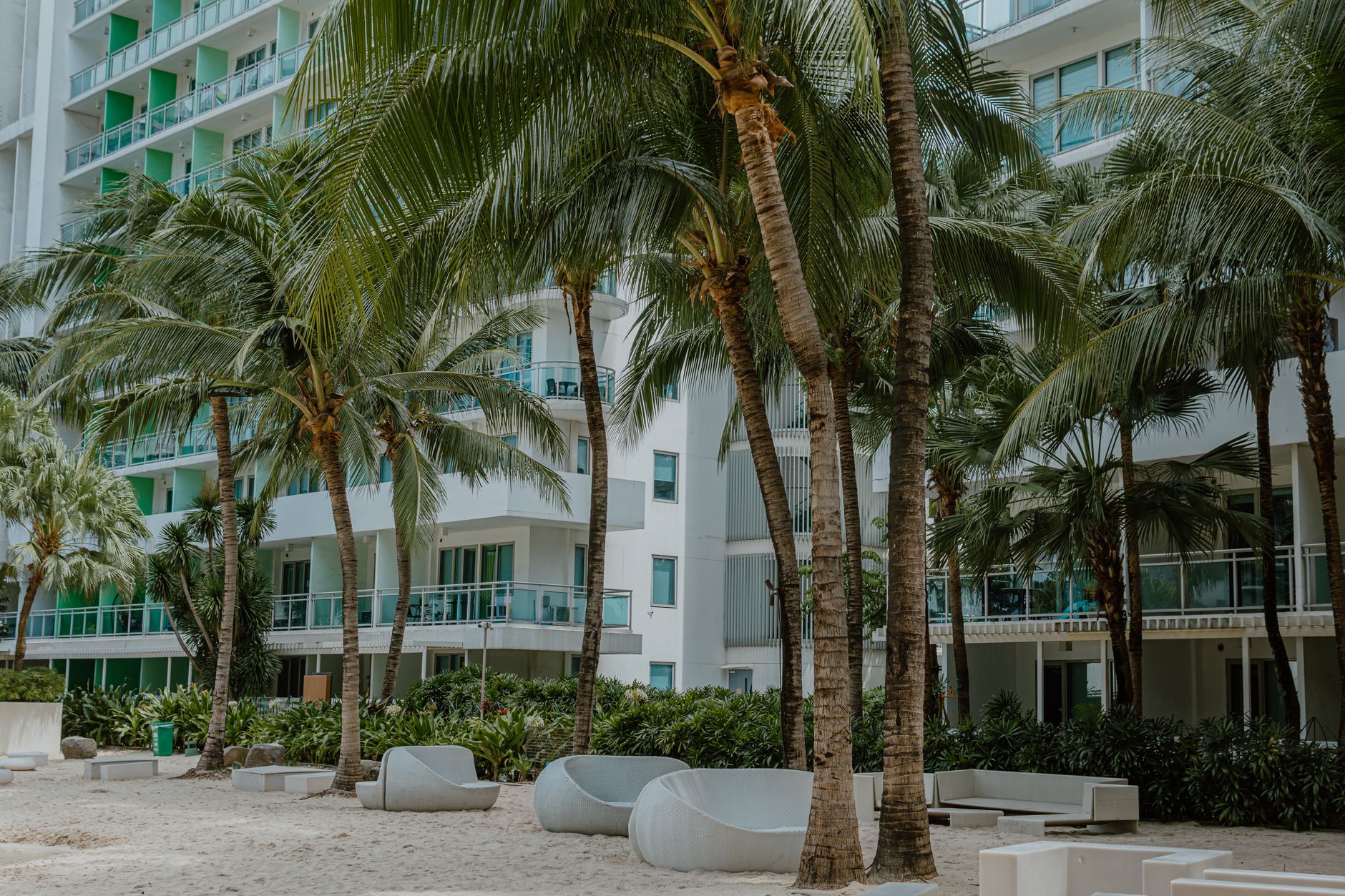
Rosewood Residences Hillsboro Beach — Hallandale Beach, Miami.
If you are selling investment property and want to defer capital gains while relocating to a low-tax state, Miami's new-construction pipeline — anchored by ultra-luxury projects like Rosewood Residences Hillsboro Beach — offers one of the most compelling 1031 exchange destinations in the country. This guide walks you through every step.
Why High-Earning Buyers Are Relocating to the Miami Area for Tax Advantages
Florida has no state income tax, no state capital gains tax, and no estate tax — a combination that saves high-income earners hundreds of thousands of dollars annually compared with states like California, New York, or Illinois. For a buyer earning $1 million or more per year, the difference between a California marginal rate near 13.3% and Florida's 0% can represent more than $130,000 in annual savings on earned income alone, before accounting for investment gains. That arithmetic has driven a sustained wave of executives, entrepreneurs, family offices, and retirees southward, and the Miami metropolitan area — including Hallandale Beach and the Hillsboro Beach corridor just to the north — has absorbed much of that demand. This guide draws on the market expertise of Denis Smykalov, Founder of Wolsen Developments, who has guided buyers through Miami's luxury new-construction market since 2012 and completed more than $500M in transactions — including some of the city's earliest cryptocurrency-settled deals.
Beyond income tax savings, Florida's homestead exemption offers meaningful property tax relief for primary residents, capping annual assessment increases at 3% under the Save Our Homes provision. Buyers who establish Florida domicile — by registering to vote, updating their driver's license, filing a Declaration of Domicile, and spending the majority of their nights in the state — can substantially reduce their overall tax burden. The combination of these structural advantages, paired with a thriving luxury real estate market and year-round lifestyle appeal, has made South Florida one of the most searched relocation destinations for affluent buyers over the past five years.
Understanding the 1031 Exchange: Core Rules Every Buyer Must Know
A 1031 exchange — named for Section 1031 of the Internal Revenue Code — allows an investor to defer federal capital gains tax on the sale of a qualifying investment property, provided the proceeds are reinvested into a 'like-kind' replacement property of equal or greater value. The deferral applies to both the capital gains tax and the 25% depreciation recapture tax, which can be substantial on properties held for many years. Critically, 'like-kind' is broadly interpreted for real property: selling a multifamily building in Chicago and acquiring a luxury condominium in Hallandale Beach qualifies, as long as the replacement property is held for investment or business purposes — not personal use from day one.
The timeline is strict and non-negotiable. From the closing date of your relinquished property, you have 45 calendar days to formally identify up to three replacement properties in writing, and 180 calendar days total to close on one or more of them. A Qualified Intermediary (QI) — an IRS-regulated third party — must hold the exchange proceeds throughout the process; you may never take constructive receipt of the funds. Failing any of these deadlines or rules disqualifies the exchange entirely, making professional coordination with a QI and a 1031-experienced real estate advisor essential. Working with a brokerage team that understands new-development contract timelines is particularly important, as pre-construction closings can carry date uncertainty.
For buyers targeting new construction specifically, timing the relinquishment sale to align with a new-development closing requires careful planning. Developers often set closing dates based on certificate-of-occupancy milestones rather than fixed calendar dates. An experienced new-construction buyer's agent will negotiate contract language that provides as much closing-date predictability as possible and will maintain close communication with the developer's sales and construction teams throughout your 180-day window.
Why New-Construction Luxury Condominiums Qualify — and Why They Are Attractive Exchange Targets
A newly constructed luxury condominium absolutely qualifies as a like-kind replacement property in a 1031 exchange, provided you intend to hold it as an investment asset — either as a rental, a fractional-use property, or part of a managed residence program — rather than occupying it immediately as a primary home. The IRS has issued safe-harbor guidance (Revenue Procedure 2008-16) suggesting that holding a replacement property for at least 24 months, renting it out for a minimum number of days per year, and limiting personal use to no more than 14 days or 10% of rental days creates a strong presumption of investment intent. Buyers who plan to eventually convert the property to a primary residence should work with a tax advisor on a structured transition strategy.
New construction offers several advantages as a 1031 target beyond qualification alone. First, a brand-new asset resets the depreciation clock, giving investors a fresh 27.5-year depreciation schedule on the residential value — a meaningful annual deduction that offsets rental income. Second, luxury new-construction projects in South Florida typically appreciate from pre-construction contract price to delivery date, meaning buyers often capture built-in equity before they even close. Third, many ultra-luxury buildings offer managed rental programs or short-term rental licensing — particularly along the Hillsboro and Hallandale Beach corridors — that simplify the income-generation requirement for 1031 compliance.
Rosewood Residences Hillsboro Beach exemplifies the kind of ultra-luxury, branded new-construction project that appeals to 1031 exchange buyers at the top of the market. Carrying the globally recognized Rosewood Hotels & Resorts name — a brand synonymous with discreet, service-driven luxury — the project is positioned along a pristine stretch of Hillsboro Beach directly adjacent to the Hallandale Beach market. Its branded residences model, combined with the prestige of the address and the scarcity of oceanfront sites in this corridor, makes it a compelling long-term hold for investors seeking both capital preservation and lifestyle optionality.
The Hallandale Beach and Hillsboro Beach Corridor: Why This Market Stands Out
Hallandale Beach sits in a uniquely advantageous geographic position — equidistant between Miami and Fort Lauderdale, with direct access to the Intracoastal Waterway, the Atlantic Ocean, Gulfstream Park, and an increasingly walkable urban core. For buyers relocating from major metros, the area offers a lower-density lifestyle compared to Miami proper, while still delivering the infrastructure, restaurants, and cultural amenities expected by luxury buyers. The city has invested heavily in its beachfront, streetscapes, and public amenities over the past decade, and a wave of new high-rise luxury development has followed, attracting a sophisticated demographic of full-time residents and seasonal owners alike.
Immediately to the north, Hillsboro Beach is one of Florida's most exclusive and least-known addresses — a narrow barrier island municipality with fewer than 2,000 permanent residents, no commercial development on its oceanfront, and strict zoning that severely limits new construction. That scarcity is precisely what makes a rare new-development opportunity like Rosewood Residences Hillsboro Beach so significant. Buyers considering a 1031 exchange into this corridor are not just acquiring a tax-deferred asset; they are acquiring a position in one of the most supply-constrained luxury oceanfront markets in the southeastern United States.
From a rental market perspective, both Hallandale Beach and the Hillsboro corridor have benefited from South Florida's post-2020 demand surge. Seasonal rental demand from northeastern snowbirds, European and Latin American travelers, and domestic remote workers has kept high-quality oceanfront inventory consistently occupied, supporting the income-generation requirements of 1031-compliant investment holding. Buyers who engage a local property management firm prior to closing can often have rental infrastructure in place from day one, strengthening their investment-intent documentation.
Establishing Florida Domicile: The Legal Steps for Relocating Buyers
Owning property in Florida does not automatically establish domicile — and for buyers moving from high-tax states, the domicile question is where the real tax savings are won or lost. Your former state will scrutinize your domicile claim aggressively if you continue to maintain property, business relationships, or significant personal ties there. A clean domicile transition requires deliberate action: updating your driver's license and vehicle registration to Florida, registering to vote in Florida, filing a Declaration of Domicile with the local county clerk, updating your will and estate documents to reference Florida law, and physically spending more than half the calendar year — ideally 183 days or more — in the state.
For buyers who will initially hold their new Hallandale Beach or Hillsboro Beach residence as a 1031 investment property before transitioning to primary use, the domicile and homestead question requires careful coordination with a Florida estate planning attorney. Homestead designation — which triggers the 3% Save Our Homes cap on assessed value increases and provides creditor protection under Florida's constitution — can only be claimed on a primary residence, so the timing of that filing matters both for tax and legal purposes. A well-structured relocation plan coordinates the real estate purchase, the 1031 exchange, the domicile filing, and the homestead application into a coherent sequence.
It is also worth noting that some states — California being the most aggressive — have enacted 'clawback' provisions attempting to tax former residents on income or gains earned while they were California residents, even after departure. Florida buyers who previously lived in California should retain a multi-state tax advisor and carefully document the timing of their domicile change relative to any sale events. The cleaner and better-documented the departure, the stronger the defense against any subsequent residency audit.
Working With the Right Team: New-Construction Expertise, 1031 Coordination, and Buyer Representation
A successful 1031 exchange into a Miami-area new-construction property requires a coordinated team that understands both sides of the transaction: the legal and financial mechanics of the exchange itself, and the particularities of purchasing pre-construction or newly delivered luxury condominiums in South Florida. The buyer's real estate agent must be fluent in developer contracts, deposit structures, closing-date provisions, and the assignment or substitution rules that can apply when a buyer's personal situation changes between contract and closing. Not every general real estate agent has this fluency — selecting a specialist in new-construction luxury transactions is essential.
Your team should typically include: a Qualified Intermediary to handle the exchange funds and documentation; a 1031-experienced CPA or tax attorney to advise on investment-intent structure, holding period, and transition planning; a Florida estate planning attorney to handle domicile, homestead, and trust or entity structuring; and a new-construction buyer's agent with established developer relationships in the Hallandale Beach and Hillsboro Beach corridor. If you are considering Rosewood Residences Hillsboro Beach or comparable ultra-luxury projects in this market, early engagement with the right advisory team — ideally before you close on your relinquished property — gives you the maximum runway to identify and secure the right replacement asset within your 45-day window.
The most common mistake 1031 buyers make when targeting new construction is underestimating how quickly inventory moves in supply-constrained luxury buildings. The best residences in a project like Rosewood Residences Hillsboro Beach — oceanfront floors, corner units, penthouse-tier homes — are typically absorbed in the earliest phases of sales, often before public announcement. Buyers who wait until they have already closed their relinquished property to begin their new-construction search frequently find that their preferred units are no longer available, forcing rushed decisions or disqualifying delays. Beginning your replacement property research well in advance — even 12 to 18 months before you expect to sell — dramatically improves your outcomes.
Frequently Asked Questions
Can I use a 1031 exchange to buy a new-construction luxury condominium in Hallandale Beach or Hillsboro Beach?
Yes. A newly constructed luxury condominium qualifies as like-kind replacement property under Section 1031 of the Internal Revenue Code, as long as you hold it for investment or business purposes rather than immediately occupying it as a personal residence. Buyers typically document investment intent by renting the property, participating in a managed rental program, or following IRS safe-harbor holding guidelines.
How long do I have to identify and close on a replacement property in a 1031 exchange?
You have 45 calendar days from the closing date of your relinquished property to formally identify replacement properties in writing, and 180 calendar days total to close on the replacement. Both deadlines are absolute — missing either one disqualifies the exchange and triggers immediate recognition of the deferred gain.
Does owning property in Florida automatically make me a Florida resident for tax purposes?
No. Property ownership alone does not establish domicile. To legally change your domicile to Florida and benefit from the state's zero income tax, you must take active steps including updating your driver's license, registering to vote, filing a Declaration of Domicile, and physically spending the majority of the year in Florida. High-tax states like California and New York may audit former residents who maintain strong ties there.
What is the Save Our Homes benefit and when can I claim it?
Florida's Save Our Homes provision caps annual increases in a homesteaded property's assessed value at 3% or the rate of inflation, whichever is lower. It applies only to a property designated as your primary residence via a homestead exemption filing with the county property appraiser. If you initially hold your Hallandale Beach residence as a 1031 investment property, you cannot file for homestead until you transition it to primary use.
Why is Hillsboro Beach considered a scarce luxury real estate market?
Hillsboro Beach is a narrow barrier island municipality with fewer than 2,000 permanent residents and strict zoning that prohibits commercial oceanfront development. The combination of extremely limited land, no new oceanfront commercial inventory, and proximity to both Miami and Fort Lauderdale makes it one of the most supply-constrained luxury addresses in Southeast Florida.
What makes Rosewood Residences Hillsboro Beach appealing as a 1031 replacement property?
Rosewood Residences Hillsboro Beach carries the globally recognized Rosewood Hotels & Resorts brand — associated with ultra-discreet, service-driven luxury — and occupies a rare oceanfront site in one of Florida's most restrictive and exclusive municipalities. For 1031 buyers, the branded residence model, scarcity of the site, and strong long-term demand fundamentals in the corridor make it a compelling capital-preservation and lifestyle asset.
Can I eventually convert my 1031 replacement property into my primary residence?
Yes, but a structured transition plan is essential. The IRS expects you to hold the property as an investment for a meaningful period — commonly at least 24 months — before converting to personal use. Working with a 1031-experienced tax advisor to document the transition properly reduces audit risk and may allow you to later utilize the Section 121 primary residence exclusion on a portion of future gains.
What is a Qualified Intermediary and do I need one for a 1031 exchange?
A Qualified Intermediary (QI) is an IRS-regulated third party who holds the proceeds from your relinquished property sale and transfers them directly to the replacement property purchase. You are legally prohibited from taking constructive receipt of the funds yourself; doing so immediately disqualifies the exchange. Using a reputable QI is mandatory, not optional, in any valid 1031 exchange.
What annual tax savings can a high-income earner expect by relocating from California or New York to Florida?
A buyer earning $1 million per year in wages or business income who relocates from California — where the top marginal income tax rate is approximately 13.3% — to Florida, which has no state income tax, can save more than $130,000 annually on earned income alone. Savings are even greater when accounting for Florida's absence of a state capital gains tax and estate tax.
When should I start searching for a 1031 replacement property if I am targeting a new-construction building?
Ideally 12 to 18 months before you expect to close the sale of your relinquished property. The best residences in supply-constrained luxury buildings — particularly oceanfront or penthouse units — are typically sold in the earliest pre-construction phases. Waiting until after your relinquished property closes leaves you only 45 days to identify a replacement, which is often insufficient to secure premium inventory in top-tier new-construction projects.
Ready to Take the Next Step?