1031 exchange · Hallandale Beach · Miami new construction · Rosewood Residences Hillsboro Beach · luxury condos · South Florida real estate
1031 Exchange into Miami New Construction: A Complete Buyer Guide for Hallandale Beach and Rosewood Residences Hillsboro Beach
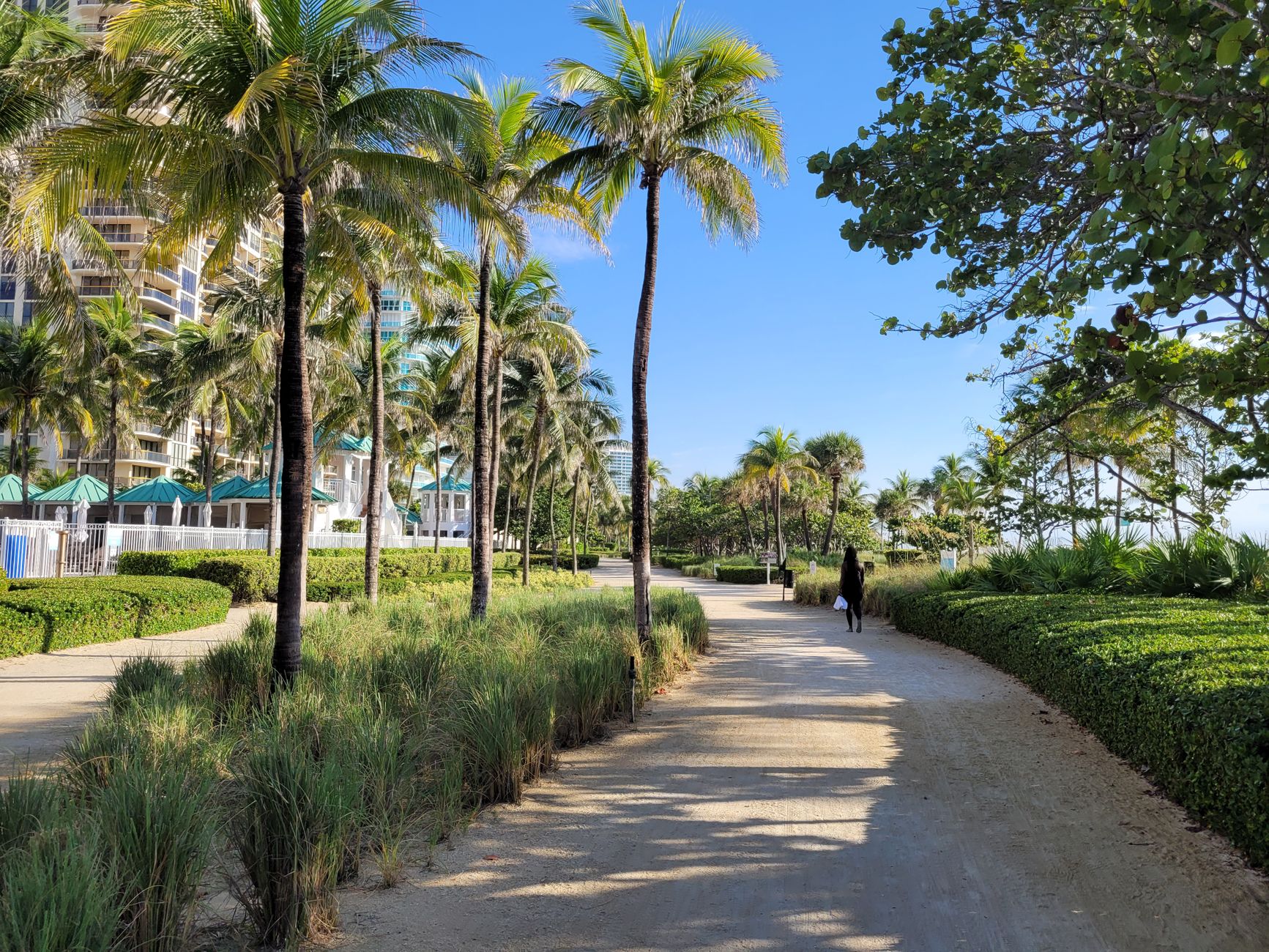
Rosewood Residences Hillsboro Beach — Hallandale Beach, Miami.
If you're completing a 1031 exchange and considering Miami's luxury new-construction market, Hallandale Beach offers a rare combination of oceanfront value, high-end inventory, and strong rental demand — this guide walks you through every step of the process.
Why Miami New Construction Is a Smart 1031 Exchange Destination
This guide draws on the market expertise of Denis Smykalov, Founder of Wolsen Developments, who has guided buyers through Miami's luxury new-construction market since 2012 and completed more than $500M in transactions — including some of the city's earliest cryptocurrency-settled deals. Denis has worked alongside exchange investors from across the country who have successfully deployed relinquished-property proceeds into South Florida new construction, navigating both the IRS timeline requirements and the unique contract structures that define pre-construction purchases.
Miami's new-development market has emerged as one of the most compelling 1031 exchange destinations in the country for several reasons. Florida imposes no state income tax, the metropolitan area continues to attract high-net-worth residents and corporations relocating from higher-tax states, and the pipeline of institutional-quality luxury towers has created a category of replacement property that can credibly serve as like-kind real estate under Section 1031. For investors coming out of commercial assets, multifamily holdings, or even high-value single-family rentals in other markets, a luxury condo in a building with a dedicated rental program can represent a seamless operational transition.
Critically, pre-construction contracts in Florida are generally structured around a deposit schedule rather than a single lump-sum closing, which creates important implications for exchange investors. The 45-day identification window and 180-day closing deadline imposed by the IRS must align with the developer's anticipated delivery date. Working with a qualified intermediary (QI) who understands Florida's new-construction contract law — and a brokerage that tracks delivery timelines with precision — is essential to executing a compliant exchange.
Hallandale Beach Neighborhood Guide: What Buyers Need to Know
Hallandale Beach occupies a strategically enviable position between Fort Lauderdale to the north and Aventura to the south, placing it within roughly 20 minutes of both Fort Lauderdale-Hollywood International Airport and Miami International Airport. For buyers relocating from gateway markets — particularly from the Northeast, Midwest, or West Coast cities where they may have built equity in investment real estate — Hallandale Beach offers a lifestyle that balances oceanfront access with a surprisingly walkable urban fabric. The Hallandale Beach Boulevard corridor has been substantially upgraded in recent years, and the beachfront itself is uncrowded relative to Miami Beach proper.
The real estate profile of Hallandale Beach skews toward high-rise condominiums, many of which sit directly on or adjacent to the Atlantic Ocean. The area has historically attracted a mix of primary residents, snowbirds, and investors operating short- and long-term rental programs, giving the market a depth of rental demand that appeals to 1031 exchange buyers who need their replacement property to generate income. Vacancy rates for well-positioned oceanfront units have remained tight, supported by both domestic leisure travelers and the area's growing population of full-time residents.
For buyers accustomed to the cultural amenities of dense urban markets, Hallandale Beach is within easy reach of Aventura Mall (one of the largest shopping centers in the United States), the arts and dining scene in Fort Lauderdale's Flagler Village, and the world-class restaurants and nightlife of Miami Beach's Mid-Beach corridor. The community also benefits from proximity to several of South Florida's most celebrated golf courses and the Gulfstream Park racing and entertainment complex, which anchors significant foot traffic and retail activity just blocks from the ocean.
Rosewood Residences Hillsboro Beach: A Flagship Replacement Property
Among the new-construction developments that merit serious consideration for 1031 exchange buyers targeting the northern Miami-Dade and Broward coastal corridor, Rosewood Residences Hillsboro Beach represents a category-defining offering. Situated directly on the Atlantic Ocean in Hillsboro Beach — a quiet, exclusive barrier island community positioned between Pompano Beach and Deerfield Beach — the project carries the Rosewood brand, one of the most respected names in ultra-luxury hospitality. The residential component of the project is expected to deliver the bespoke service standards, curated amenities, and design pedigree associated with the Rosewood hotel portfolio.
Rosewood Residences Hillsboro Beach is designed for buyers who prioritize provenance and scarcity. With a limited number of residences commanding direct oceanfront exposure, the project is positioned at the very top of the Broward coastal market. For a 1031 exchange investor, a branded luxury residence of this caliber can provide a defensible valuation thesis: the Rosewood name functions as a demand driver for both primary-residence buyers and rental guests, and the managed services infrastructure that comes with a branded residence can support a compliant rental program — potentially satisfying the IRS's held-for-investment requirement.
From a practical standpoint, buyers conducting a 1031 exchange into a project like Rosewood Residences Hillsboro Beach should engage their QI and legal counsel early in the process to confirm that the contract structure, deposit timing, and anticipated closing date are compatible with their exchange windows. Because branded luxury projects of this scale often have extended construction timelines, buyers who identify the property within their 45-day window may need to structure their exchange carefully to ensure the 180-day deadline does not expire before the developer is ready to close. In some cases, exchange investors explore alternative structures — such as a reverse exchange or an exchange accommodator taking title to the replacement property — to preserve flexibility.
Executing a 1031 Exchange into Florida Pre-Construction: Key Mechanics
The foundational rule of a 1031 exchange is that the replacement property must be like-kind to the relinquished property and must be held for productive use in a trade or business or for investment. A luxury condominium purchased with the intent to rent — even part-time — generally qualifies, provided the buyer does not use the property for personal use beyond the IRS's safe-harbor thresholds (typically the greater of 14 days or 10% of the days the unit is rented at fair market value in a given year). Buyers who anticipate significant personal use should discuss their specific situation with a qualified tax attorney or CPA before proceeding.
The mechanics of closing on a pre-construction unit require careful coordination. Most Florida developer contracts require a series of deposits — commonly 10% at contract signing, with additional tranches due at construction milestones — followed by the balance at closing. An exchange investor cannot simply wire 1031 proceeds to a developer as deposits without potentially jeopardizing the tax-deferred status of those funds. The safest approach is for the QI to hold all exchange funds until the final closing, with the buyer funding interim deposits from personal or business capital. This is a nuance that many general real estate attorneys miss but that an experienced South Florida new-construction team will flag immediately.
Financing is another consideration that exchange investors often underestimate. While some buyers complete all-cash exchanges, others seek to leverage their replacement property. Florida's pre-construction lending environment has evolved, and several regional and private lenders now offer construction-period financing for qualified buyers. However, lenders typically require the buyer to demonstrate reserves and income independent of the exchange proceeds, and loan approval timelines must be synchronized with the developer's closing schedule. Working with a brokerage that maintains active relationships with pre-construction lenders — and that has closed exchange transactions in Florida specifically — is a material advantage.
Relocating from Out of State: Lifestyle Fit and Tax Considerations
For buyers moving from states with high income tax rates — California, New York, New Jersey, Illinois, and Massachusetts among the most common sources of Miami luxury buyer demand — establishing Florida domicile can compound the financial benefit of a 1031 exchange. Florida's absence of a state income tax means that rental income, capital gains from future sales, and ordinary income earned after establishing residency are all sheltered from state-level taxation. The process of establishing Florida domicile requires more than simply purchasing property; buyers must change their driver's license, register to vote, file a Declaration of Domicile with the county, and — critically for high-net-worth individuals — be prepared to demonstrate the change of domicile if audited by their former state.
From a lifestyle perspective, buyers relocating to the Hallandale Beach and northern Broward coastal corridor from dense urban markets typically report a faster-than-expected adaptation to the South Florida pace. The area offers year-round outdoor living, a dining scene that has matured significantly over the past decade, and a social infrastructure built around both the water and the region's significant arts and cultural programming. The climate — warm winters, hot and humid summers with afternoon thunderstorms — is a genuine adjustment for buyers from temperate or cold-weather markets, but the ability to be on the water twelve months a year is consistently cited as a defining quality-of-life upgrade.
Families with school-age children should research the Broward County Public Schools system and the area's private school options in advance of relocation. The Broward corridor has several well-regarded private institutions, and proximity to the campuses in Aventura and Boca Raton expands the options further. Buyers who plan to split time between Miami and their origin market — a common pattern for 1031 exchange investors who have not yet fully exited their prior market — should also consider the ease of the Fort Lauderdale-Hollywood International Airport, which has direct service to most major domestic hubs and a less congested terminal experience than Miami International.
Working with a Miami New-Construction Specialist: What to Look For
Not every licensed real estate agent in South Florida has meaningful experience with 1031 exchanges, pre-construction contracts, or the specific due diligence required for branded luxury residences. The questions you should ask any prospective buyer's representative include: Have you personally guided clients through 1031 exchanges into Florida pre-construction? Do you have direct relationships with the developer sales teams at projects like Rosewood Residences Hillsboro Beach? Can you connect me with QIs, real estate attorneys, and CPAs who specialize in exchange transactions? The answers to these questions will reveal quickly whether an agent has transactional depth or is simply licensed to sell condos.
A specialist in new construction will also be able to walk you through the developer's purchase agreement in detail — a document that can run to 50 pages or more and that contains provisions about assignment rights, cancellation clauses, deposit forfeiture, construction timeline representations, and buyer warranties that have significant implications for exchange investors. Understanding whether a contract is assignable, for example, can matter enormously if an exchange buyer needs to close before a partner or entity structure is finalized. These are not hypothetical concerns; they arise regularly in high-value new-construction transactions.
Finally, a knowledgeable brokerage will help you think through the portfolio-level question of how a luxury Miami new-construction asset fits into your broader investment thesis. A single ultra-luxury unit at a development like Rosewood Residences Hillsboro Beach is a concentrated, illiquid, appreciation-oriented asset. Understanding how it complements or replaces the cash-flow profile of whatever relinquished property you are selling — and how it positions you for the next liquidity event — is the kind of strategic conversation that separates a transactional agent from a true buyer's advocate.
Frequently Asked Questions
Can I use a 1031 exchange to purchase a pre-construction condo in Miami or Hallandale Beach?
Yes, a pre-construction condominium can generally qualify as like-kind replacement property in a 1031 exchange, provided it is purchased with the intent to hold it for investment or productive use rather than immediate resale. The key challenge is aligning the developer's closing timeline with the IRS's 180-day exchange window, which requires careful coordination between your qualified intermediary and the developer.
What is the 45-day identification rule and how does it apply to Miami new construction?
After closing on your relinquished property, you have exactly 45 calendar days to formally identify potential replacement properties in writing to your qualified intermediary. For a pre-construction project, you can identify the specific unit and development within this window even if the building has not yet been completed, as long as the property is sufficiently described. Missing this deadline forfeits your ability to defer capital gains tax on that exchange.
How do pre-construction deposit payments interact with 1031 exchange funds?
Exchange funds held by your qualified intermediary generally should not be used to fund interim construction deposits, as disbursing those funds before the closing date may trigger recognition of gain. Most exchange investors fund early deposits from personal capital and use QI-held exchange proceeds only at final closing. Confirm this structure with your QI and a Florida real estate attorney before signing a pre-construction contract.
What makes Hallandale Beach a good target market for 1031 exchange buyers?
Hallandale Beach offers direct oceanfront inventory, proximity to both Fort Lauderdale and Miami airports, strong short- and long-term rental demand, and a price point that — while premium — typically offers more value per square foot than Miami Beach proper. These factors make it a credible held-for-investment asset, which is a threshold requirement for 1031 exchange qualification.
Is Rosewood Residences Hillsboro Beach near Hallandale Beach?
Rosewood Residences Hillsboro Beach is located on the Hillsboro Beach barrier island, approximately 10 to 15 minutes north of Hallandale Beach by car. Both communities sit along the northern Broward County Atlantic coastline and share the same general market dynamics, including oceanfront demand, luxury inventory, and access to South Florida's major airports and amenities.
What personal-use limitations apply to a 1031 exchange replacement property that is also a vacation condo?
The IRS generally limits personal use of a 1031 exchange replacement property to the greater of 14 days or 10% of the days the unit is rented at fair market value during the tax year, to maintain its held-for-investment status. Exceeding this threshold can reclassify the property as a personal residence, potentially invalidating the exchange. Consult a CPA or tax attorney to structure your usage appropriately.
Does establishing Florida residency after a 1031 exchange into Miami provide additional tax benefits?
Yes. Florida has no state income tax, so establishing legal domicile in Florida after your purchase means that future rental income, capital gains on the replacement property's eventual sale, and other investment income are not subject to state-level taxation. However, changing domicile requires more than buying property — you must satisfy Florida's legal requirements and may need to demonstrate the change to your former state if challenged.
Can a branded luxury residence like Rosewood qualify for a 1031 exchange?
A branded luxury residence can qualify as a 1031 exchange replacement property if it is structured and used as an investment asset rather than a primary personal residence. Many branded residences offer managed rental programs that can support the held-for-investment requirement, but buyers must stay within personal-use limits and ensure the ownership entity and contract structure are aligned with IRS requirements.
How long does it typically take to close on a new-construction condo in Hallandale Beach?
Closing timelines on pre-construction condominiums in Hallandale Beach and the surrounding area vary significantly depending on where the project is in its construction cycle at the time of purchase. Projects already under construction may close within 12 to 24 months, while projects in early phases may have delivery timelines of 3 to 5 years. Exchange investors must verify the anticipated delivery date against their 180-day closing window before signing a contract.
What type of professional team do I need to complete a 1031 exchange into Miami new construction?
You will need a qualified intermediary (QI) to hold exchange funds, a Florida real estate attorney experienced in pre-construction contracts, a CPA or tax advisor who specializes in 1031 exchanges, and a buyer's representative with direct experience closing exchange transactions in the Miami and Broward new-construction market. Each of these professionals plays a distinct role, and gaps in any one area can jeopardize the exchange.
Ready to Take the Next Step?