Six Fisher Island · Fisher Island Real Estate · Ultra-Luxury Miami New Construction · International Buyer Miami · Private Island Residences Miami · UHNW Real Estate Florida · Miami Pre-Construction Investment · Florida Tax Domicile
Six Fisher Island: The Ultra-High-Net-Worth International Buyer's Complete Guide to Miami's Most Exclusive Address
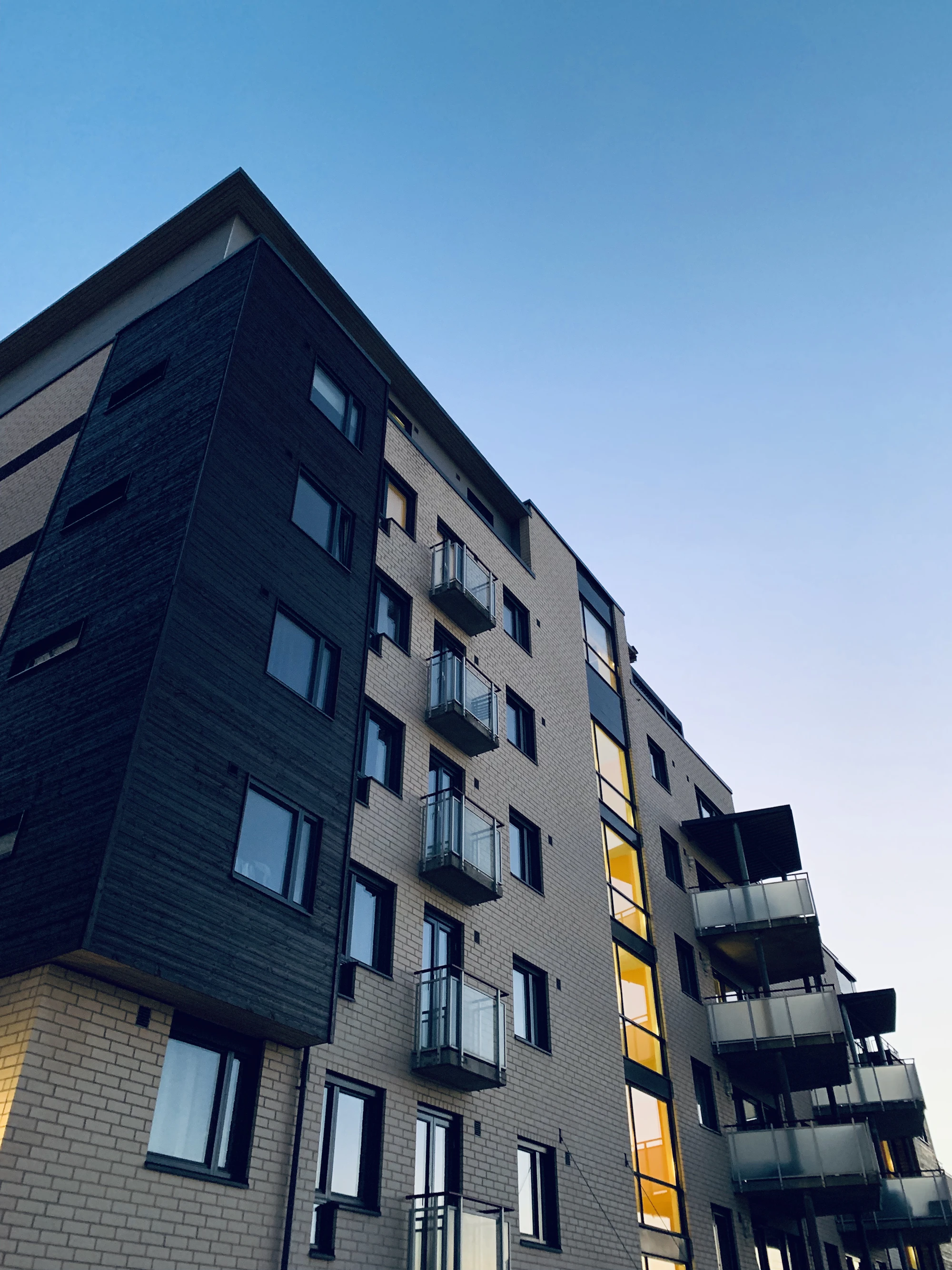
Sixth&Rio (in Ft.Lauderdale) — Fisher Island, Miami.
Fisher Island ranks as the wealthiest zip code in the United States by per-capita income, accessible only by ferry or private vessel, and the new <a href='/developments/six-fisher-island'>Six Fisher Island</a> residences represent its most significant new construction offering in a generation. This guide examines everything an international ultra-high-net-worth buyer needs to understand before committing capital to this singular asset — from ownership structures and FIRPTA obligations to lifestyle realities, resale dynamics, and how Six Fisher Island compares against competing trophy properties across Miami. Written for buyers making decisions measured in eight figures, not five.
Why Fisher Island Occupies a Category of One in Global Real Estate
There are perhaps a dozen places on earth where physical geography, extreme scarcity, and generational wealth concentration converge so completely that the address itself functions as a financial credential. Fisher Island, a 216-acre barrier island off the southern tip of Miami Beach, is unambiguously one of them. With no bridge to the mainland and access restricted exclusively to residents, their verified guests, and island employees via a private ferry terminal, Fisher Island enforces a level of separation from the broader city that no gate, no guard booth, and no elevated security protocol can replicate. The island is not merely exclusive — it is structurally inaccessible in a way that is immutable regardless of how Miami's broader growth evolves. That permanence of exclusivity is the foundational argument for any capital allocation here.
The economic profile of Fisher Island's resident base is unlike any other residential community in the United States. The island's zip code, 33109, has consistently ranked either first or near the top nationally for per-capita income, regularly exceeding $2 million per household annually in IRS Statistics of Income data. The resident list has historically included heads of state, technology founders, global banking families, entertainment figures, and dynastic wealth custodians from Latin America, Europe, and the Middle East. This is not merely a matter of prestige — it has direct and measurable implications for property values, the quality of on-island services, and the social capital that accrues to ownership. Buyers who have made their fortunes operating at the intersection of geopolitics and capital appreciate immediately why their peers cluster here.
The island was originally developed in the 1920s as the private winter estate of William K. Vanderbilt II, who transformed the then-uninhabited barrier island into a Mediterranean-style compound. That original Vanderbilt mansion — the Vanderbilt Mansion — still anchors the island's identity and today serves as the Fisher Island Club, the heart of the community's social infrastructure. The island was subsequently developed over the latter decades of the twentieth century into a private residential enclave, with condominiums, single-family villas, and club amenities built within the framework of tight architectural and use restrictions. New development opportunities are extraordinarily rare precisely because there is almost no land left to build on, which is the single most important supply-side constraint underpinning long-term value.
For international buyers evaluating Miami, the natural comparison set includes Bal Harbour, Palm Beach, Star Island, and a handful of branded ultra-luxury towers in Sunny Isles Beach and Brickell. Each of those alternatives offers genuine merit. None of them replicates Fisher Island's fundamental proposition: a private island with no bridge, no through-traffic, no hotel tourism, no retail disruption, and a resident community governed entirely by the Fisher Island Community Association rather than by the rhythms and commercial pressures of a surrounding city. The island is not part of Miami Beach's municipal government; it is an unincorporated community in Miami-Dade County, which provides an additional layer of insulation from the political and regulatory volatility that affects urban real estate elsewhere in the region.
Six Fisher Island: What the Development Actually Is and What Makes It Architecturally Significant
Six Fisher Island represents the most consequential new residential construction project in the island's modern history. Developed by a team that understands both the physical constraints and the cultural expectations of this address, the project is positioned not as a departure from Fisher Island's character but as its highest contemporary expression. The name itself — Six — is a deliberate restraint, signaling the intimate scale of the offering. On an island where scarcity is the primary value driver, a project that limits itself to a small number of exceptional residences is making a philosophical statement about what luxury actually means at this level: not maximized sellable square footage, but irreducible quality applied to a collection of homes that would not exist anywhere else.
The architectural approach at Six Fisher Island reflects the Mediterranean and Moorish references that characterize the island's historic built environment while incorporating the spatial generosity and technical sophistication that today's ultra-high-net-worth buyers require. Great rooms with ceiling heights that allow for meaningful art installations, primary suites conceived as autonomous retreats within the residence, and the kind of kitchen and service infrastructure that supports both private chef engagements and catered entertaining at scale — these are the building blocks. What distinguishes Six Fisher Island architecturally is the insistence on views and orientations that would be impossible in a tower format anywhere on the Miami mainland: water surrounding the building on multiple exposures, with sight lines to Government Cut, the Port of Miami, the Atlantic Ocean, and the Miami Beach skyline creating a panoramic orientation that no urban high-rise can claim.
Interior design at this tier of development is no longer merely about the quality of finishes — it is about the coherence of a total environment that supports a specific way of living. The residences at Six Fisher Island have been designed for buyers who divide their time across multiple properties and who arrive expecting a home that is immediately livable at the level of their primary residence. That means the mechanical systems — climate, air quality, acoustics, lighting control — are specified to perform invisibly and flawlessly. It means the service infrastructure of the building, from concierge to maintenance, is staffed and protocols to a standard that anticipates the needs of residents who travel with household staff and who expect their property to be monitored, maintained, and ready for arrival on any given day.
The building's positioning on the island places it within immediate proximity of Fisher Island Club amenities while maintaining the residential privacy that is the non-negotiable baseline for this buyer profile. Fisher Island Club access for residents has historically been one of the defining privileges of ownership on the island, providing access to a private beach club on the Atlantic side of the island, multiple dining venues, tennis facilities, a spa, and a marina capable of accommodating significant private vessels. For international buyers whose Miami experience is organized around a private watercraft — whether a sportfisher, a motoryacht in the 60- to 100-foot range, or a larger vessel berthed nearby at a Coconut Grove or Miami Beach marina — the combination of ferry-free private island life with immediate water access creates a lifestyle integration that is genuinely difficult to assemble elsewhere.
Ownership Structures for International Buyers: Entities, FIRPTA, and the Legal Framework
International buyers acquiring residential real estate in the United States face a legal and tax framework that is meaningfully different from what they encounter in most other jurisdictions, and Fisher Island adds a layer of community association governance on top of the standard Florida real estate legal structure. The first and most consequential decision for any non-US-citizen buyer is the question of how to hold title. The three primary structures are direct individual ownership, ownership through a domestic limited liability company or domestic corporation, and ownership through a foreign entity or trust. Each carries distinct implications for estate tax exposure, privacy, transactional friction, and the tax obligations triggered on eventual sale or rental income. Before signing a purchase contract, consultation with a US tax attorney experienced in international real estate transactions is not optional — it is the prerequisite to making an informed decision.
FIRPTA — the Foreign Investment in Real Property Tax Act — is the federal statute that requires buyers of US real estate from foreign sellers to withhold a portion of the purchase price at closing and remit it to the Internal Revenue Service as a prepayment against the seller's potential capital gains tax obligation. For transactions above $1 million, the standard withholding rate is 15 percent of the gross sale price, not 15 percent of the gain. On an eight-figure Fisher Island transaction, this means the buyer may be required to withhold more than $1 million at closing, which the seller can recover through the filing of a US tax return if their actual gain-related liability is lower. International buyers purchasing at Six Fisher Island need to understand this dynamic both as future sellers and, in some structures, as buyers acquiring from non-US persons. Working with a qualified intermediary and a FIRPTA-experienced closing attorney is standard practice at this level.
Florida is among the most favorable states in the union for high-net-worth asset protection planning. Florida's homestead law, codified in Article X of the Florida Constitution, provides near-absolute protection of a primary residence from forced creditor sale — a provision that has made Florida real estate a preferred asset class for buyers navigating litigation risk or operating in industries with elevated liability exposure. To qualify for homestead protection, the owner must be a Florida resident domiciliary and must actually use the property as their primary residence. International buyers who are establishing Florida domicile as part of a broader tax or residency strategy should be aware that homestead designation requires genuine primary residence intent and is not automatically conferred by ownership. The Fisher Island Community Association imposes its own use restrictions that interact with but do not supersede Florida's homestead protections.
The Fisher Island Community Association is the governing body for the island's residential community, and understanding its role is essential for any buyer. The FICA governs common area maintenance, security protocols, ferry access management, and the rules governing renovation, rental, and use of individual properties. For international buyers accustomed to freehold ownership in jurisdictions without homeowners associations, the FICA's authority can feel unfamiliar — it can approve or condition renovation plans, restrict short-term rental activity, and in some cases impose approval processes on ownership transfers. These restrictions are not obstacles; they are the mechanism by which the island maintains the character and privacy standards that justify its premium. Any buyer's legal review of a purchase at Six Fisher Island should include a thorough reading of the FICA governing documents, the declaration of condominium, and any recorded covenants before contracts are executed.
The Ferry Access Reality: What Island Life Actually Means Day to Day
No evaluation of Fisher Island real estate is complete without an honest engagement with the ferry. The island is accessible to residents, their registered guests, and authorized employees via a private ferry that operates continuously from a terminal adjacent to the Miami Beach marina district at the southern end of South Beach. For residents, the ferry is not a public transportation system — it is a private amenity controlled by the Fisher Island Community Association, and access is verified at the terminal. Guests must be pre-registered by the resident they are visiting. Service vehicles and contractors must be authorized in advance. This creates a frictionless experience for the resident and a total barrier to uninvited access from the outside. For buyers whose privacy and security requirements are non-negotiable, this structural separation from the city is the island's single most compelling physical characteristic.
The practical daily experience of the ferry depends significantly on how the buyer structures their life. Full-time residents who commute to Miami or Miami Beach for business have calibrated their schedules to the ferry's rhythms — most residents describe the crossing as a three-to-five-minute trip at normal operating conditions, and the ferry runs frequently enough that wait times rarely become material. The friction point, when it exists, tends to occur during high-demand windows such as peak season weekend evenings when multiple households are simultaneously arriving or departing. Buyers who intend to use the property primarily as a seasonal residence or second home — arriving for extended stays of weeks to months — will experience the ferry very differently from daily commuters, and for this profile, the crossing is typically a minor operational detail rather than a daily variable.
Private vessel access provides an important complement to the ferry for buyers who own or charter boats. Residents with marina access can arrive and depart Fisher Island by water independently of the ferry schedule, which effectively eliminates the principal friction point for anyone whose Miami lifestyle includes regular waterborne travel. The ability to depart for the Bahamas directly from the island, to arrive by tender from a larger yacht anchored off Miami Beach, or to use a center console for same-day trips to the Florida Keys is not a minor lifestyle perk — for buyers in the global yachting community, it integrates Fisher Island into a waterborne life that includes Caribbean destinations, the Exuma Cays, and Atlantic crossings in a way that no mainland address can replicate. The marina at Fisher Island Club accommodates vessels up to a meaningful size, and larger yachts are routinely berthed nearby at marinas in Coconut Grove, Dinner Key, or Miami Beach.
Helicopter access is a legitimate option for Fisher Island residents, and the island has historically accommodated private helicopter arrivals for residents with appropriate scheduling. For buyers who maintain helicopter operations as part of their broader transportation infrastructure — whether based at Opa-locka Executive Airport, Miami Executive Airport, or arriving from private aircraft at Miami International — the ability to bridge the air-to-island gap without depending on the ferry adds a layer of operational flexibility that is meaningful for schedules driven by global business travel. For the international buyer who may be arriving from a transatlantic flight, clearing customs at MIA, and reaching their residence within the same hour, the combination of ground transportation to a helipad and a short flight to the island is not a fantasy — it is a standard service configuration that several Fisher Island-based household staff operations have managed routinely.
The Miami Tax Advantage and Its Specific Application to Fisher Island Ownership
Florida's tax environment is the most discussed driver of high-net-worth relocation from high-tax states and, increasingly, from international jurisdictions where buyers are rationalizing their global footprint. Florida levies no state income tax, no state capital gains tax, no state estate tax, and no state inheritance tax. For a buyer selling a business, liquidating a significant equity position, or receiving a carried interest distribution, the absence of state income tax can represent a tax savings of 9 to 13 percent of income depending on their previous state of residence — on eight-figure income events, this is a transformative number. Establishing Florida domicile is the mechanism by which these savings are realized, and Fisher Island, as a Florida address with all of the associated documentation requirements for homestead designation, is a fully viable domicile anchor for buyers willing to meet the residency requirements.
For international buyers who are not US citizens or permanent residents, the Florida tax advantage interacts with their global tax situation in ways that require jurisdiction-specific analysis. A Brazilian national, a Mexican family office principal, a UK-domiciled buyer, and a UAE-based buyer each face a different matrix of home-country tax obligations, treaty positions, and reporting requirements that will affect how they structure ownership and use of a Fisher Island residence. What is universally true is that Florida's domestic tax structure presents no incremental burden relative to other US states — it is the most favorable large-state environment available. The question for each international buyer is how to optimize the interaction between US domestic tax rules and their home-country obligations, which is work for a cross-border tax specialist rather than a general real estate attorney.
The Foreign Account Tax Compliance Act (FATCA) and the Common Reporting Standard (CRS) have fundamentally changed the information landscape for high-net-worth individuals with assets in multiple jurisdictions. International buyers acquiring US real estate should assume that their ownership will be visible to their home-country tax authorities through one or both of these frameworks, and should structure their ownership accordingly — not to obscure, but to ensure that the legal structure chosen reflects their actual tax position with appropriate documentation. For buyers who are US persons — including green card holders and those who have met the substantial presence test — the worldwide income and worldwide asset reporting requirements of the US tax code apply regardless of how the Fisher Island property is titled. The acquisition of a property at this price point is a reportable event in many jurisdictions and should be planned with full legal and tax coordination.
The Save Our Homes assessment cap, Florida's constitutional property tax protection for homestead properties, limits increases in assessed value for homestead-designated properties to the lesser of 3 percent or the Consumer Price Index annually. In a market where Fisher Island values have appreciated substantially over the past decade, this cap can create a meaningful divergence between market value and assessed value for long-term owners, effectively reducing the ongoing property tax burden relative to what it would be at full market assessment. New buyers will initially be assessed at or near their purchase price, but the cap begins to apply immediately upon homestead designation. For buyers evaluating the total annual cost of ownership, understanding the difference between market value and assessed value — and modeling the long-term trajectory of both under different price appreciation scenarios — is an important component of underwriting the investment.
Resale Value Dynamics and the Supply Constraint That Makes Fisher Island Different
The fundamental investment thesis for Fisher Island real estate is supply-driven in a way that distinguishes it from virtually every other residential real estate market in the United States. The island contains 216 acres in total, of which a substantial portion is devoted to club amenities, infrastructure, open space, and existing developed properties. There is effectively no remaining land for new development of scale, and the completion of Six Fisher Island will exhaust what little developable opportunity remained. This is not a market where a developer can acquire adjacent parcels, rezone underutilized land, or build infill on surface parking lots. When the current pipeline is complete, Fisher Island's residential supply is essentially fixed in perpetuity. The implications for long-term value are straightforward: future price appreciation will be driven entirely by demand dynamics against a fixed supply, without the dilution that new construction creates in virtually every other luxury market.
Historical transaction data on Fisher Island illustrates the supply constraint thesis in practice. During the broader US residential real estate correction of 2008 to 2012, Fisher Island experienced a price decline that was less severe than comparable luxury coastal markets in Miami-Dade County, and the recovery to pre-correction peak values was faster. The island's resident base — concentrated in generational wealth rather than leveraged buyers dependent on debt — created a more resilient demand floor than markets populated by buyers with significant mortgage exposure. The global financial crisis produced distressed sales on Fisher Island, but they were fewer in number and shallower in discount than might have been expected given the severity of the broader correction. This relative resilience is a data point that family offices and institutional-adjacent buyers weigh carefully when stress-testing a proposed acquisition.
The buyer pool for Fisher Island resales is, by structural necessity, one of the smallest and most concentrated in the world. The ferry access requirement, the community association governance, the price point, and the very specific lifestyle that the island demands mean that the universe of qualified and motivated buyers for any given property is small in absolute terms. This is simultaneously an argument for patience on the sell side and for rigorous due diligence on the buy side. Buyers who acquire Fisher Island real estate without a genuine long-term commitment to the lifestyle — who treat it as a short-term trade or as a parking mechanism for capital without actually engaging with the island community — often find that the illiquid nature of the market works against them on exit. The buyers who have achieved the strongest realized returns on Fisher Island have, almost without exception, been long-term owners who allowed the supply constraint to compound over time.
For buyers evaluating Six Fisher Island against competing ultra-luxury new construction in Miami, the relevant comparisons include the handful of branded residences in Sunny Isles Beach and Brickell that offer comparable price points and finish standards. Those buildings offer genuine advantages in terms of density of amenity, proximity to urban infrastructure, and in some cases stronger short-term rental income potential. What they cannot offer is Fisher Island's structural supply ceiling, its ferry-enforced privacy, or its resident community profile. In markets where brand association is a proxy for scarcity, Fisher Island itself — rather than any branded partnership applied to the building — functions as the most durable brand of all. The address carries a meaning in global wealth circles that cannot be manufactured through a licensing agreement, and that meaning is both the reason buyers pay the premium and the reason the premium has historically been sustained.
The International Buyer's Practical Due Diligence Checklist for Six Fisher Island
Due diligence for an ultra-luxury purchase at this price point should be structured more like a private equity acquisition than a standard residential real estate transaction. The first layer is title due diligence: a comprehensive title search confirming the absence of liens, judgments, code enforcement violations, and pending assessments; a review of the condominium declaration, bylaws, and any recorded amendments; and a survey of the unit confirming that the actual physical configuration matches the recorded plans and disclosures. In Florida, condominium purchases are governed by Chapter 718 of the Florida Statutes, which provides buyers with a mandatory rescission period after receipt of the developer's disclosure documents — typically three business days for new construction and resale contracts. International buyers should ensure their attorney is reviewing the full disclosure package within this window and providing an opinion before the rescission period expires.
The second layer is financial due diligence on the condominium association itself. Florida law requires condominium associations to maintain reserves for major capital expenditures including roof replacement, paving, painting, and structural components, and associations with three or more stories and certain structural characteristics face specific reserve adequacy requirements that have been reinforced by post-Surfside legislation. Buyers should request and review the association's most recent audited financial statements, the current reserve study, the budget adopted for the current fiscal year, and the minutes of recent board meetings. Underfunded reserves in a condominium association are a latent liability that will eventually manifest as a special assessment, and on a building of Fisher Island's caliber, special assessments for deferred maintenance can reach six figures per unit. This is not theoretical — it is a historical reality in several Miami-area condominium buildings of similar vintage.
Physical due diligence for new construction should include a review of the developer's track record, the general contractor's bonding and licensing status, and the project's construction financing structure. In Florida, developer deposit funds for pre-construction purchases are required to be held in escrow by statute, but the specific terms — including the circumstances under which deposits can be released to the developer prior to closing — are governed by the purchase contract and can vary. Buyers contributing substantial deposits to a pre-construction project should understand clearly under what conditions those deposits are protected, under what conditions they are at risk, and what recourse exists if the developer fails to complete the project on schedule or in accordance with the specifications. These are not scenarios to plan for optimistically — they are scenarios to understand contractually before any deposit is delivered.
Environmental due diligence for barrier island properties in South Florida has become increasingly important as climate risk enters the standard underwriting framework for institutional lenders and insurance carriers. Fisher Island's elevation profile, its exposure to Atlantic storm surge, and its dependence on a ferry and private infrastructure for access create a specific risk matrix that is different from both oceanfront towers in Sunny Isles Beach and inland properties in Brickell. Flood zone designation affects both insurance costs and the terms available under the National Flood Insurance Program, and private flood insurance markets have undergone significant repricing in Florida since 2022. A thorough environmental due diligence review should include the current FEMA flood zone designation, available elevation certificate data, historical storm surge inundation maps, and current insurance market quotes — not estimates, but actual quotes from licensed Florida carriers — before the inspection contingency period expires.
The Lifestyle Architecture: How Ultra-High-Net-Worth Residents Actually Use Fisher Island
Understanding how the residents of Fisher Island actually live — rather than how the island is marketed — is essential context for any buyer evaluating whether the property will serve their needs. The island functions primarily as a winter season community, with peak occupancy concentrated in the months of November through April when Miami's climate is at its most compelling and when residents escape colder-climate primary residences in the northeastern United States, Canada, Europe, and increasingly the UK. Summer occupancy exists but is lower, reflecting both the heat and humidity of South Florida summers and the travel patterns of a resident base that typically has access to European, New England, or mountain alternatives during July and August. For buyers whose lifestyle is structured around this seasonal rhythm, Fisher Island is near-perfectly calibrated.
The Fisher Island Club is the social and recreational nucleus of the island, and understanding what it offers — and what it costs — is a material part of underwriting the total cost of ownership. Club membership for Fisher Island residents has historically been a component of the community's social infrastructure, with access to the private beach, multiple food and beverage outlets, tennis, spa facilities, and marina services. The club's membership structure and fee levels have evolved over time, and buyers should request current membership documents and fee schedules as part of their due diligence, rather than relying on historical information that may no longer reflect current terms. The quality of the beach club experience — particularly the Atlantic-facing beach on the ocean side of the island — is consistently cited by current residents as one of the primary reasons they chose Fisher Island over mainland alternatives.
For buyers with children, the question of school access from Fisher Island requires direct engagement with the logistics of island living. The island itself has no school; children attend schools in Miami Beach or elsewhere in Miami-Dade County, which requires ferry crossings and ground transportation as part of the daily school run. Families with school-age children who are considering Fisher Island as a primary residence rather than a seasonal property should honestly assess whether the ferry logistics are compatible with their children's schedules, particularly for early-morning school start times and afternoon activities. Many Fisher Island families address this by maintaining a mainland pied-à-terre — sometimes in a Miami Beach or South of Fifth building — to support the school week, using the island as the primary home base while maintaining the flexibility of mainland proximity for school logistics.
The social dimension of Fisher Island living is distinct from what buyers encounter at branded residential towers in Brickell or Sunny Isles Beach, where the amenity deck is designed to create a curated hotel-like social scene. Fisher Island's social life is more self-organized, more private, and more dependent on the resident's initiative in engaging with the club and the community. The island's dinner invitations, tennis matches, and club events exist, but they are the product of a small, highly self-selecting residential community rather than a programmed amenity experience. For buyers who prize quiet, privacy, and the ability to engage socially entirely on their own terms — without the exposure inherent in a building lobby shared with 200 other units — Fisher Island's social model is not a limitation but a specific value proposition. For buyers who moved to Miami partly for its energy and urban accessibility, the island's quietude can feel isolating during extended stays.
Financing, Valuation, and Wealth Management Considerations for Eight-Figure Acquisitions
While the majority of ultra-high-net-worth buyers acquiring property at the price point represented by Six Fisher Island transact without conventional mortgage financing, the question of whether to use leverage — and in what form — is increasingly a strategic rather than a necessity-driven decision for sophisticated wealth managers. Interest rates across the 2022 to 2024 tightening cycle elevated the all-in cost of conventional jumbo mortgage financing to levels that made cash acquisition the default for buyers with liquid assets. As the rate environment evolves, private banking arms of major financial institutions — including UBS, Goldman Sachs Private Wealth, JPMorgan Private Bank, and Citibank Private Bank — offer securities-backed lending structures that allow buyers to finance a portion of the acquisition without the friction of a traditional mortgage qualification process, using a diversified investment portfolio as collateral rather than the property itself.
Appraisal is a genuine challenge in any Fisher Island transaction because the comparison set is so small. Standard appraisal methodology relies on recent sales of comparable properties adjusted for size, condition, view, and amenity, and on an island with a limited number of annual transactions, the absence of close comparables can create appraisal gaps — instances where the contracted purchase price exceeds what an appraiser can support through available comparable sales data. For all-cash buyers, this gap is a non-issue contractually, since there is no lender whose loan amount is tied to the appraised value. For buyers using any form of financing secured by the property, an appraisal gap can require the buyer to increase their down payment or restructure the financing to bridge the difference. This is a Fisher Island-specific due diligence item that should be addressed with the lender before contract execution rather than after.
The integration of a Fisher Island acquisition into a broader wealth management strategy requires coordination across the buyer's real estate portfolio, liquid investment portfolio, estate plan, and tax strategy. For family offices managing assets across multiple jurisdictions, the addition of a significant US real estate holding creates reporting obligations — FBAR, Form 8938, potential PFIC implications depending on how other assets are held — that require coordination between US counsel and the family's home-jurisdiction advisors. The acquisition also creates an opportunity to revisit estate planning documents, particularly for non-US-citizen buyers whose US estates are subject to a much lower federal estate tax exemption ($60,000 for non-resident aliens versus over $13 million for US citizens) before the estate tax applies. Proper structuring of ownership through a domestic trust or other vehicle can substantially mitigate this exposure.
Currency risk is a practical consideration for international buyers transacting in US dollars. For buyers whose primary wealth is denominated in euros, British pounds, Brazilian reais, Mexican pesos, or emerging market currencies, the timing of a large USD purchase is influenced by the exchange rate environment at the time of transaction. A buyer whose assets are in euros purchasing an $8 million property when the euro is at parity with the dollar is effectively paying a different price in home-currency terms than the same buyer transacting when the euro is at 1.15. Sophisticated buyers work with their private banks or FX advisors to develop a hedging strategy for the purchase — using forward contracts, options, or phased conversion — particularly when the transaction has a pre-construction timeline measured in months or years over which the exchange rate will fluctuate. This is not a niche concern; for large transactions, currency timing has represented more than 10 percent of the effective purchase price for buyers who did not manage it proactively.
How Six Fisher Island Compares to the Competitive Set: An Honest Assessment
The competitive landscape for an ultra-high-net-worth buyer considering Six Fisher Island includes a small number of genuinely comparable offerings in South Florida, and an honest assessment requires acknowledging both where Fisher Island leads and where alternatives offer specific advantages. At the branded residential tower tier — Porsche Design Tower in Sunny Isles, Aston Martin Residences in Brickell, the forthcoming Pagani Residences, the St. Regis in Sunny Isles — buyers are purchasing exceptional engineering and brand association in buildings that offer more conventional urban amenity density: rooftop pools, fitness facilities programmed by name operators, concierge services, and immediate access to restaurants and retail by elevator or walking distance. These are real benefits for buyers whose lifestyle integrates heavily with Miami's urban energy and who value the hotel-quality service model that branded residences provide.
Palm Beach is the natural alternative for buyers whose profile emphasizes established old-money culture, privacy, and a slower pace of life. Worth Avenue, the Breakers, and Palm Beach's single-family estate market offer a social context that some buyers find more aligned with European aristocratic sensibility than Miami's energetic internationalism. The trade-off is distance from Miami's business community and international airport infrastructure, and a real estate market that is equally illiquid but has a different buyer profile — one more concentrated in domestic old wealth and less diverse in its international composition. For buyers who value cultural diversity and the presence of sophisticated Latin American, European, and Middle Eastern peers, Fisher Island's resident base more closely mirrors the global composition of the buyer's own social and business world.
Comparing Fisher Island to international ultra-private island residential offerings — the handful of private island residences in the Maldives, the Abaco Club in the Bahamas, the Mustique model in the Caribbean — requires a different framework. Those properties offer even more extreme isolation and, in some cases, a climate advantage over South Florida's hurricane exposure. What none of them offer is the combination of US legal infrastructure, Miami's airport connectivity (Miami International Airport is a global hub with non-stop service to more than 100 international destinations), the US banking and financial system, and Florida's domestic tax environment. For buyers who need their island retreat to also function as a credible US domicile with access to world-class medical facilities, international business connectivity, and the legal protections of the US property rights system, Fisher Island is not competing with Mustique — it is in a different product category entirely.
The most relevant comparison for a buyer currently considering Six Fisher Island is ultimately the buyer's own lifestyle and financial objectives, weighed against what the island specifically delivers. If the priority is the most private, physically secure, socially exclusive residential address accessible to Miami's international business community and airport infrastructure, with a supply ceiling so absolute that no future development can dilute its scarcity premium, and a resident base concentrated in the highest tier of global wealth — then the honest conclusion is that Fisher Island has no equivalent in the United States and very few globally. If the priority is urban walkability, programmed building amenities, immediate F&B access, or strong short-term rental yield, then other Miami properties are better solutions. The buyer who understands Fisher Island for what it is — not a Miami luxury condo with an island setting, but a structurally unique private island community that happens to be within ten minutes of one of the world's major international airports — has the framework to make a genuinely informed decision. For a current market analysis tailored to your specific situation — budget, timeline, and investment objectives — Denis Smykalov at Wolsen Developments works directly with buyers and investors in this segment and can provide the kind of personalized data that no market report can substitute for.
Frequently Asked Questions
Can a non-US citizen purchase property at Six Fisher Island, and are there any ownership restrictions?
Yes, non-US citizens may purchase real estate at Six Fisher Island without restriction under US federal law, which imposes no nationality-based limits on foreign ownership of residential property. Florida state law similarly imposes no ownership restrictions based on citizenship or residency status, with the narrow exception of certain agricultural land restrictions that do not apply to residential condominium purchases. The Fisher Island Community Association does impose a buyer approval or review process, and buyers should review the condominium declaration to understand any transfer restrictions or right-of-first-refusal provisions that may affect the transaction timeline. International buyers should structure their ownership — individual, LLC, trust, or foreign entity — with the guidance of a cross-border tax attorney before executing the purchase contract, as the structuring decision has material implications for estate tax exposure, FIRPTA obligations, and ongoing reporting requirements. Working with a brokerage experienced in cross-border ultra-luxury transactions, such as Wolsen Developments, will ensure that the appropriate legal team is coordinated from the outset.
What is the FIRPTA withholding obligation for a buyer purchasing from a foreign seller at Six Fisher Island?
FIRPTA — the Foreign Investment in Real Property Tax Act — requires the buyer in a US real estate transaction to withhold a percentage of the gross purchase price when the seller is a foreign person and remit it to the IRS as a prepayment against the seller's US tax liability. For transactions with a purchase price exceeding $1 million, the withholding rate is 15 percent of the gross sale price — not 15 percent of the gain — which on an eight- or nine-figure Fisher Island transaction can represent a very large sum. The seller can subsequently file a US tax return to recover any excess withholding above their actual capital gains tax liability, but this creates a cash flow lag that must be factored into transaction planning. Buyers can reduce or eliminate this withholding obligation if the seller obtains a withholding certificate from the IRS prior to closing, which requires advance application and documentation. Any buyer of Fisher Island property should confirm the seller's status as a US or foreign person early in the due diligence process and engage FIRPTA-experienced counsel before closing.
How does the Fisher Island Community Association approval process work, and can it delay or block a purchase?
The Fisher Island Community Association maintains certain governance rights over transfers of ownership within the community, and the specific terms — including any right of first refusal, background review process, or approval requirement — are detailed in the condominium declaration and governing documents for the specific building. Buyers should obtain and review these documents during the due diligence period, as the approval process can affect the expected closing timeline. In practice, FICA processes are designed to ensure that the island's community standards are maintained rather than to block legitimate transactions between qualified buyers, and delays are far more common than outright rejections. International buyers with complex ownership structures or those purchasing through less familiar entities may face additional documentation requests from the association as part of its review. Coordinating with experienced local counsel who has handled FICA approvals previously is the most reliable way to manage this process efficiently and avoid unnecessary delays near closing.
What are the ongoing costs of ownership at Six Fisher Island beyond the purchase price?
The total annual cost of ownership at Fisher Island includes several distinct categories that buyers should model carefully. Condominium association fees cover building maintenance, common area upkeep, security, and building insurance — on a building of Six Fisher Island's caliber, monthly HOA fees will reflect the full cost of maintaining a private island residence to the highest standard. Property taxes are assessed by Miami-Dade County at the millage rate applicable to the property's assessed value, which for a newly purchased property will be at or near the purchase price. Flood insurance is a mandatory cost for properties in FEMA-designated Special Flood Hazard Areas, and the Florida private insurance market has experienced significant premium increases since 2022; buyers should obtain actual insurance quotes rather than estimates. Fisher Island Club membership fees — covering access to beach, dining, tennis, spa, and marina facilities — represent an additional material cost that varies by membership tier. Finally, buyers who maintain household staff — a property manager, housekeeper, or private chef — should budget accordingly for the labor costs of maintaining a private island residence at this standard.
How has Fisher Island real estate performed historically during US market downturns, and what is the outlook for Six Fisher Island?
Fisher Island's residential market has historically demonstrated greater resilience during US real estate corrections than the broader South Florida luxury market, primarily because its buyer base is concentrated in liquid, largely debt-free wealth rather than leveraged buyers whose positions become distressed when credit conditions tighten. During the 2008 to 2012 correction, Fisher Island experienced price declines but recovered to prior peak values faster than comparable coastal markets in Miami-Dade County. The supply constraint is the dominant long-term value driver: with development opportunities now essentially exhausted, future price appreciation is determined purely by demand dynamics against a fixed stock of properties, without the dilution that new construction creates in markets where additional supply can be brought to market. The completion of Six Fisher Island represents one of the final additions to that fixed supply, which means buyers acquiring now are positioned to benefit from the absolute supply ceiling that post-development Fisher Island will represent. Forward-looking risks include climate-driven insurance cost increases, potential changes to the federal estate tax exemption, and any shifts in Florida's tax advantages — none of which are unique to Fisher Island but all of which warrant monitoring.
Can a Fisher Island residence be rented out short-term, and are there platform restrictions?
Short-term rental regulations at Fisher Island are governed by the condominium declaration and Fisher Island Community Association rules rather than exclusively by Miami-Dade County's short-term rental ordinance, and the island's governance documents have historically imposed meaningful restrictions on short-term rental activity that are stricter than those applicable to mainland Miami properties. The island's community is fundamentally structured around privacy and a resident-only access model, and permitting Airbnb- or VRBO-style short-term rentals would be inconsistent with that foundational character. Buyers who are acquiring primarily for investment yield through rental income should understand clearly that Fisher Island is not the optimal vehicle for that strategy; the strongest return thesis here is long-term capital appreciation driven by supply scarcity, not current cash flow yield. Longer-term rentals to qualified tenants — subject to FICA approval of the tenant — have historically been permissible in some buildings on the island, and buyers should review the specific governing documents for Six Fisher Island to understand the rental rules that apply to that specific property. Wolsen Developments can provide referrals to legal counsel experienced in Fisher Island rental regulations.
What is the construction timeline for Six Fisher Island, and what buyer protections exist if the project is delayed?
Pre-construction purchases in Florida are governed by Chapter 718 of the Florida Statutes, which requires developers to disclose material information about the project — including the projected construction timeline, the escrow arrangements for buyer deposits, and the conditions under which the developer may delay or modify the project — in the public offering statement provided to buyers. Buyer deposits for pre-construction purchases are required to be held in a Florida escrow account, providing a statutory layer of protection against developer insolvency during the construction period. Buyers should review the purchase contract carefully for provisions governing construction delays: whether there is a longstop date after which the buyer can cancel and recover the deposit, whether the developer's right to delay is time-limited, and what remedies exist if the finished product materially deviates from the specifications disclosed at contract. Working with a real estate attorney to negotiate contract terms that maximize deposit protection and provide clear cancellation rights in the event of material delay or specification change is standard practice for purchases at this price point.
How does establishing Florida domicile at Fisher Island work practically, and what documentation is required?
Establishing Florida domicile requires the buyer to take a series of affirmative steps demonstrating an intent to make Florida their permanent legal residence. The core requirements include obtaining a Florida driver's license or state ID, registering a vehicle in Florida, filing a Declaration of Domicile in the Miami-Dade County clerk's office, registering to vote in Florida if a US citizen, updating estate planning documents to reference Florida as the state of domicile, and filing for homestead exemption on the Fisher Island property with the Miami-Dade County Property Appraiser. Critically, the buyer's prior state of residence will likely challenge the domicile change if significant income or estate tax is at stake, and documentation of the change — including a log of days spent in Florida versus the prior state, utility bills, medical records, and social engagement in Florida — should be maintained from the date of the move. International buyers establishing Florida as their principal US residence should also consult with immigration counsel if their visa or residency status is relevant to the residency determination. The combination of Fisher Island's physical island setting — which creates a naturally verifiable record of arrivals and departures through ferry logs — and its status as an extremely high-value, high-credibility address makes it a particularly strong domicile anchor.
What is the profile of the typical buyer at Six Fisher Island, and does the community have a social admission process?
The Fisher Island community's resident base has historically been concentrated in ultra-high-net-worth individuals and families with global business footprints, and Six Fisher Island continues that tradition at the pinnacle of the market. The FICA's governance process for ownership transfers includes a review component that reflects the community's interest in maintaining the character and privacy standards that define the island's value proposition — it is less a social admission process in the formal sense of a private club blackball and more a documentation and verification process ensuring that buyers are who they represent themselves to be and are acquiring the property for legitimate residential or investment purposes. International buyers should expect the process to require identity documentation, ownership structure disclosure, and potentially a review period that extends the closing timeline by several weeks. The social community that exists on the island is self-selecting and largely informal; there is no formal interview or membership committee vote of the type associated with, say, a New York cooperative board. Buyers who engage with the island with genuine intent to participate in the community as residents will find the FICA process straightforward.
How should international buyers think about climate and hurricane risk at Fisher Island, and is the island insurable?
Fisher Island's location off the southern tip of Miami Beach places it in an area with genuine hurricane exposure — Miami-Dade County sits within the Atlantic hurricane basin and has experienced major storm impacts historically, most recently Hurricane Irma in 2017. Modern construction standards in Florida, particularly post-Andrew building codes implemented after the devastating 1992 storm, require new construction to be built to wind resistance standards that substantially exceed those of older buildings, and a new development like Six Fisher Island will be built to current code requirements that provide a meaningful structural advantage over the existing residential stock. The Florida private insurance market has undergone significant disruption since 2022, with several major carriers withdrawing from the state and Citizens Property Insurance — the state-backed insurer of last resort — growing substantially in market share. International buyers should obtain specific flood and windstorm insurance quotes prior to finalizing their purchase rather than relying on estimates, and should model insurance costs as a recurring annual expense in their ownership underwriting. Fisher Island's physical characteristics — its elevation, its construction quality, and the FICA's infrastructure management — provide some degree of mitigation against flood and wind damage, but the exposure cannot be eliminated and should be understood clearly before acquisition.
Ready to Take the Next Step?