Rivo Alto Island · Miami short-term rental investment · Venetian Islands real estate · crypto buyer Miami · luxury STR yield · Miami new construction
Rivo Alto Island Short-Term Rental Investor Guide: Why Crypto and Tech Buyers Are Choosing Miami Beach's Hidden Enclave Over Downtown Condos
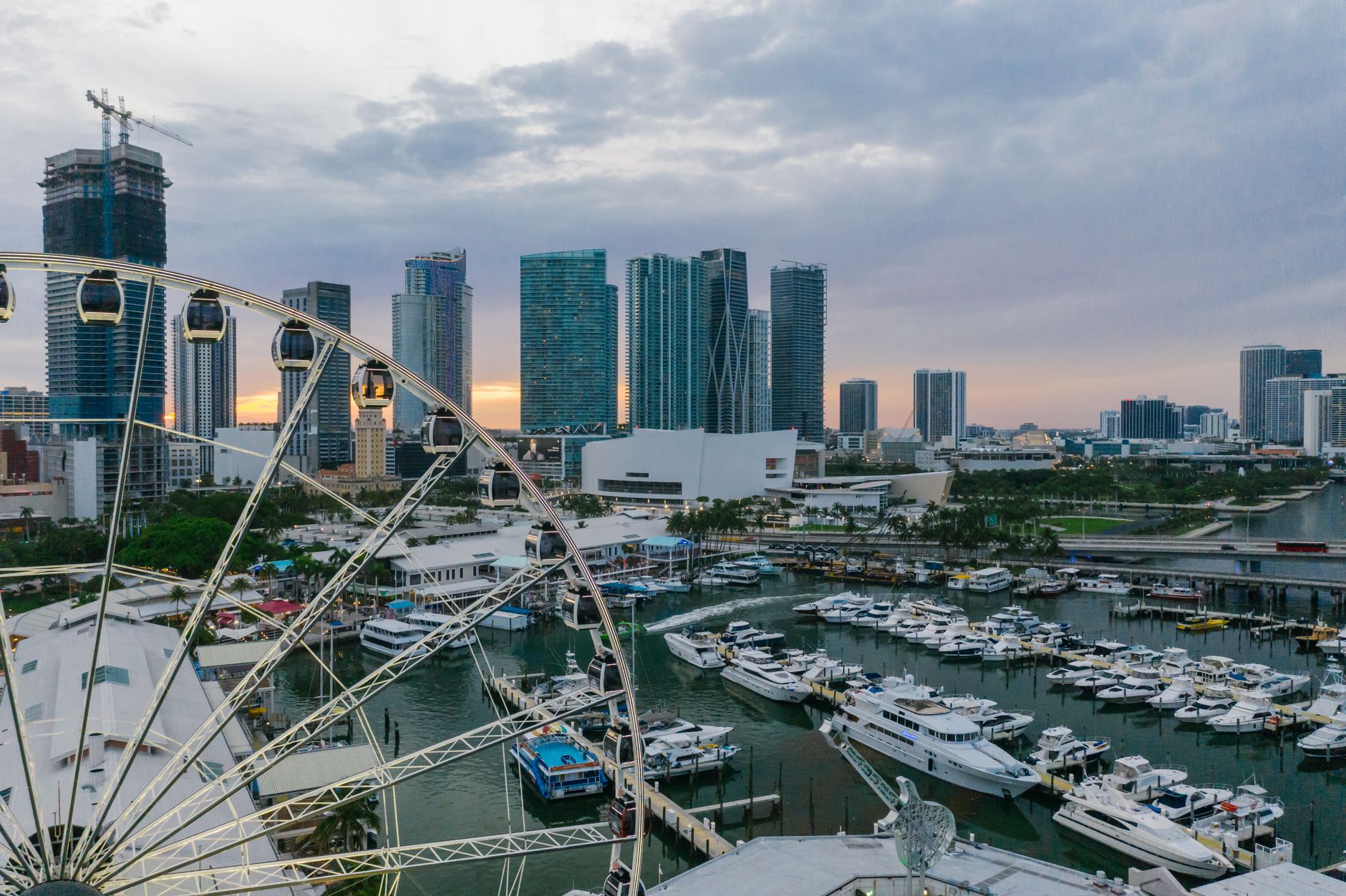
Una Residences — Rivo Alto Island, Miami.
A detailed buyer guide for yield-focused investors evaluating Rivo Alto Island as a short-term rental platform, including why high-net-worth crypto and tech wealth buyers are pivoting away from Miami's condo towers toward this exclusive waterfront enclave.
Why Rivo Alto Island Is Capturing Investor Attention in 2024–2025
Rivo Alto Island sits within the Venetian Islands chain, a necklace of man-made barrier islands strung between Miami Beach and the mainland across Biscayne Bay. Despite sharing a zip code and causeway with some of Miami's most photographed real estate, Rivo Alto has historically flown under the radar of institutional investors — a fact that is changing quickly as a new class of buyer, flush with liquidity from crypto cycles and technology exits, begins looking past the obvious condo towers for assets with genuine scarcity value. The island contains only a modest number of single-family and estate-style properties, and that supply ceiling is structural, not cyclical.
For the short-term rental investor, scarcity is the beginning of the thesis, not the end. What makes Rivo Alto particularly compelling is the convergence of constrained inventory with an addressable guest market that is growing faster than anywhere else in South Florida. Ultra-high-net-worth travelers — many of them in the same tech and crypto demographic now buying here — are increasingly booking private island homes rather than hotel suites or branded residences. The per-night rate achievable for a fully appointed Rivo Alto waterfront home with deep-water dock access can meaningfully exceed what comparably priced Miami condo inventory generates, even before accounting for the privacy premium that wealthy guests consistently reward.
Miami's broader macro backdrop reinforces the case. The metro has absorbed a sustained wave of high-income relocation from New York, San Francisco, and international gateway cities, and that population growth has structurally elevated both short-term rental demand and nightly rate floors. Against that backdrop, Rivo Alto is not a speculative bet on a neighborhood finding its footing — it is a scarcity play on a neighborhood that has already found it, and whose supply is physically incapable of expanding to meet rising demand.
The Crypto and Tech Buyer Profile: Why This Cohort Prefers Rivo Alto Over Miami Condo Towers
The buyer who has exited a crypto position, sold a SaaS company, or vested through a technology IPO approaches real estate with a fundamentally different calculus than a traditional real estate investor. Liquidity is not a primary concern — capital preservation, lifestyle optionality, and asset differentiation are. Miami's branded condo towers, from Brickell to Edgewater, have served this cohort well as a first Miami purchase, offering turnkey delivery, hotel-style amenities, and the psychological safety of a recognizable address. But as this cohort matures in its Miami real estate sophistication, many are asking what comes after the condo — and Rivo Alto is increasingly the answer.
The appeal is multi-layered. First, Rivo Alto properties are structurally non-fungible. No two waterfront lots are identical, no developer can replicate the island's finite footprint, and no amenity package can manufacture the experience of private outdoor space at the water's edge — something Miami condos, regardless of price point, cannot deliver. For a buyer accustomed to thinking in terms of token scarcity and network effects, this logic translates naturally. Second, the crypto and tech demographic skews strongly toward experiences over possessions, which makes the short-term rental use case feel personally coherent: the owner occupies the property during preferred windows and monetizes it the remainder of the year, effectively letting the asset partially self-fund.
There is also a community dimension worth noting. Rivo Alto and the broader Venetian Islands have quietly become a gathering point for Miami's incoming technology and venture capital community. Proximity to Miami Beach's cultural life, walkability to the mainland via the Venetian Causeway, and the low density of the neighborhood itself create an environment that appeals to buyers seeking the energy of a global city with the privacy of a gated residential enclave — without the actual gate, which many in this cohort find aesthetically unappealing.
Short-Term Rental Yield Mechanics: What Investors Need to Understand Before Buying
Short-term rental yield on Rivo Alto Island is a function of several variables that differ meaningfully from condo-based STR strategies in Miami. The most important is the guest profile. Single-family island homes attract multi-generational family groups, corporate retreat bookings, and high-net-worth leisure travelers who prioritize privacy, outdoor space, and boat access. These guests book longer minimum stays, cancel less frequently, and pay premium nightly rates that reflect the scarcity of the product rather than competition with adjacent comparable inventory — because adjacent comparable inventory on Rivo Alto is extremely limited.
Investors evaluating gross yield should model conservatively on occupancy — typically lower than a high-traffic condo building in Brickell or South Beach — while modeling aggressively on average daily rate, which is where island properties consistently outperform. Net yield calculations must account for professional property management, which is non-negotiable at this price point and guest expectation level, as well as the cost of maintaining waterfront assets at a condition consistent with luxury nightly rates. Pool maintenance, dock upkeep, landscaping, and the carrying cost of furnishing a large home to hotel specification are meaningful line items that condo investors often underestimate when underwriting their first single-family STR acquisition.
Regulatory context matters significantly in Miami Beach and the surrounding Venetian Islands. Short-term rental permitting rules in Miami-Dade County and Miami Beach have evolved considerably in recent years and continue to be subject to municipal review. Prospective buyers must conduct careful due diligence on the specific parcel's current permitting status, applicable zoning classifications, and any homeowners association or deed restrictions that may affect rental frequency or minimum stay requirements. Working with a brokerage team that has direct experience navigating Venetian Islands STR compliance is a meaningful risk mitigation step, not an optional one.
Una Residences and the New-Construction Context: What the Brickell Pipeline Tells Us About Rivo Alto's Value Proposition
Understanding why sophisticated investors are gravitating toward Rivo Alto requires understanding what they are choosing it over — and the new-construction condo pipeline in Miami provides the clearest frame of reference. Una Residences, the Rafael Viñoly-designed tower completed along the Brickell waterfront, represents the apex of what Miami's branded residential condo market can deliver: architectural distinction, curated amenity programming, direct bay frontage, and a positioning that targets the same ultra-high-net-worth buyer cohort considering Rivo Alto. It is an exceptional product, and for buyers prioritizing a turnkey, service-intensive residence with strong resale liquidity, it represents a compelling case for the condo format.
The comparison with Rivo Alto, however, illuminates a meaningful divergence in investment thesis. A unit at Una Residences competes for STR guests within a building where other owners are simultaneously listing their units — effectively creating internal supply competition within the same address. A Rivo Alto island home has no such dynamic. The guest searching for a private waterfront home with outdoor space, a pool, a dock, and no shared elevators or lobbies is not cross-shopping with a Brickell tower unit. These are distinct product categories serving distinct guest needs, and understanding that distinction is foundational to building a coherent STR yield thesis.
The new-construction conversation in Miami also clarifies timing. As more branded condo projects deliver inventory across Brickell, Edgewater, and the Design District over the next several years, the condo STR market will face incremental supply pressure. Rivo Alto's supply cannot expand. For an investor with a five-to-ten-year hold horizon, that supply asymmetry compounds over time in favor of the island asset, particularly as Miami's overall population and tourism base continues to grow.
Due Diligence Priorities for Rivo Alto Investors: A Practical Checklist
Acquisitions on Rivo Alto require a due diligence framework that extends well beyond standard Miami condo purchase checklists. Waterfront properties carry specific inspection considerations including seawall condition and remaining useful life, dock permitting status and structural integrity, flood zone designation under current and forthcoming FEMA mapping, and the cost of flood and wind insurance at Miami Beach elevations. These are not disqualifying factors for a well-underwritten investment, but they are carrying costs that must be modeled accurately to produce a credible yield projection. Insurance costs for waterfront single-family properties in South Florida have risen materially in recent years and should be sourced from a licensed Florida insurer before closing, not estimated from national averages.
Title review on Venetian Islands properties occasionally surfaces easements, riparian rights questions, or historical deed restrictions that require legal analysis. Engaging a South Florida real estate attorney with specific Venetian Islands transactional experience is advisable, particularly for buyers whose primary legal relationships are with counsel in New York, California, or international jurisdictions. The nuances of Florida property law — including homestead protections, documentary stamp tax treatment for entity-held properties, and the mechanics of 1031 exchange eligibility for STR-designated assets — are sufficiently distinct from other U.S. markets to warrant local legal oversight.
Finally, investors should evaluate off-market access. Given the limited number of Rivo Alto transactions in any given year, listed inventory represents only a fraction of what is actually available to a buyer with the right brokerage relationships. Properties are frequently transacted through direct seller outreach, pocket listings, and estate sales before reaching any public listing platform. For buyers serious about acquiring on this island, working with a brokerage that maintains active relationships with current Rivo Alto owners is not a luxury — it is a prerequisite for seeing the full opportunity set. For current pre-construction pricing, availability, and access to off-market units in Rivo Alto Island, contact Denis Smykalov at Wolsen Developments — denis@wolsenre.com or (305) 333-1122.
Frequently Asked Questions
Is short-term rental allowed on Rivo Alto Island in Miami?
Short-term rental permitting on Rivo Alto Island and the broader Venetian Islands falls under Miami-Dade County and City of Miami Beach regulatory frameworks, which have been subject to ongoing revisions. Each parcel must be evaluated individually for its current zoning classification, permitting status, and any deed or HOA restrictions. Buyers should conduct specific legal due diligence on the target property before assuming STR use is permitted.
How does short-term rental yield on Rivo Alto Island compare to Miami condo STR yield?
Rivo Alto island homes typically achieve higher average daily rates than comparable-value Miami condo units due to their privacy, outdoor space, dock access, and scarcity, but they often operate at lower occupancy percentages. Net yield calculations must account for higher operating costs including property management, insurance, seawall and dock maintenance, and luxury furnishing standards. The yield profile differs structurally from condo STR and rewards investors who optimize on nightly rate rather than occupancy volume.
Why are crypto and tech wealth buyers choosing Rivo Alto Island over Miami condo towers?
Crypto and tech buyers are increasingly seeking assets with genuine scarcity value, private outdoor space, and lifestyle optionality that Miami condo towers cannot provide. Rivo Alto's finite island footprint, proximity to Miami Beach culture, and compatibility with a personal-use-plus-rental income model align with how this buyer cohort thinks about capital deployment and lifestyle investment.
How does Una Residences in Brickell compare to buying on Rivo Alto Island as an investment?
Una Residences and Rivo Alto Island properties target overlapping buyer demographics but represent structurally different investment theses. Una Residences offers branded turnkey delivery, curated amenities, and strong resale liquidity within a condo format. Rivo Alto island homes offer non-replicable scarcity, private outdoor and waterfront access, and an STR guest profile that does not compete internally with other units at the same address. The right choice depends on the investor's yield strategy, hold horizon, and operational preferences.
What are the main risks of investing in a short-term rental property on Rivo Alto Island?
Key risks include STR regulatory changes that could restrict or eliminate short-term rental use, rising insurance costs for waterfront South Florida properties, seawall and dock maintenance capital expenditures, and lower occupancy rates compared to higher-traffic condo buildings. Investors should also account for the illiquidity of island single-family assets relative to branded condo towers when modeling exit scenarios.
What is the minimum stay requirement for short-term rentals on Rivo Alto Island?
Minimum stay requirements vary by parcel based on applicable Miami-Dade County and City of Miami Beach ordinances, as well as any deed or HOA restrictions specific to the property. There is no single island-wide minimum stay rule, and requirements are subject to regulatory change. Buyers must verify the current rules for their specific property with a local real estate attorney before closing.
How do I access off-market listings on Rivo Alto Island?
Given the small number of annual transactions on Rivo Alto, a significant share of available properties trade before reaching public listing platforms through direct seller relationships, pocket listings, and estate sales. Working with a Miami-based brokerage that maintains active relationships with current island property owners is the most reliable way to access the full inventory of available homes.
What should I budget for operating costs on a Rivo Alto short-term rental property?
Operating cost budgets for Rivo Alto STR properties should include professional property management fees, luxury-grade furnishing and ongoing replacement, pool and landscaping maintenance, seawall and dock upkeep, elevated Florida wind and flood insurance premiums, and property tax. These costs are materially higher than a Miami condo STR and must be accurately modeled against projected nightly rate and occupancy assumptions to produce a credible net yield figure.
Is Rivo Alto Island a good long-term investment for 2024–2030?
Rivo Alto Island's investment case over a five-to-ten-year horizon rests on structural supply scarcity, growing Miami metro population and tourism demand, and the rising preference among ultra-high-net-worth travelers for private residential experiences over hotel or branded condo alternatives. Supply cannot expand to meet demand, which historically supports price appreciation and sustained nightly rate growth for well-positioned waterfront assets.
Can I use a 1031 exchange to acquire a short-term rental property on Rivo Alto Island?
1031 exchange eligibility for STR properties depends on meeting IRS guidelines for held-for-investment use, including limitations on personal use relative to rental days. A Rivo Alto home used primarily as a short-term rental may qualify, but the analysis is fact-specific and Florida-nuanced. Investors should consult a qualified intermediary and tax counsel before structuring a 1031 acquisition into an island property.
Ready to Take the Next Step?