Fisher Island · Professional Athletes · Miami New Construction · Florida Property Tax · Non-Resident Buyers · Six Fisher Island
Professional Athlete's Guide to Buying on Fisher Island, Miami: New Construction, Property Taxes & Six Fisher Island
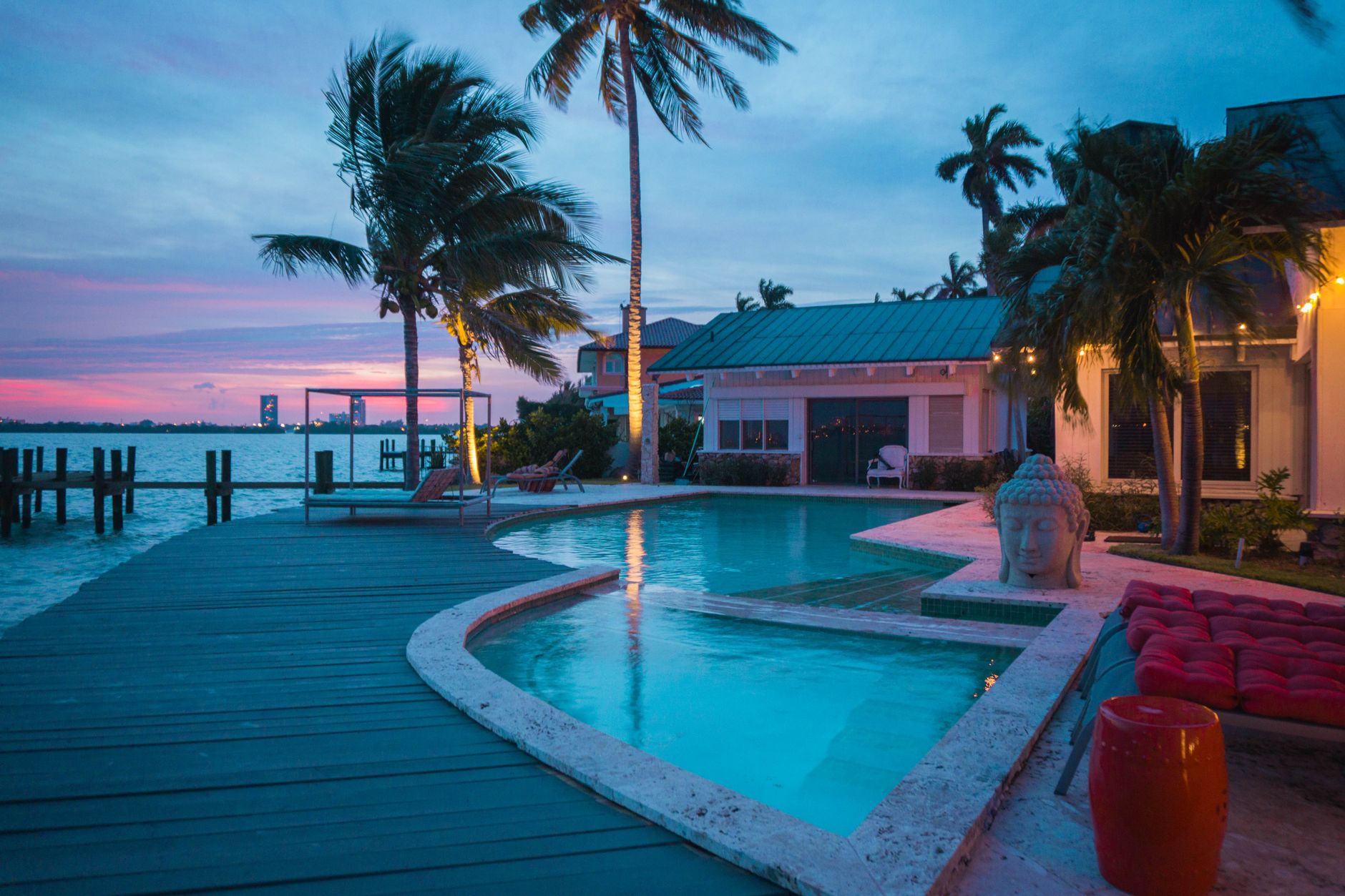
Six Fisher Island — Fisher Island, Miami.
A comprehensive buying guide for professional athletes considering new-construction condos on Fisher Island, covering privacy advantages, Florida property tax obligations for non-residents, and what to expect at marquee development Six Fisher Island.
Why Fisher Island Is Miami's Premier Address for Professional Athletes
This guide draws on the market expertise of Denis Smykalov, Founder of Wolsen Developments, who has guided buyers through Miami's luxury new-construction market since 2012 and completed more than $500M in transactions — including some of the city's earliest cryptocurrency-settled deals. Denis has worked extensively with professional athletes relocating to South Florida, and Fisher Island consistently ranks as the most requested address among that clientele — for reasons that go well beyond prestige.
Fisher Island is a private, car-free barrier island accessible only by ferry or private boat, making it one of the most naturally secured residential communities in the United States. For professional athletes who routinely contend with unwanted public attention, the island's controlled access points function as a structural privacy filter that no gated community on the mainland can fully replicate. There are no casual pedestrian visitors, no paparazzi stakeouts at the entry, and no through-traffic — only residents, pre-approved guests, and vetted service providers.
The island's residential density is also deliberately low. With approximately 600 residences spread across roughly 216 acres, Fisher Island never feels crowded. World-class amenities — a private beach club, golf course, spa, tennis facilities, and a marina — are serviced by a staff-to-resident ratio that rivals a five-star resort. For an athlete in-season or in active training, the ability to recover, train, and decompress without leaving the island is a meaningful quality-of-life advantage.
New Construction on Fisher Island: What Buyers Should Know
New-construction inventory on Fisher Island is exceptionally rare. The island's land mass is finite and substantially built out, meaning true ground-up development opportunities emerge only once or twice per decade. When they do, they attract disproportionate interest from ultra-high-net-worth buyers globally — which tends to compress the available preconstruction window and accelerate sell-through rates. Athletes relocating to Miami from tax-advantaged motivations should treat new-construction availability on the island as a time-sensitive opportunity rather than an evergreen market.
Six Fisher Island represents exactly this kind of generational opportunity. The project introduces a limited collection of ultra-luxury residences to an island where inventory of this caliber rarely exists. Designed to meet the expectations of buyers accustomed to the world's finest addresses, Six Fisher Island incorporates private amenities, expansive water-view terraces, and building systems engineered for both security and long-term resilience — criteria that matter enormously to buyers planning to use the residence as a primary home rather than an occasional retreat.
Buyers evaluating new construction should understand that Miami's preconstruction market operates on a deposit-based timeline, with payments typically structured across preconstruction milestones rather than delivered in a single lump sum at closing. For athletes with contract-based income structures, this phased payment model can align well with salary disbursement schedules — though coordination with a sports-specialized financial advisor and a Miami real estate attorney is essential before executing a purchase contract.
Florida Property Taxes for Non-Resident Buyers: The Core Framework
Florida imposes no state income tax and no estate tax, which are primary drivers behind the mass relocation of professional athletes — particularly those in the NBA, MLB, NFL, and NHL — to Miami-Dade County. However, property taxes are levied at the county level on all real estate, and non-residents face a meaningfully different tax burden than Florida-domiciled buyers. Understanding this distinction before purchase is critical, as the difference in effective tax rate between homestead and non-homestead classification can be substantial.
In Miami-Dade County, properties are assessed at market value by the Property Appraiser's office, and the millage rate applied to that assessed value determines your annual tax bill. Non-residents who do not claim Florida as their primary domicile cannot qualify for the Homestead Exemption — a benefit that reduces taxable assessed value by up to $50,000 and, more importantly, caps annual assessment increases at 3% per year (the Save Our Homes cap). Without Homestead protection, a non-resident owner's assessed value can rise with the market each year without limit, which in a rising market like Fisher Island can produce significant year-over-year tax increases.
Athletes who have relocated to Florida and legitimately established domicile — through actions like obtaining a Florida driver's license, registering to vote, updating their official team address, and filing a Declaration of Domicile with the county clerk — can apply for Homestead Exemption on a property they occupy as their primary residence by January 1 of the tax year. This is a legal process with specific requirements, not an administrative formality, and athletes with multi-state lives should work with a Florida-licensed attorney to ensure their domicile documentation is airtight before applying.
Property Tax Strategy for Athletes: Timing, Domicile, and the Duty Days Rule
The intersection of property taxes and athlete taxation in Florida is nuanced. While Florida itself does not tax income, most states where athletes play road games will tax the portion of their income earned in those jurisdictions — commonly referred to as the 'jock tax.' Establishing Florida domicile and maximizing time spent in Florida helps minimize exposure to other states' jock tax regimes. A Fisher Island residence that functions as a genuine primary home — where the athlete sleeps the majority of nights they are not traveling for games or training — strengthens domicile claims and can have cascading tax benefits beyond property tax alone.
For athletes who purchase on Fisher Island but do not yet meet the January 1 domicile requirement, their property will be assessed at full market value without a cap in the initial years of ownership. At price points typical of Fisher Island — where residences routinely trade in the eight-figure range — even fractional millage rate differences translate to tens of thousands of dollars annually. Buyers should model this tax exposure explicitly during the acquisition analysis, rather than discovering it at the first tax bill.
It is also worth noting that Miami-Dade County's Property Appraiser reassesses properties upon sale. This means a buyer acquiring a resale unit that had been owned for many years under the Save Our Homes cap will likely see the assessed value reset dramatically upward to reflect current market value. For new construction like Six Fisher Island, buyers start from the initial assessed value with no legacy cap history, making Homestead Exemption establishment particularly valuable in the early years of ownership.
Structuring the Purchase: Entity Ownership, Privacy, and Financing Considerations
Many professional athletes prefer to take title to Miami real estate through a legal entity — most commonly a Florida LLC or a trust — rather than in their personal name. This approach can offer privacy benefits (the entity name rather than the athlete's personal name appears in public records), liability insulation, and estate planning flexibility. However, entity ownership has important implications for Homestead Exemption eligibility: in Florida, Homestead applies only to natural persons, and a property held in an LLC generally cannot qualify unless specific trust structures meeting Florida statutory requirements are used. Buyers must structure ownership carefully if they want both privacy and Homestead protection.
Financing is another area where athlete buyers face specific complexity. Traditional mortgage underwriting models are built around W-2 income history, and athletes with contract years, signing bonuses, endorsement income, and variable earnings structures often fall outside standard qualification guidelines. Jumbo and non-QM lending products exist that can accommodate athletes, but interest rates and terms vary significantly. Many Fisher Island transactions at the high end close in cash, which simplifies the process and can provide negotiating leverage — particularly in a preconstruction context where developers may offer more favorable terms to cash buyers early in a sell-out.
Cryptocurrency as a payment method has also become increasingly relevant in Miami's luxury new-construction market. While the mechanics of crypto-settled real estate transactions — including conversion, reporting, and the treatment of crypto as property under IRS rules — require specialized legal and tax guidance, the market's familiarity with this settlement method has grown considerably. Buyers holding significant cryptocurrency wealth should discuss this option explicitly with both their advisor and the developer's sales team to understand what is currently accommodated.
Making the Decision: Fisher Island vs. Other Miami Ultra-Luxury Markets
Fisher Island is not the only ultra-luxury address in Miami, and athlete buyers benefit from understanding how it compares to alternatives like Surfside, Bal Harbour, Coconut Grove, and the Brickell waterfront. The fundamental differentiator remains access control: no other Miami-Dade neighborhood offers a comparable structural barrier to unwanted visitor access. Star Island and Palm Island are gated, but accessible by public causeway; Coconut Grove offers prestige and privacy through landscaping and lot size, but not controlled access. For athletes whose personal security is a professional priority, Fisher Island's ferry-only access is genuinely unique.
From a value-retention perspective, Fisher Island has demonstrated exceptional resilience across Miami's market cycles. The combination of scarce land supply, controlled development density, world-class amenity infrastructure, and a resident community that is self-selecting for ultra-high net worth creates favorable supply-demand dynamics over long holding periods. Athletes who purchase with a medium-to-long investment horizon — whether or not they ultimately establish full-time residency — have historically found Fisher Island to be among the most defensible luxury submarkets in South Florida.
Ultimately, the right Miami purchase decision depends on an athlete's specific career phase, domicile timeline, privacy requirements, and financial structure. What Fisher Island offers — and what a development like Six Fisher Island represents at its finest — is a convergence of lifestyle quality, structural privacy, tax-advantaged geography, and long-term asset strength that is genuinely difficult to replicate elsewhere in the United States. Buyers who move decisively when new-construction inventory appears on this island rarely regret the timing.
Frequently Asked Questions
Can professional athletes qualify for Florida's Homestead Exemption on a Fisher Island condo?
Yes, but only if the athlete has legitimately established Florida as their primary domicile by January 1 of the tax year and occupies the property as their principal residence. Athletes with multi-state lives must carefully document their domicile — including Florida driver's license, voter registration, and a filed Declaration of Domicile — before applying. Properties held in LLCs generally do not qualify for Homestead unless a qualifying trust structure is used.
How much higher are property taxes on Fisher Island for non-residents compared to Florida residents?
Non-residents pay taxes on the full assessed market value of the property with no cap on annual assessment increases, while Homestead-eligible Florida residents benefit from a reduction in taxable value of up to $50,000 and the Save Our Homes cap that limits annual assessment growth to 3%. At Fisher Island price points — often in the eight-figure range — this difference can amount to tens of thousands of dollars per year and compounds over time as the market appreciates.
What makes Fisher Island different from other gated communities in Miami for privacy?
Fisher Island is accessible only by private ferry or personal watercraft — there is no public road or bridge connecting it to the mainland. This creates a structural access barrier that no gated road community can replicate. Visitors must be pre-approved, and casual public access is simply not possible, making it the most naturally private residential address in Miami-Dade County.
What is Six Fisher Island?
Six Fisher Island is a new ultra-luxury residential development on Fisher Island offering a limited collection of high-end condominiums with private amenities, expansive water views, and sophisticated building systems. New-construction opportunities on Fisher Island are extremely rare given the island's finite land area and low residential density, making Six Fisher Island a significant market event.
Can an athlete buy a Fisher Island condo in an LLC for privacy while still getting tax benefits?
Using an LLC provides privacy (the LLC name appears in public records rather than the athlete's personal name) and some liability protection, but Florida's Homestead Exemption generally does not apply to properties held in a standard LLC. Buyers who want both privacy and Homestead eligibility should work with a Florida real estate attorney to explore qualifying trust structures that can satisfy both goals.
How does the 'jock tax' relate to owning property in Florida?
Florida itself does not impose a state income tax, but other states where athletes play road games tax the portion of income earned in their jurisdictions — known as the 'jock tax.' Establishing genuine Florida domicile and spending significant time at a Florida primary residence helps reduce income tax exposure to other states, making a well-documented Florida home like a Fisher Island condo a meaningful part of an athlete's overall tax strategy.
Is new construction on Fisher Island available frequently?
No — new-construction opportunities on Fisher Island are exceptionally rare. The island's land mass is limited and largely built out, so ground-up residential developments emerge only occasionally. When they do, they sell through quickly given strong global demand from ultra-high-net-worth buyers. Buyers who identify an opportunity should move with urgency rather than waiting for additional options.
Can a professional athlete use cryptocurrency to purchase a new-construction condo in Miami?
Cryptocurrency-settled real estate transactions have become more common in Miami's luxury new-construction market. The process involves converting crypto to fiat or direct transfer depending on the developer's accommodation, and buyers must account for IRS treatment of cryptocurrency as property (triggering capital gains on conversion) and proper reporting. Buyers should engage both a crypto-experienced tax advisor and confirm the developer's current policy before proceeding.
What happens to property tax assessments when a new buyer purchases on Fisher Island?
Under Florida law, the Miami-Dade Property Appraiser reassesses a property upon sale to reflect current market value. A resale unit that was previously protected under the Save Our Homes cap may have a very low assessed value relative to its sale price — after the sale, the new owner's assessment resets to market value. For new construction, the initial assessment establishes the starting baseline, making early Homestead Exemption filing particularly valuable.
What amenities does Fisher Island offer that are relevant to professional athletes?
Fisher Island features a private beach club, an 18-hole golf course, a full-service spa and wellness center, tennis facilities, a marina, and multiple dining venues — all serviced at a resort-level staff ratio. The car-free environment and ferry-controlled access also support security and recovery. Athletes can train, rest, and entertain without leaving the island, which is a meaningful advantage during both season and off-season periods.
Ready to Take the Next Step?