Morningside · Miami waterfront estates · professional athlete real estate · luxury new construction Miami · Faena House · Miami buyer guide
Professional Athlete's Guide to Buying a Waterfront Estate in Miami's Morningside Neighborhood
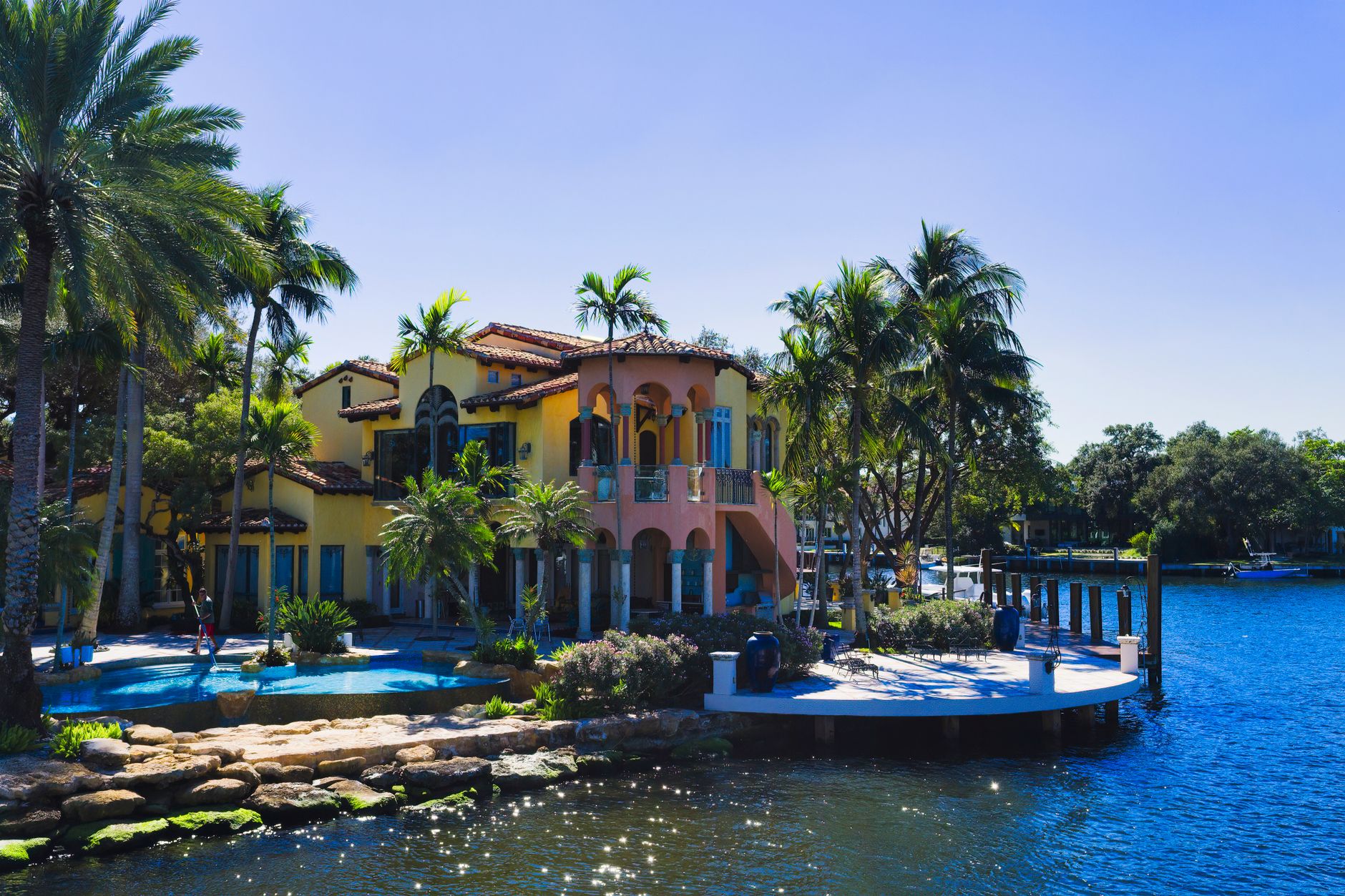
Faena House — Morningside, Miami.
A comprehensive buyer guide for professional athletes navigating Miami's luxury new-construction and waterfront estate market in Morningside — covering privacy, asset structure, lifestyle considerations, and how properties like Faena House benchmark ultra-prime Miami value.
Why Miami's Waterfront Market Demands Specialized Guidance for Professional Athletes
This guide draws on the market expertise of Denis Smykalov, Founder of Wolsen Developments, who has guided buyers through Miami's luxury new-construction market since 2012 and completed more than $500M in transactions — including some of the city's earliest cryptocurrency-settled deals. For professional athletes, acquiring real estate in Miami is rarely a straightforward transaction. The convergence of compressed decision timelines, complex income structures, endorsement-driven wealth cycles, and the ever-present need for privacy creates a buying environment where generic advice simply fails. Miami's luxury waterfront market rewards buyers who understand its nuances, and Morningside — one of the city's most architecturally rich and genuinely private waterfront enclaves — is a neighborhood that rewards that kind of knowledge more than almost anywhere else.
Miami has long been a destination of choice for professional athletes across the NFL, NBA, MLB, MLS, and Formula 1. Florida's absence of a state income tax is a well-known structural advantage, but athletes who treat that as the primary driver of their decision often overlook what makes a specific address genuinely valuable over a 10- or 20-year horizon. Waterfront estate inventory in neighborhoods like Morningside is finite by definition. The combination of Biscayne Bay frontage, historic deed protections, and a residential scale that resists high-rise encroachment means that supply constraints here operate differently from the condo-heavy markets that dominate Miami's waterfront headlines.
Morningside: Understanding the Neighborhood Before You Make an Offer
Morningside is a historic residential district situated along the western shore of Biscayne Bay in Miami's Upper Eastside corridor, roughly bounded by NE 50th Street to the south and NE 60th Street to the north. It is one of the few areas in Miami-Dade County where single-family waterfront estates with genuine bay frontage exist at a neighborhood scale — meaning you are buying into a community of other private homeowners, not competing for bay views through a glass tower. The neighborhood is listed on the National Register of Historic Places, and its Mediterranean Revival, Art Deco, and Mission-style homes sit on lots that in many cases were platted in the 1920s and 1930s. This architectural integrity is not merely aesthetic; it functions as a durable constraint on speculative overdevelopment.
For a professional athlete, Morningside's urban context matters as much as the homes themselves. The neighborhood sits minutes from Wynwood's dining and cultural corridor, Brickell's financial infrastructure, Miami International Airport, and the Design District's retail ecosystem. Yet its residential streets — shaded by mature canopy trees, gated at several entry points, and populated largely by owner-occupants — provide a level of day-to-day privacy that is genuinely difficult to replicate in Miami's more prominent luxury zip codes. Waterfront estates here typically feature private docks capable of accommodating sportfishing boats and center consoles, direct bay access without bridges, and lot sizes that allow for the training amenities, vehicle collections, and security infrastructure that high-profile buyers require.
Waterfront Estate Buyer Checklist: What to Evaluate Before Closing
Buying a waterfront estate in Morningside — or anywhere on Biscayne Bay — requires due diligence that goes well beyond a standard luxury residential purchase. Seawall condition and age is a primary variable; a deteriorating seawall can represent a six- or seven-figure remediation cost that is rarely disclosed proactively by sellers. Buyers should commission an independent marine survey of both the seawall and any existing dock structure before entering a hard deposit period. FEMA flood zone designation and the corresponding insurance implications have become increasingly material in South Florida since 2021 actuarial revisions; a property's base flood elevation relative to its finished floor elevation will directly affect annual carrying costs and insurability.
For athlete buyers specifically, the estate's configuration for privacy and security deserves its own checklist. Consider lot depth from the street, the visibility of primary living spaces from neighboring properties and waterways, the technical capacity of the electrical and structural systems to support a comprehensive security installation, and the zoning allowances for accessory structures — guest houses, training facilities, and detached garages. Miami-Dade's permitting environment for new construction and substantial renovation has improved but remains complex; working with a brokerage that has existing relationships with local architects, permit expediters, and contractors is not a luxury — it is a practical necessity that can determine whether a planned renovation is completed in 12 months or 36.
Title structure is another area where athlete buyers frequently require customized guidance. Whether the property is held in an LLC, a revocable trust, or directly in a buyer's name has implications for privacy, estate planning, and liability that vary based on individual circumstances. Florida's homestead exemption and its associated creditor protection provisions add another layer of strategic consideration. These decisions should be made in close coordination with the buyer's existing legal and financial advisory team from the earliest stage of the search process — not after an offer has been accepted.
How Faena House Sets the Benchmark for Ultra-Prime Miami Value
Any serious conversation about Miami's luxury waterfront market requires an understanding of how the market's benchmark properties establish and sustain value. Faena House on Mid-Beach — the 47-unit ultra-luxury residential tower designed by Rem Koolhaas — has functioned as one of the most reliable value anchors in South Florida real estate since its completion. Its per-square-foot sales records, its roster of globally recognized residents, and the operational excellence of the Faena Hotel ecosystem beneath it have collectively demonstrated that Miami's luxury market can sustain pricing comparable to Manhattan's most prestigious addresses. For an athlete buyer evaluating Morningside, understanding Faena House is less about considering it as an alternative and more about calibrating what genuine scarcity and irreplaceable location mean in Miami terms.
The lesson of Faena House for Morningside estate buyers is fundamentally about supply constraints and long-term appreciation dynamics. Faena's performance was driven not by broad market conditions but by the absolute limitation of its unit count, the caliber of its finishes and services, and the architectural identity that made it a cultural landmark rather than simply a luxury address. Morningside waterfront estates operate on analogous logic: the number of bay-fronting single-family lots in this neighborhood is fixed. Unlike a condo tower that can be replicated, or a neighborhood where zoning allows infill densification, Morningside's estate inventory is structurally bounded. That scarcity premium tends to be durable across market cycles in ways that more commoditized luxury product is not.
For athletes with investment horizons that extend beyond a single playing contract, this framing matters considerably. The acquisition of a Morningside waterfront estate is not simply a lifestyle decision — it is a positioning decision within a finite asset class. The distinction between a property that merely performs well in a strong market and one that holds its relative value position through corrections is frequently determined by this kind of irreplaceable scarcity, and Morningside's structural characteristics place it in the latter category.
Financial and Structural Considerations for Athlete Buyers in Miami New Construction
Professional athletes face a set of financial realities that make real estate acquisition fundamentally different from the process experienced by a corporate executive or a generational-wealth buyer. Income concentration risk — the fact that the majority of lifetime earnings often arrive within a 5- to 15-year window — creates urgency around asset allocation that most buyers do not experience. Miami real estate, and waterfront estate real estate in particular, has historically served as an effective vehicle for wealth preservation when acquired at the right basis, structured correctly, and held through a sufficient horizon. The challenge is that compressed timelines, the social dynamics of the athlete community, and aggressive marketing by brokers who lack specific market expertise have historically resulted in athlete buyers overpaying for the wrong assets.
Cryptocurrency settlement has become an increasingly relevant consideration for athletes with digital asset holdings that represent a significant portion of their net worth. Miami's luxury real estate market — more than any other in the United States — has developed the institutional infrastructure to accommodate crypto-to-real estate transactions, from seller acceptance of digital assets to escrow mechanisms that address price volatility during the closing window. This is not a fringe capability; it has become a genuine differentiator for buyers whose liquidity profile includes substantial Bitcoin, Ethereum, or other digital holdings that they prefer not to liquidate into fiat currency prior to acquisition.
Pre-approval strategy, financing structure, and the specific mechanics of purchasing through a legal entity all deserve careful attention before the search process formally begins. Miami's most competitive waterfront listings — particularly off-market Morningside estates — are often allocated on the basis of buyer qualification and relationship capital, not simply on offer price. A buyer who arrives at a negotiating table with a fully structured acquisition vehicle, clear proof of funds or financing commitment, and professional representation that is recognized within the local market will consistently outcompete a less-prepared buyer, even at a nominally lower offer price.
Working with the Right Team: Representation, Access, and Long-Term Strategy
The Miami luxury market — and the Morningside waterfront estate sub-market specifically — is relationship-driven in ways that are not fully visible to buyers approaching it from outside the city. A significant proportion of the most desirable waterfront estate transactions in neighborhoods like Morningside occur off-market: the property never appears on the MLS, it is not featured in press releases, and access to it is entirely dependent on the listing broker's willingness to bring a specific buyer's representative into the conversation. This reality means that the representation a buyer selects is not a cost optimization decision — it is a market access decision with direct consequences for the quality of opportunities they are able to evaluate.
For professional athletes specifically, representation should also encompass an understanding of the privacy and discretion infrastructure that serious buyers in this market expect as a baseline. The management of public information about a buyer's identity, the structure through which offers are submitted, the coordination with a buyer's security team during property tours, and the communication protocols that prevent premature disclosure of a transaction are all competencies that a specialized luxury brokerage maintains as part of its standard operating practice. These are not peripheral considerations — for high-profile buyers, a breach of confidentiality during the acquisition process can have direct consequences ranging from inflated seller expectations to unwanted public attention.
Long-term asset management strategy should be part of the conversation from the beginning of the buying process, not an afterthought. A Morningside waterfront estate is a meaningful asset that requires thoughtful planning around maintenance, insurance, property management during seasons of absence, and eventual disposition or refinancing strategy. The most effective buyer relationships in this market are those where the brokerage functions as a long-term advisor rather than a single-transaction intermediary — providing ongoing market intelligence, connecting buyers to vetted local service providers, and offering perspective on when market conditions favor a refinancing, a renovation, or a sale.
Frequently Asked Questions
Why do professional athletes choose Morningside over other Miami waterfront neighborhoods?
Morningside offers a combination of direct Biscayne Bay frontage, historic neighborhood protections that resist overdevelopment, genuine residential privacy, and proximity to Miami's commercial and cultural infrastructure — all within a single-family estate context that most waterfront condo buildings cannot replicate. The neighborhood's finite bay-fronting lot inventory also creates durable scarcity that supports long-term value.
What is the most important due diligence item when buying a waterfront estate in Morningside?
Seawall condition is typically the most consequential and underexamined variable. An aging or deteriorating seawall can represent a remediation cost of several hundred thousand to over a million dollars. Buyers should commission an independent marine survey of the seawall and any dock structure before committing to a hard deposit.
How does Florida's lack of state income tax benefit professional athletes who buy in Miami?
Florida imposes no personal state income tax, which represents a meaningful annual tax advantage for athletes with high earned income. When combined with Florida's homestead exemption — which also provides significant creditor protection on a primary residence — the structural financial benefits of Miami ownership are substantial relative to high-tax states like California and New York.
Can a professional athlete use cryptocurrency to purchase a waterfront estate in Miami?
Yes. Miami's luxury real estate market has developed more infrastructure for cryptocurrency-settled transactions than virtually any other U.S. market. Sellers in the ultra-prime segment increasingly accept digital assets, and specialized brokerages have established escrow and closing mechanisms that address price volatility during the settlement window. Buyers with significant Bitcoin or Ethereum holdings should discuss this structure early in the process.
What does Faena House tell us about Miami luxury real estate values?
Faena House demonstrated that Miami can sustain per-square-foot pricing comparable to Manhattan's most prestigious addresses when the product combines absolute scarcity, architectural irreplaceability, and institutional-quality hospitality services. For estate buyers, the key lesson is that supply-constrained assets — whether a 47-unit tower or a bay-fronting single-family lot — tend to hold their relative value position through market cycles more reliably than commoditized luxury product.
Should a professional athlete buy a Miami waterfront estate in an LLC or personally?
This depends on the buyer's individual tax situation, estate planning objectives, and privacy requirements. Florida's homestead exemption and its associated creditor protection are among the most robust in the country but apply to primary residences held directly by individuals or through certain trust structures. An LLC offers privacy and liability separation but may affect homestead eligibility. This decision should be made in coordination with the buyer's legal and financial advisory team before submitting an offer.
How do off-market waterfront estate transactions work in Morningside?
Many of the most desirable Morningside waterfront estates transact off-market — without MLS exposure — through broker-to-broker relationships. Access to these opportunities depends almost entirely on the buyer's representation having established relationships with local listing brokers and seller networks. A buyer without that kind of representation will typically only see properties that have already been passed over by better-connected buyers.
What lot and property features should an athlete buyer prioritize in Morningside?
Key priorities include lot depth from the street for security and privacy, direct bay frontage with a private dock capable of accommodating the buyer's watercraft, sufficient square footage and zoning allowances for training facilities and accessory structures, and structural and electrical capacity to support a comprehensive security installation. Mature tree canopy and setback from neighboring sight lines are also meaningful quality-of-life variables.
How has Miami's luxury waterfront market performed during real estate downturns?
Truly supply-constrained waterfront estates in established Miami neighborhoods have historically shown more resilience during broad market corrections than high-rise condo product, largely because their inventory cannot be replenished by new construction and because the buyer pool for them is globally diversified. That said, no asset class is immune to severe macro dislocations, and buyers should evaluate any acquisition on the basis of a realistic long-term holding strategy rather than short-term price movement.
What is the role of a luxury real estate brokerage in managing privacy during a high-profile athlete acquisition?
A specialized luxury brokerage maintains protocols around buyer identity disclosure, offer submission structure, and communication management that protect against premature public disclosure of a transaction. For high-profile buyers, a breach of confidentiality during the acquisition process can inflate seller expectations and generate unwanted attention — so discretion infrastructure is a core professional competency, not an optional service.
Ready to Take the Next Step?