North Beach · Miami new construction · short-term rental investment · waterfront condos · bay vs ocean view · Miami Beach STR
Miami North Beach Short-Term Rental Investment Guide: Bay vs. Ocean Views, Yield Strategies & New Construction Condos in 2025
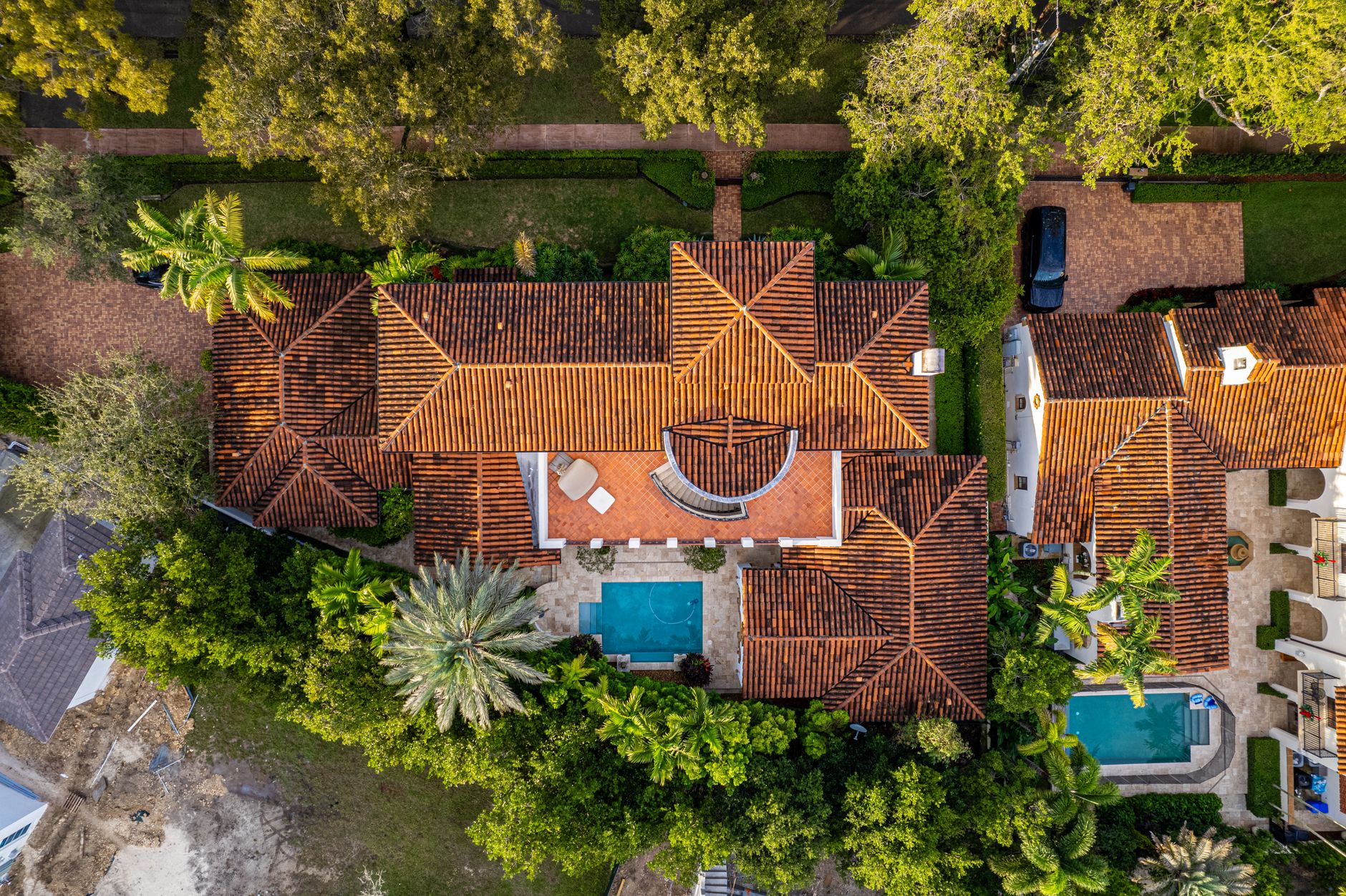
The Residences at 1428 Brickell — North Beach, Miami.
A comprehensive buyer guide for investors targeting short-term rental yield in Miami's North Beach corridor, covering waterfront view premiums, STR-permissible new developments, and how projects like The Residences at 1428 Brickell benchmark luxury demand across Miami's condo market.
Why North Beach Is Miami's Most Compelling STR Investment Frontier Right Now
Miami's short-term rental landscape has matured significantly over the past several years, and sophisticated investors have shifted their attention northward — away from the saturated South Beach corridor and toward North Beach, a neighborhood that offers a rare combination of genuine oceanfront access, a more relaxed residential character, and a regulatory environment that, by Miami Beach standards, has historically been more navigable for vacation rental operators. Stretching roughly from 63rd Street to 87th Terrace along Collins Avenue, North Beach sits at the intersection of authentic Miami Beach living and high-velocity short-term rental demand, driven by guests who want proximity to the Atlantic without the price premium or noise ordinance exposure of South Beach.
From a yield perspective, the fundamentals in North Beach are difficult to ignore. Average daily rates for oceanfront units in this submarket have climbed steadily, reflecting both post-pandemic travel normalization and the broader scarcity of well-appointed, professionally managed condo hotels in the area. New construction supply in North Beach has historically lagged behind demand — a dynamic that creates meaningful upside for early-stage investors who can secure pre-construction pricing before a project's stabilized comparables are established. Investors who entered North Beach pre-construction cycles in prior years have seen both appreciation and above-market rental income, and the current pipeline suggests a similar opportunity is forming.
It is worth understanding, however, that short-term rental permitting in Miami Beach is subject to ongoing legislative scrutiny. Investors must conduct thorough due diligence on zoning designations — specifically whether a target building is located within a resort-zoned district that explicitly permits nightly rentals — before committing capital. Working with a brokerage that specializes in Miami new construction, rather than a generalist residential agent, is essential to navigating these nuances correctly from the outset.
Bay Views vs. Ocean Views: Understanding the Waterfront Premium in Miami Condo Investing
One of the most consequential decisions a Miami condo investor makes is choosing between bay-facing and ocean-facing units — a choice that carries meaningful implications for both acquisition cost and short-term rental income potential. Ocean-facing units in Miami Beach command a premium at the point of sale that is broadly understood, but the relationship between that premium and actual STR yield is more nuanced than most buyers initially assume. Oceanfront views generate higher average daily rates and stronger occupancy during peak travel months (December through April and June through August), but they also come with higher HOA fees, greater exposure to weather-related rental disruption, and in some buildings, restrictions tied to resort management programs that limit owner flexibility.
Bay views, by contrast, offer a different value proposition that is increasingly attractive to a segment of the investment market. Units with direct Biscayne Bay or Intracoastal Waterway views tend to be priced at a moderate discount to their oceanfront equivalents in the same building or comparable projects, yet they can achieve 75–85% of oceanfront ADR during high season — and in some cases exceed it during periods when guests prioritize sunset views, marina access, or quieter balcony environments. In North Beach specifically, where the bay side of the island offers proximity to Normandy Isle, Bay Harbor Islands, and the developing restaurant and retail scene along 71st Street, bay-view units have a distinct lifestyle narrative that resonates with the extended-stay traveler and the design-conscious remote worker — two of the fastest-growing STR guest segments.
The most sophisticated investors approach the bay-versus-ocean question through a yield-adjusted lens rather than a prestige lens. A unit priced at a 20% discount with 80% of the ADR potential and lower carrying costs can significantly outperform an oceanfront unit on a cash-on-cash return basis. That said, the best pre-construction opportunities in North Beach's emerging luxury pipeline often include both orientations, allowing investors to model scenarios across different floors and unit configurations before selecting. Understanding how major Miami developers price view premiums at launch — versus where those same premiums land at market stabilization — is one of the core competencies that separates experienced Miami condo investors from first-cycle buyers.
New Construction vs. Resale: Why Pre-Construction Pricing Changes the STR Math in North Beach
The case for new construction over resale in the context of STR investment in North Beach is built on several compounding advantages. First, pre-construction pricing structures — typically phased over 18 to 36 months of construction — allow investors to control a luxury asset with a fraction of the total capital deployed upfront, creating implicit leverage that resale transactions simply do not offer. During the construction period, the broader Miami market continues to price comparables, meaning that by the time a new building delivers, the gap between the investor's contract price and current market value has often widened materially.
Second, new construction buildings are engineered for the contemporary short-term rental guest in ways that resale inventory cannot replicate. Smart home technology, energy-efficient HVAC systems, resort-caliber amenity decks, hotel-style concierge infrastructure, and interior finishes specified to compete with five-star hospitality brands are standard in Miami's current generation of luxury new developments. These features directly translate into higher listing performance on platforms like Airbnb and VRBO — better photography, stronger reviews, and the ability to charge rates that resale units in the same neighborhood cannot justify. Guests booking a luxury STR in North Beach in 2025 are comparing their experience not just to other condos but to the boutique hotel market, and new construction narrows that gap considerably.
Projects like The Residences at 1428 Brickell serve as an important market benchmark for investors underwriting North Beach opportunities. While The Residences at 1428 Brickell is positioned in Brickell — Miami's urban financial core — rather than North Beach, it exemplifies the caliber of finishes, sustainability standards, and architectural ambition that Miami's current luxury new construction cycle is producing at its upper end. Investors who understand how projects of that tier are priced and absorbed can better contextualize the relative value available in North Beach's pre-construction pipeline, where similar design and amenity quality is often available at a meaningful per-square-foot discount to Brickell or South Beach comps.
Short-Term Rental Permitting, Zoning, and Compliance: What North Beach Investors Must Know
No discussion of STR investing in Miami Beach is complete without a candid treatment of the regulatory environment. Miami Beach has implemented some of the most restrictive short-term rental ordinances in Florida, with large swaths of the island — particularly residential neighborhoods — effectively off-limits to nightly rentals. Investors targeting North Beach must verify at the unit level that their prospective building sits within a zoning district that explicitly permits transient occupancy, typically defined as stays of fewer than six months and one day. This is not a question of building management policy; it is a matter of municipal code, and violations carry significant fines.
The good news for investors is that a subset of North Beach's new and near-new construction is designed from the ground up to operate within compliant resort and hotel zoning, often structured as condo hotel programs that provide built-in management infrastructure, rental pooling arrangements, and booking support. These programs vary widely in their economic terms — management fees, owner usage restrictions, net revenue splits, and brand affiliation arrangements all differ from project to project — and investors should model each program's actual net yield, not just the gross ADR projections that developers or their agents typically lead with. Understanding the difference between a building with a voluntary rental program and one with a mandatory participation structure is particularly important, as mandatory programs can significantly limit an owner's flexibility to self-manage or use alternative booking platforms.
Beyond permitting, investors should be aware of Florida's evolving preemption law landscape, which at the state level has periodically sought to limit municipalities' authority to restrict short-term rentals. While these legal frameworks remain in flux, they represent a potential tailwind for STR investors in Miami Beach over a longer investment horizon. Consulting with a Florida real estate attorney who specializes in short-term rental compliance, in parallel with working with a specialized new construction brokerage, is strongly advisable before executing any purchase contract in this market.
Underwriting STR Yield in North Beach: Key Metrics, Assumptions, and Realistic Return Expectations
Investors new to the Miami STR market frequently arrive with either overly optimistic yield projections sourced from developer marketing materials or overly conservative assumptions borrowed from non-coastal markets. A grounded underwriting framework for North Beach STR investments should begin with submarket-specific occupancy data — not citywide averages — and should distinguish between the performance of oceanfront units, bay-view units, and interior-facing units within the same building. Third-party data platforms that aggregate actual booking performance from platforms like Airbnb and VRBO have made this analysis far more accessible than it was even five years ago, and investors should treat these tools as essential due diligence instruments rather than optional supplements.
On the revenue side, realistic high-season ADRs for a well-positioned, professionally managed two-bedroom new construction unit in North Beach with ocean or bay views have ranged broadly depending on floor, finishing level, building amenities, and management quality. Investors should model blended annual occupancy in the 60–75% range for a well-run unit in a compliant STR building, with seasonal peaks substantially above that figure and slower shoulder months that bring the average down. On the expense side, STR investors in Miami Beach should budget for HOA fees that frequently run higher than mainland Miami equivalents, property taxes at the non-homestead rate (which does not benefit from Save Our Homes capping), platform fees, management fees if using a third-party operator, routine furnishings refresh cycles, and utilities if included in the rental offering.
Net cash-on-cash yields in the North Beach new construction STR segment, when properly underwritten against actual pre-construction pricing and realistic operating assumptions, tend to be most compelling for investors who enter early in a project's sales cycle and hold for a minimum of five to seven years to capture both income yield and appreciation. Short-horizon investors expecting immediate double-digit cash flow from day one of delivery should approach this market with caution; the STR model in Miami is a medium-duration wealth-building strategy as much as it is a pure income play. That said, for investors who align their expectations appropriately and execute with precision — selecting the right building, the right unit, and the right operator — North Beach represents one of the highest-quality STR investment opportunities available in the Florida coastal market today.
Selecting the Right Unit and Building in North Beach: A Pre-Construction Buyer's Checklist
The quality of a North Beach STR investment ultimately comes down to unit-level decisions made before groundbreaking — choices about building, floor, orientation, layout, and finish tier that determine both the asset's rental competitiveness and its long-term resale liquidity. Investors should prioritize buildings with genuine waterfront positioning over those marketed as 'ocean block' or 'steps from the beach,' as the distinction matters significantly both to STR guests and to future buyers. Within a given building, mid-to-upper floors with unobstructed views — whether ocean or bay — consistently outperform lower floors and interior-facing units on a per-night basis, and the acquisition premium for those floors is typically less than the lifetime revenue differential they generate.
Layout considerations for STR optimization in North Beach favor units with well-separated bedroom configurations, in-unit laundry, and balconies large enough to function as a genuine outdoor living space — a feature that Miami's climate makes into a meaningful revenue driver for guest satisfaction and review scores. One-bedroom plus den configurations and two-bedroom units represent the highest-demand STR inventory in this submarket, balancing acquisition cost, HOA exposure, and achievable ADR. Three-bedroom units can generate exceptional gross revenue during peak season but require more sophisticated revenue management and may sit idle during shoulder months unless priced aggressively.
As North Beach's new construction pipeline continues to develop, investors would do well to track projects at their earliest pre-sales phases, when pricing is most favorable and unit selection is broadest. The comparison to Brickell developments such as The Residences at 1428 Brickell is instructive: landmark projects at that tier tend to sell out their most desirable units in the first 20–30% of their sales cycle, and late entrants often find that the value proposition has materially diminished by the time broader market awareness catches up to the opportunity. In North Beach, where the development cycle is earlier and institutional awareness lower, the window for informed early-entry investment remains open — but it narrows with each passing quarter as the neighborhood's profile rises. For current pre-construction pricing, availability, and access to off-market units in North Beach, contact Denis Smykalov at Wolsen Developments — denis@wolsenre.com or (305) 333-1122.
Frequently Asked Questions
Is North Beach Miami Beach a good area for short-term rental investment?
North Beach is one of Miami Beach's most promising STR investment corridors because it combines genuine Atlantic oceanfront and bay-view access with historically lower price points than South Beach, while offering a more residential character that appeals to the premium vacation rental guest seeking a quieter Miami Beach experience. Investors must verify that target buildings are in resort-zoned districts that permit transient occupancy under Miami Beach municipal code before purchasing.
What is the difference between bay view and ocean view condos in Miami Beach from an investment perspective?
Ocean-view units in Miami Beach typically command higher acquisition prices and can achieve the highest average daily rates during peak STR season, making them appealing for top-line revenue. Bay-view units are generally priced at a discount of 15–25% relative to oceanfront equivalents in the same building, yet can achieve 75–85% of oceanfront ADR — a dynamic that frequently produces superior cash-on-cash returns when factoring in lower purchase price and comparable carrying costs.
Can you legally operate a short-term rental in North Beach Miami Beach?
Short-term rental legality in North Beach depends entirely on the specific zoning designation of the building and parcel, not simply the neighborhood boundary. Miami Beach has strict STR ordinances that restrict nightly rentals in most residential zones; investors must confirm their target property sits within a resort or hotel-zoned district that explicitly permits transient rentals before executing a purchase contract.
What occupancy rates should investors realistically expect for a North Beach STR condo?
A well-managed, properly permitted two-bedroom condo in a North Beach STR-compliant building can realistically target blended annual occupancy in the 60–75% range, with peak season (December through April and mid-June through August) occupancy potentially reaching 85–95% for well-positioned units. Shoulder months require active revenue management and competitive pricing to maintain occupancy.
Why do Miami luxury new construction buildings outperform resale condos for short-term rentals?
New construction buildings deliver features that directly improve STR performance: smart home technology, resort-grade amenity decks, hotel-quality lobbies, and high-specification interiors that photograph well and command premium ADRs on booking platforms. These features allow new construction STR units to compete effectively against boutique hotels, while resale inventory — regardless of renovation — typically cannot replicate the full new-construction guest experience.
How does The Residences at 1428 Brickell relate to North Beach investment decisions?
The Residences at 1428 Brickell represents the upper tier of Miami's current luxury new construction cycle in the Brickell submarket, offering a benchmark for finish quality, architectural ambition, and pricing that investors can use to contextualize relative value in North Beach. Pre-construction opportunities in North Beach often offer comparable or superior design standards at a meaningful per-square-foot discount to Brickell or South Beach comps, creating potential upside for early-entry investors.
What are the typical operating expenses for a North Beach Miami Beach short-term rental condo?
Investors should budget for HOA fees (which tend to run higher in Miami Beach than mainland Miami), non-homestead property taxes, platform fees of 3–5% on STR booking platforms, third-party property management fees typically ranging from 20–35% of gross revenue, utilities if included in the rental offering, and a furnishings refresh reserve. Accurately modeling these costs against realistic gross revenue is essential for a credible net yield projection.
What unit types perform best for short-term rentals in North Beach new construction buildings?
One-bedroom-plus-den and two-bedroom configurations with well-separated bedroom layouts, in-unit laundry, and meaningful balcony space represent the highest-demand STR inventory in North Beach, balancing acquisition cost against achievable ADR. Three-bedroom units can generate strong peak-season gross revenue but require more sophisticated revenue management to maintain blended annual occupancy.
When is the best time to buy a pre-construction condo in North Beach for STR investment?
The optimal entry point is in the earliest phase of a project's pre-sales cycle, when pricing is most favorable and the widest selection of unit types, floors, and orientations is available. In North Beach, where institutional awareness of the market opportunity is still building, early-phase buyers have historically secured the most compelling price-to-value ratios — a window that tends to narrow as a project gains market visibility.
Does Florida state law protect short-term rental rights in Miami Beach?
Florida has periodically advanced preemption legislation that would limit municipalities' authority to restrict short-term rentals statewide, but the legal framework remains in flux and Miami Beach has maintained significant local control over STR regulation. Investors should not underwrite a North Beach STR purchase solely on the assumption that state preemption will override local ordinances; verifying current zoning compliance at the building level remains essential due diligence.
Ready to Take the Next Step?