Design District · Miami new construction · foreign national financing · tax relocation · Kempinski Residences · luxury condos Miami
Miami New-Development Buyer Guide for Tax-Advantaged Relocation: Design District, Foreign National Financing & Kempinski Residences
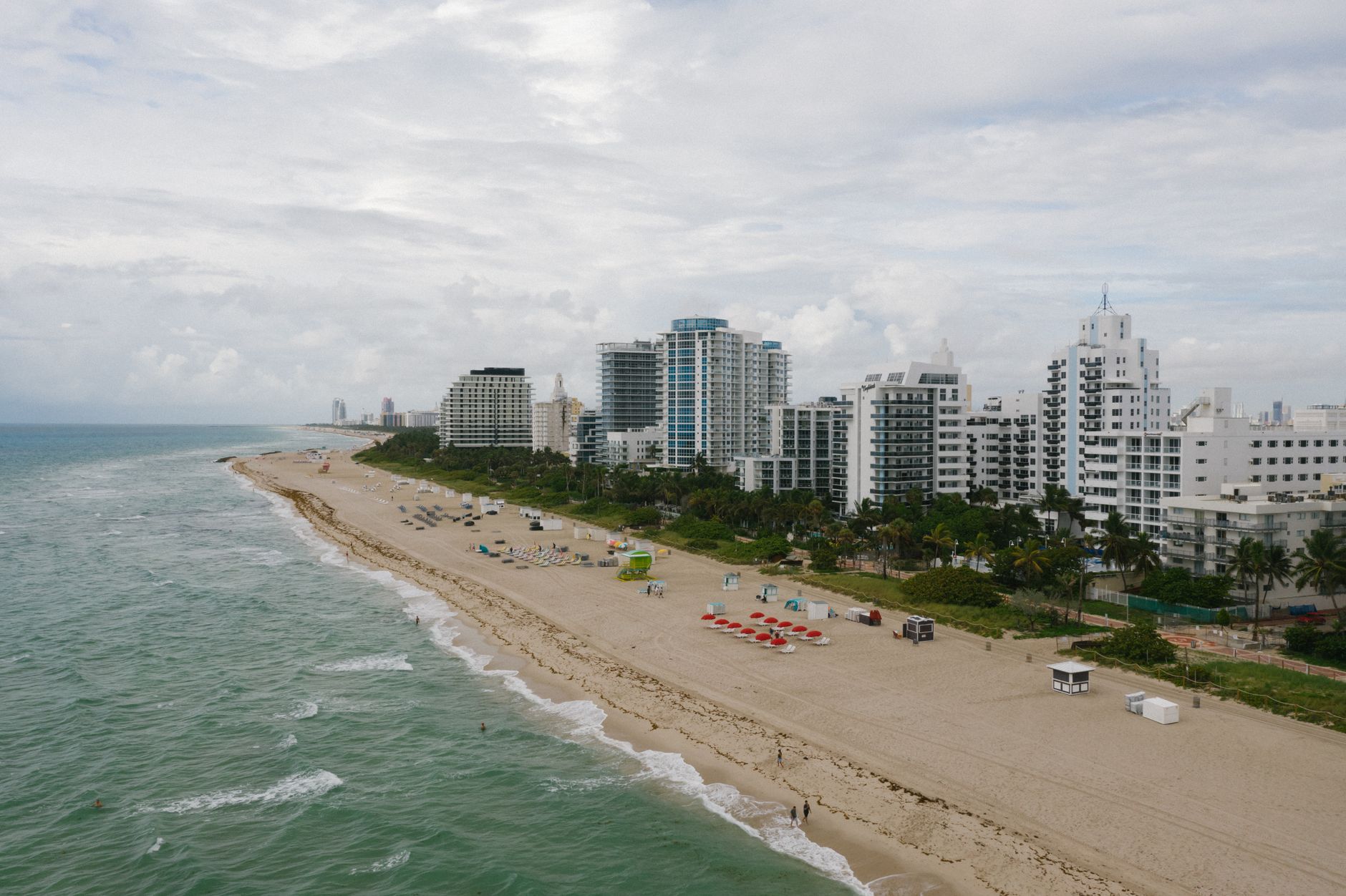
Kempinski Residences — Design District, Miami.
A comprehensive guide for buyers relocating to Miami for Florida's tax advantages, covering the Design District luxury condo market, how foreign nationals can finance a new-construction purchase, and what makes Kempinski Residences a standout opportunity.
Why Miami — and Why Now
This guide draws on the market expertise of Denis Smykalov, Founder of Wolsen Developments, who has guided buyers through Miami's luxury new-construction market since 2012 and completed more than $500M in transactions — including some of the city's earliest cryptocurrency-settled deals. Denis has worked extensively with domestic buyers relocating from high-tax states like New York and California, as well as international buyers establishing Florida residency for the first time, making his perspective especially relevant to the tax-motivated relocation story playing out across Miami today.
Florida levies no personal state income tax, no state estate tax, and no inheritance tax — a combination that has made Miami a magnet for high-net-worth individuals fleeing New York's 10.9% top income tax rate or California's 13.3%. For a household earning $2M per year, the annual savings from a Florida domicile change can easily exceed $200,000, meaning a luxury condo in the Design District can effectively pay for itself in avoided taxes within a few years. Beyond the math, Miami's global connectivity — with nonstop flights to Europe, Latin America, and financial centers worldwide — makes it practical for buyers who still maintain business interests elsewhere.
The relocation trend accelerated meaningfully after 2020 and has not reversed. Corporate headquarters, family offices, and hedge funds have followed their principals southward, creating a self-reinforcing ecosystem of professional talent, private schools, arts institutions, and restaurant culture that now rivals older gateway cities. Buyers who might once have treated Miami as a vacation-home market increasingly treat it as their primary address — and that shift is reflected in the caliber of new-construction product coming to market, particularly in the Design District.
Understanding the Design District as a Luxury Residential Address
The Miami Design District occupies a compact, walkable grid roughly bounded by NE 36th Street to the south and NE 42nd Street to the north, between North Miami Avenue and Biscayne Bay's western approaches. What began as a wholesale furniture trade zone was reimagined over the past two decades into one of the world's most concentrated luxury retail corridors, hosting flagship boutiques for Louis Vuitton, Hermès, Dior, Rolex, and dozens of other maisons alongside destination restaurants, galleries, and the Institute of Contemporary Art Miami. This cultural and commercial density gives Design District residents a genuinely walkable urban lifestyle that is rare in South Florida.
Residentially, the neighborhood is still in a relatively early phase of its maturation, which is part of its appeal for buyers who study urban evolution cycles. The surrounding neighborhoods of Wynwood, Midtown Miami, and Edgewater have all seen dramatic appreciation as Miami's urban core has densified, and the Design District — with its controlled retail curation and limited land supply — benefits from each of those adjacent success stories. For buyers accustomed to Manhattan's SoHo or London's Marylebone, the Design District offers a recognizable archetype: a former industrial-creative zone that has been refined into a luxury live-work-play environment.
New-construction residential supply in the neighborhood is intentionally constrained. Developers who build here must navigate a design review process that reflects the neighborhood's aesthetic ambitions, which means finished product tends to be architecturally distinguished rather than generic. This selectivity supports long-term value for buyers who purchase thoughtfully. Among the projects that exemplify this standard is Kempinski Residences, which brings the standards of one of Europe's oldest luxury hotel groups to Miami residential development for the first time — a meaningful distinction in a market where brand partnerships vary widely in credibility.
Kempinski Residences: Brand-Backed Luxury in the Heart of the District
Kempinski Residences represents the Miami debut of Kempinski Hotels, a Munich-based hospitality group founded in 1897 that operates flagship properties across Europe, the Middle East, and Asia. The brand's entry into branded residential development in Miami signals confidence in the Design District's long-term position as a primary luxury address rather than a secondary market. For buyers, a Kempinski affiliation carries specific implications: hotel-grade service infrastructure, managed common areas, and an international brand promise that resonates with European and Middle Eastern buyers who already know the Kempinski name from properties in Geneva, Berlin, Dubai, and Istanbul.
Branded residences at this level typically offer a suite of services that elevate daily living beyond what a conventional condominium association provides — concierge programming, valet, housekeeping options, curated amenity spaces, and in many cases a formal hotel management structure that allows owners to participate in rental programs when they are not in residence. For tax-motivated relocators who maintain a home base in another city or country, this operational infrastructure is practical as well as prestigious: a residence that is professionally managed in your absence performs better as an asset and better as a home when you return.
The Design District address amplifies the brand positioning. Residents have immediate walkable access to the neighborhood's retail, dining, and cultural programming, while also being within a short drive of Wynwood's gallery scene, Midtown's everyday amenities, and Brickell's financial district. Proximity to MIA and the private terminals at Opa-locka and Fort Lauderdale Executive is a practical consideration for internationally mobile buyers. For buyers comparing branded-residence options across Miami, Kempinski Residences occupies a distinctive position: European heritage hospitality in a neighborhood that is itself defined by European luxury retail culture.
Establishing Florida Domicile: What Tax-Motivated Buyers Actually Need to Do
Purchasing a Florida property is not, by itself, sufficient to establish Florida domicile for tax purposes. Domicile is a legal determination based on facts and intent, and high-tax states like New York and California have audit programs specifically designed to challenge domicile changes made by high-income taxpayers. Buyers should work with a qualified tax attorney experienced in multi-state domicile issues — not just a general CPA — before assuming that a Miami purchase eliminates their prior state tax exposure. The underlying transaction, however, is real and the savings potential is substantial when the domicile change is properly documented.
The generally accepted framework for establishing Florida domicile includes several concrete steps: filing a Declaration of Domicile with the county clerk, obtaining a Florida driver's license and registering vehicles in Florida, registering to vote in Florida, updating your primary address on financial accounts, professional licenses, and club memberships, and — critically — spending more days in Florida than in any other single state. Many advisors recommend tracking travel days carefully using a contemporaneous log. For buyers with a home in New York, for example, the 183-day rule is particularly important: New York will treat you as a statutory resident subject to full New York income tax if you maintain a permanent place of abode there and spend more than 183 days in the state.
A new-construction purchase in the Design District can be timed to support a domicile change strategy, particularly if the buyer has flexibility around their move date. Delivery timelines for luxury new construction typically run one to three years from contract, giving buyers time to plan their transition, work with counsel, and sequence the sale or restructuring of their prior-state residence. The Design District's full-service residential environment — with hotel-grade amenities and concierge support — makes it easier to genuinely relocate rather than simply maintain a Florida address, which strengthens the domicile position from a legal standpoint.
How to Finance a Miami Condo as a Foreign National
Foreign national financing for Miami new construction is more accessible than many international buyers assume, but it operates under different parameters than conventional domestic mortgage lending. The core distinction is that foreign national loans are typically portfolio products held by the lending bank rather than loans sold to Fannie Mae or Freddie Mac. This means terms, rates, and documentation requirements are set by the individual lender rather than by a federal underwriting standard, and they vary meaningfully from institution to institution. Working with a mortgage broker who specializes in foreign national and international high-net-worth lending — rather than a generalist — is genuinely important.
Most foreign national lenders in the Miami market will finance between 50% and 70% of the purchase price, with the higher loan-to-value ratios typically available to buyers who establish a meaningful banking relationship with the lending institution. Documentation requirements generally include a valid passport, proof of income sourced to the buyer's home country (tax returns, business financial statements, or accountant letters depending on jurisdiction), evidence of liquid assets sufficient to cover the down payment and reserves, and a credit reference from the buyer's home-country bank. Some lenders also require an ITIN (Individual Taxpayer Identification Number) from the IRS, which can be obtained through a Certifying Acceptance Agent without visiting an IRS office. Buyers who are already U.S. visa holders with a Social Security number have a somewhat simpler documentation path.
Interest rates on foreign national loans historically carry a premium over comparable conforming domestic loans, reflecting the additional underwriting complexity and the portfolio nature of the product. That premium has narrowed in recent cycles as Miami's international buyer base has deepened and more lenders have developed specialized programs. For buyers purchasing at the price points common in the Design District, all-cash purchases are also common — and developers of projects like Kempinski Residences are well-accustomed to working with international buyers navigating wire transfer protocols, currency conversion timing, and the structural deposit schedules typical of new-construction contracts. Pre-construction purchases typically require deposits at signing, at construction milestones, and at closing, which can actually be advantageous for buyers managing liquidity across multiple currencies.
Structuring Your Purchase: Legal, Tax, and Practical Considerations
Foreign buyers and domestic relocators alike should consider the ownership structure of a Miami real estate purchase carefully before signing a contract. Options include individual ownership, ownership through a U.S. LLC or corporation, ownership through a foreign entity, or ownership through a trust. Each structure has different implications for estate tax exposure, probate, privacy, and ongoing tax reporting. Under current U.S. law, nonresident aliens are subject to federal estate tax on U.S.-situs assets — which includes U.S. real estate — above a relatively modest exemption threshold. Domestic U.S. citizens relocating from high-tax states have a different set of concerns, centered on state estate tax and the mechanics of domicile documentation described above.
Florida has no state estate tax and no state income tax on capital gains, both of which matter significantly at the price points prevalent in the Design District. For domestic buyers, the combination of federal capital gains treatment and the absence of state-level tax on disposition creates a more favorable hold-and-sell environment than in New York or California. For foreign buyers, FIRPTA (the Foreign Investment in Real Property Tax Act) requires withholding at closing on the gross sales price when a foreign person sells U.S. real property — buyers should understand this mechanism before purchase and plan accordingly with their tax advisor.
Miami's new-construction market also involves a specific set of contract norms that differ from resale transactions. Pre-construction contracts are typically written by the developer's counsel, are non-negotiable on major terms, and include detailed provisions around delivery date estimates, developer's right to make design changes, and escrow of deposits. Florida law requires that deposits on new condominium units be held in escrow, which provides meaningful buyer protection, but buyers should still have qualified Florida real estate counsel review any contract before signing. A buyer's agent representing your interests in the transaction — rather than the developer's sales team — is the appropriate advocate for helping you understand the contract and negotiate on the terms that are negotiable, such as upgrades, closing cost credits, and parking.
Frequently Asked Questions
Does buying a condo in Miami automatically establish Florida domicile for income tax purposes?
No. Purchasing a Florida property is a necessary but not sufficient step. Florida domicile requires demonstrating intent and presence through a combination of actions including filing a Declaration of Domicile, obtaining a Florida driver's license, registering to vote in Florida, and spending more days in Florida than in any other state. High-tax states like New York and California actively audit domicile changes, so buyers should work with a qualified multi-state tax attorney before assuming their prior-state tax liability has ended.
What is the New York 183-day rule and why does it matter for Miami relocators?
New York State treats individuals as statutory residents subject to full New York income tax if they maintain a permanent place of abode in New York and spend more than 183 days in the state during the tax year. Miami relocators who keep a New York residence must track their days carefully and ensure they spend 183 days or fewer in New York to avoid being taxed as a New York resident even after claiming Florida domicile.
Can a foreign national get a mortgage to buy a new-construction condo in Miami?
Yes. Foreign national mortgage programs are available from a number of U.S. lenders active in the Miami market, typically offering 50% to 70% loan-to-value financing. These are portfolio loans with documentation requirements that include a valid passport, proof of foreign-sourced income, liquid asset verification, and often a home-country bank reference. Working with a mortgage broker who specializes in foreign national lending is strongly recommended, as terms vary significantly by institution.
What is FIRPTA and how does it affect foreign buyers selling Miami real estate?
FIRPTA — the Foreign Investment in Real Property Tax Act — requires that when a foreign person sells U.S. real property, the buyer must withhold a percentage of the gross sales price and remit it to the IRS as a prepayment against the seller's potential capital gains tax. Foreign buyers should understand this obligation before purchasing and work with a U.S. tax advisor to plan for the eventual disposition of the property.
What makes the Miami Design District a strong location for a primary luxury residence?
The Design District offers a rare combination of walkable urban density, world-class retail and dining, proximity to Miami's broader cultural and financial districts, and a curated architectural environment that limits generic development. Its constrained land supply and high design standards have historically supported property values, and the neighborhood's continued maturation benefits from the success of adjacent areas like Wynwood and Edgewater.
What is Kempinski Residences in Miami and what does the brand affiliation mean for buyers?
Kempinski Residences is a branded luxury residential development in Miami's Design District affiliated with Kempinski Hotels, a Munich-based hospitality group founded in 1897. The brand affiliation typically means hotel-grade services and amenities, professional management infrastructure, and an internationally recognized standard of quality that resonates particularly with European and Middle Eastern buyers already familiar with the Kempinski name.
Should I buy a Miami new-construction condo in my own name or through an LLC?
This depends on your tax residency, estate planning goals, and financing structure. U.S. LLCs offer privacy and probate avoidance, but foreign national mortgage lenders may not lend to foreign-owned entities. Nonresident aliens face significant U.S. estate tax exposure on personally owned U.S. real estate, making entity or trust ownership potentially important. This decision should be made with qualified U.S. real estate and tax counsel before signing a purchase contract.
How do deposit schedules work for pre-construction condos in Miami?
Pre-construction contracts in Miami typically require deposits paid in stages: an initial deposit at contract signing (commonly 10-20% of the purchase price), additional deposits tied to construction milestones, and the balance at closing. Florida law requires that buyer deposits on new condominium units be held in escrow, providing a meaningful layer of buyer protection. The staged structure can be advantageous for buyers managing international currency transfers.
What taxes does Florida not have that make it attractive for high-income relocators?
Florida has no personal state income tax, no state capital gains tax, no state estate tax, and no state inheritance tax. For high earners relocating from states like New York (up to 10.9% top rate) or California (13.3% top rate), the annual tax savings from establishing Florida domicile can be substantial — often exceeding the carrying costs of a luxury property within a few years.
Do I need a buyer's agent when purchasing directly from a Miami new-construction developer?
Yes, a buyer's agent is strongly advisable. The developer's on-site sales team represents the developer's interests, not yours. A buyer's agent can help you understand the contract, identify which terms are negotiable (such as upgrades, parking, and closing cost credits), explain the project's deposit structure and delivery timeline, and provide market context to assess whether the pricing is appropriate. The buyer's agent commission is typically paid by the developer, so there is no direct cost to the buyer.
Ready to Take the Next Step?