South Beach · Miami new construction · family office real estate · pre-construction deposit structure · luxury condominiums · Una Residences
Miami New-Development Buyer Guide for Family Offices: Pre-Construction Deposit Structures, South Beach Strategy, and What Una Residences Reveals About the Market
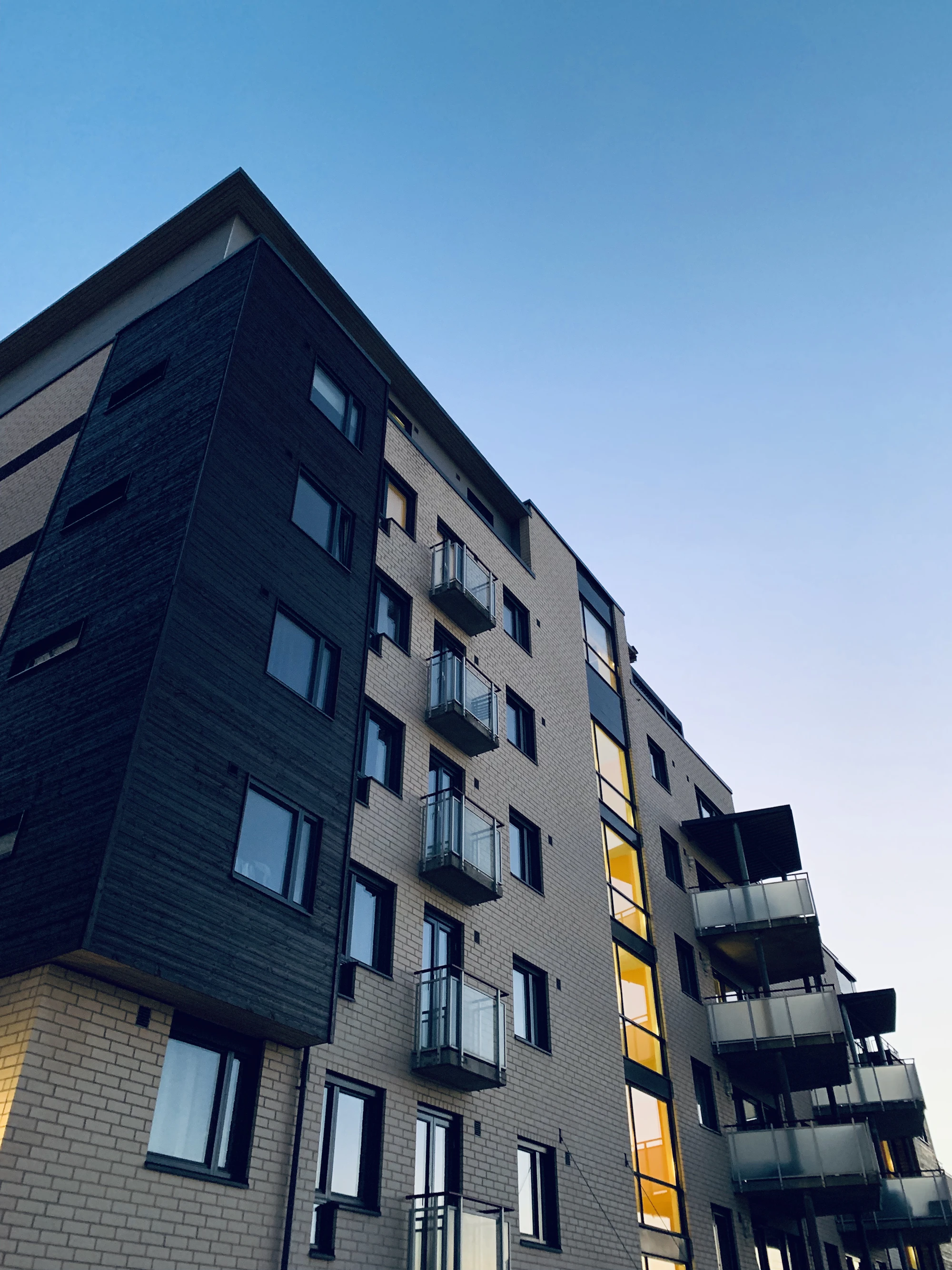
Una Residences — South Beach, Miami.
Family offices allocating capital to Miami's luxury new-construction market face a distinct set of due-diligence demands — from staged deposit schedules to jurisdiction-specific contract protections. This guide breaks down the frameworks sophisticated buyers need before committing to a South Beach or Brickell waterfront residence.
Why Miami New Construction Continues to Attract Family Office Capital
Miami has evolved from a seasonal resort market into a genuine global wealth hub, drawing family offices that once focused exclusively on New York, London, and Geneva. Several structural forces underpin this shift: Florida's absence of a state income tax, the city's positioning as the financial gateway to Latin America, and a wave of institutional-grade developers who have raised the bar for construction quality, amenity programming, and architectural pedigree. For a family office managing multigenerational wealth, a trophy Miami address now serves a dual function — a performing asset and a functional residence for principals and their networks.
South Beach in particular occupies a unique position within this landscape. The neighborhood offers something no inland submarket can replicate: an Art Deco and Mid-Century architectural fabric paired with direct Atlantic Ocean frontage and a walkable, culturally dense urban village. Inventory of true waterfront or ocean-view new-construction sites in South Beach is structurally constrained by historic-preservation zoning and the finite supply of land east of Collins Avenue. That scarcity dynamic is not a sales talking point — it is a verified planning reality that consistently supports long-term value retention, even through cyclical corrections.
Family offices approaching Miami should also appreciate that new construction is not a monolithic category. The market spans entry-level condominiums, boutique luxury buildings, and ultra-prime branded residences with hotel-level service infrastructure. The due-diligence requirements, deposit structures, and exit liquidity profiles differ materially across those tiers. This guide focuses on the upper end — projects where typical unit values run into seven or eight figures and where the sophistication of the developer, the contract terms, and the building's operational model are as important as the views.
Understanding Pre-Construction Deposit Structures in Miami's Luxury Segment
Pre-construction deposit structures in Miami are governed primarily by the Florida Condominium Act, which provides buyers with certain baseline protections — including a statutory rescission period after signing a purchase agreement. Beyond that statutory floor, however, every developer negotiates deposit schedules that reflect their financing needs, their confidence in market demand, and their leverage with construction lenders. Family offices should treat the deposit schedule as a negotiating document and a risk-disclosure instrument, not merely an administrative formality.
A typical luxury pre-construction project in Miami will require a series of deposits tied to construction milestones. An initial reservation deposit is followed by a contract deposit — often in the range of ten to twenty percent of the purchase price — paid at contract execution. Subsequent tranches may be called at groundbreaking, at the completion of the structure's concrete shell, and again when the building tops out. The final balance is typically due at closing, which coincides with the issuance of a certificate of occupancy. For a project with a multi-year construction timeline, a family office may have between thirty and fifty percent of the purchase price deployed before taking title, with that capital sitting in an escrow account governed by Florida law.
Escrow protections are a critical variable. Florida law requires that buyer deposits be held in escrow, but the specific escrow agent, the conditions under which funds can be released to the developer during construction, and the remedies available if the project fails to close all vary by contract. Family offices should engage Florida-licensed real estate counsel — not merely their general counsel — to review these provisions before execution. The distinction between a 'hard' escrow (funds remain entirely protected until closing) and a 'release escrow' (developer can draw down funds at milestones) has material implications for capital-at-risk calculations and should be modeled explicitly in the family office's investment thesis.
South Beach as an Allocation Target: Scarcity, Zoning, and Demand Drivers
South Beach's new-construction pipeline is, by design, thin. The Miami Beach Historic Preservation Board and the city's height-restriction ordinances impose constraints that do not exist in Brickell, Edgewater, or Sunny Isles Beach. The result is that when a significant new project does reach the market in South Beach or the adjacent South of Fifth neighborhood, it often absorbs a disproportionate share of ultra-high-net-worth demand that has been waiting for a product commensurate with its price expectations. For a family office building a Miami position, this supply constraint is a fundamental valuation support — one that should be stress-tested against historical absorption data and not taken on faith.
Demand for South Beach specifically is driven by a global buyer pool that values the neighborhood's cultural identity as much as its real estate fundamentals. Residents of South Beach's top buildings are not simply purchasing square footage — they are purchasing proximity to Art Basel Miami Beach, to the Design District, to a restaurant scene that has matured well beyond its nightlife-era reputation. This buyer profile — wealthy, internationally mobile, culturally sophisticated — creates a rental and resale market that is relatively resilient to domestic economic cycles, because it is anchored by foreign capital inflows and by the migration of domestic wealth from higher-tax states.
Family offices should also factor the operational environment into their underwriting. South Beach's short-term rental regulations are stricter than those in unincorporated Miami-Dade County, which affects yield assumptions for any residence that might be put into a rental program. Conversely, luxury condominiums in South Beach that offer managed rental programs through hotel operators or through the building's own concierge infrastructure can command premium nightly rates during Art Basel, the Formula 1 Miami Grand Prix weekend, and the winter season. A qualified Miami new-development specialist can help model both scenarios — owner-occupied holding versus income-generating deployment — against the specific rules applicable to any given building.
What Una Residences Illustrates About Developer Quality and Contract Sophistication
Una Residences is a completed ultra-luxury tower in Brickell — not South Beach — but it is consistently cited by family office advisors as a reference point for what best-in-class developer execution looks like in Miami's current cycle. Developed by OKO Group and designed by Adrian Smith + Gordon Gill Architecture, the project delivered on its pre-construction promises with a level of finish, structural engineering, and amenity execution that set a new benchmark for the Brickell waterfront. For family offices evaluating pre-construction commitments elsewhere, studying a completed project like Una Residences provides a template for the questions to ask and the standards to demand.
The lessons Una illustrates are both architectural and contractual. On the architectural side, the building demonstrates how a developer with genuine commitment to quality — reflected in the selection of an internationally recognized architect, the use of premium materials, and the investment in structural resilience — produces a building that retains its market position well after opening. On the contractual side, the project's sales process was characterized by contract terms that were sophisticated enough to attract family offices and institutional buyers who might otherwise have been deterred by the risks inherent in a long pre-construction cycle. That alignment between developer ambition and buyer protection is not accidental; it requires experienced legal structuring and a developer willing to accept constraints on how deposit funds are deployed.
Family offices evaluating current South Beach or broader Miami new-construction opportunities should use completed towers like Una Residences as a comparative baseline. Key benchmarks include: the actual cost per square foot at delivery versus the contracted price, the timeline from groundbreaking to certificate of occupancy versus the developer's original projection, the caliber of finish relative to the sales renderings, and the building's post-delivery resale velocity. These are observable, verifiable data points — not marketing claims — and a qualified buyer's agent with access to transaction records can compile them into a due-diligence package before you commit a dollar to any new contract.
Structuring the Purchase: Entity, Tax, and Cross-Border Considerations for Family Offices
Family offices acquiring Miami real estate rarely do so in their own names. A layered holding structure — combining a Florida LLC at the property level with a domestic or offshore trust or holding company above it — is common and serves several legitimate purposes: estate-planning flexibility, liability separation, privacy in public property records, and the ability to transfer ownership through entity interest assignment rather than deed transfer. The specific structure appropriate for any family office depends on the domicile of the ultimate beneficial owners, the intended use of the property, and the family's broader estate architecture. This is an area where Miami-based tax counsel and the family office's existing advisors must collaborate from the outset of the acquisition process.
Foreign family offices — particularly those with beneficial owners domiciled in Latin America, Europe, or the Middle East — face an additional layer of compliance requirements. FIRPTA withholding, FinCEN beneficial ownership reporting under the Corporate Transparency Act, and the geographic targeting orders that have historically applied to high-value cash real estate purchases in Miami-Dade County all create disclosure and compliance obligations that must be understood before contract execution, not after. Non-compliance is not merely a financial risk; it can jeopardize the closing itself and, in extreme cases, create exposure for the beneficial owners. Again, qualified local counsel is non-negotiable.
Currency and capital transfer logistics are often underestimated by first-time Miami buyers. Large wire transfers into the United States from foreign accounts — particularly from jurisdictions that U.S. financial institutions designate as elevated risk — can trigger correspondent bank delays or requests for additional documentation. A family office planning to fund a seven-figure deposit from an offshore account should begin the banking logistics conversation at least sixty days before the deposit is due. Title companies and escrow agents experienced with international ultra-high-net-worth transactions will have established protocols for this, but the burden of preparation falls on the buyer.
Selecting an Advisor: What a Family Office Should Demand from a Miami New-Development Specialist
The Miami new-construction brokerage landscape includes agents who specialize in representing developers — earning their compensation from the developer's marketing budget — and advisors who represent buyers exclusively. For a family office, the distinction is consequential. A developer's sales agent is contractually obligated to advance the developer's interests; a buyer's representative is obligated to advance yours. In practice, many luxury transactions are structured as co-brokerage arrangements where a buyer's agent and a developer's agent share a commission, but the alignment of your advisor matters enormously when it comes to negotiating contract terms, assessing project risk, and advocating for your interests if construction timelines slip or specifications change.
A qualified Miami new-development advisor for a family office should be able to demonstrate: a transaction history that includes completed new-construction closings (not just reservations), a working knowledge of Florida condominium law sufficient to flag problematic contract provisions, relationships with the Miami-Dade legal and tax advisory community, and fluency in the specific submarkets where you are allocating — because the micro-dynamics of South of Fifth in South Beach are materially different from those of Brickell Key or Edgewater. Ask prospective advisors for anonymized case studies of family office or institutional transactions they have advised on, and ask them to walk you through a sample deposit schedule and escrow analysis.
Finally, understand that the best advisors in this market have access to information that is not publicly available: pre-launch pricing, shadow inventory (units that developers hold back from public sale), and off-market resales within new buildings. For a family office whose acquisition criteria are specific — floor, view corridor, unit size, building operational model — this access can be the difference between finding the right asset and settling for what is publicly advertised. Engaging a well-connected Miami new-development specialist early, before you have identified a specific project, gives you the positioning advantage that institutional buyers routinely exploit in other asset classes. Denis Smykalov at Wolsen Developments guides buyers through exactly this process — if you are beginning your search or have specific questions about any aspect of a Miami purchase, a direct consultation is the most efficient first step.
Frequently Asked Questions
What is a typical pre-construction deposit schedule for a luxury Miami new-development purchase?
Luxury pre-construction projects in Miami typically require an initial reservation deposit followed by a contract deposit of roughly ten to twenty percent at signing, with additional tranches called at major construction milestones such as groundbreaking and topping out. The final balance is due at closing when the certificate of occupancy is issued. Total pre-closing outlay for a buyer can reach thirty to fifty percent of the purchase price before title is transferred.
Are pre-construction deposits protected in Florida?
Florida law requires that buyer deposits be held in escrow and provides a statutory rescission period after contract signing. However, the specific escrow terms vary by project — some contracts allow the developer to release funds at construction milestones, while others maintain a fully protected 'hard' escrow until closing. Buyers should have Florida-licensed real estate counsel review the escrow provisions before signing.
Why is South Beach new-construction inventory so limited?
South Beach's supply of new-construction sites is constrained by historic-preservation zoning, height restrictions imposed by the City of Miami Beach, and the finite land area east of Collins Avenue. These regulatory limits are structural, not cyclical, which means that when new projects do come to market, they tend to absorb concentrated demand from ultra-high-net-worth buyers who have been waiting for product at this tier.
Can a family office purchase Miami new construction through an LLC or trust?
Yes, and this is common practice. A layered holding structure — typically a Florida LLC at the property level with a trust or offshore holding company above it — provides estate-planning flexibility, liability separation, and privacy. The appropriate structure depends on the domicile of the beneficial owners and the family's broader estate architecture, and should be designed in collaboration with Miami-based tax counsel before contract execution.
What compliance obligations apply to foreign family offices buying Miami real estate?
Foreign buyers must contend with FIRPTA withholding, FinCEN beneficial ownership reporting under the Corporate Transparency Act, and potential geographic targeting order requirements for high-value cash purchases in Miami-Dade County. These obligations must be understood before contract signing, not at closing, and require coordination between the family office's existing advisors and qualified Florida real estate counsel.
What makes Una Residences a useful benchmark for evaluating other Miami new-construction projects?
Una Residences is a completed ultra-luxury tower in Brickell that is widely regarded as having delivered on its pre-construction commitments in terms of finish quality, construction timeline, and market positioning. Family offices can use its actual delivery metrics — cost per square foot at completion versus contracted price, timeline adherence, and post-delivery resale velocity — as observable benchmarks against which to evaluate the credibility of other developers' projections.
How do short-term rental regulations affect new-construction investments in South Beach?
The City of Miami Beach enforces stricter short-term rental regulations than unincorporated Miami-Dade County, which limits rental program options for South Beach condo owners. Some luxury buildings offer managed rental programs through hotel operators that are structured to comply with these rules, but buyers should model yield assumptions against the specific regulations applicable to each building rather than assuming unrestricted rental flexibility.
How early should a family office engage a Miami new-development advisor?
Engaging an advisor before identifying a specific project gives a family office access to pre-launch pricing, shadow inventory, and off-market resales that are not publicly advertised. The best advisors in the Miami market have information advantages that can be decisive when acquisition criteria are specific, so early engagement — analogous to retaining a financial advisor before identifying a specific investment — is the standard institutional approach.
What is the difference between a developer's sales agent and a buyer's representative in Miami new construction?
A developer's sales agent is contractually obligated to advance the developer's interests and is compensated from the developer's marketing budget. A buyer's representative is obligated to advocate for the buyer. In many luxury transactions, both participate in a co-brokerage arrangement, but the alignment of the buyer's specific advisor — including their willingness to flag unfavorable contract terms and negotiate on the buyer's behalf — is a critical distinction for family offices.
How should a family office plan for international wire transfers when funding a Miami pre-construction deposit?
Large wire transfers from offshore accounts — particularly from jurisdictions flagged by U.S. financial institutions as elevated risk — can trigger delays or requests for additional documentation from correspondent banks. Family offices should begin banking logistics discussions at least sixty days before a deposit is due and work with a title company or escrow agent experienced in international ultra-high-net-worth transactions.
Ready to Take the Next Step?