Mid-Beach · Brickell · Edgewater · crypto real estate Miami · 57 Ocean · Miami new construction
Miami New Development Buyer Guide for Crypto & Tech Wealth: Mid-Beach, Brickell vs. Edgewater, and Why 57 Ocean Stands Apart
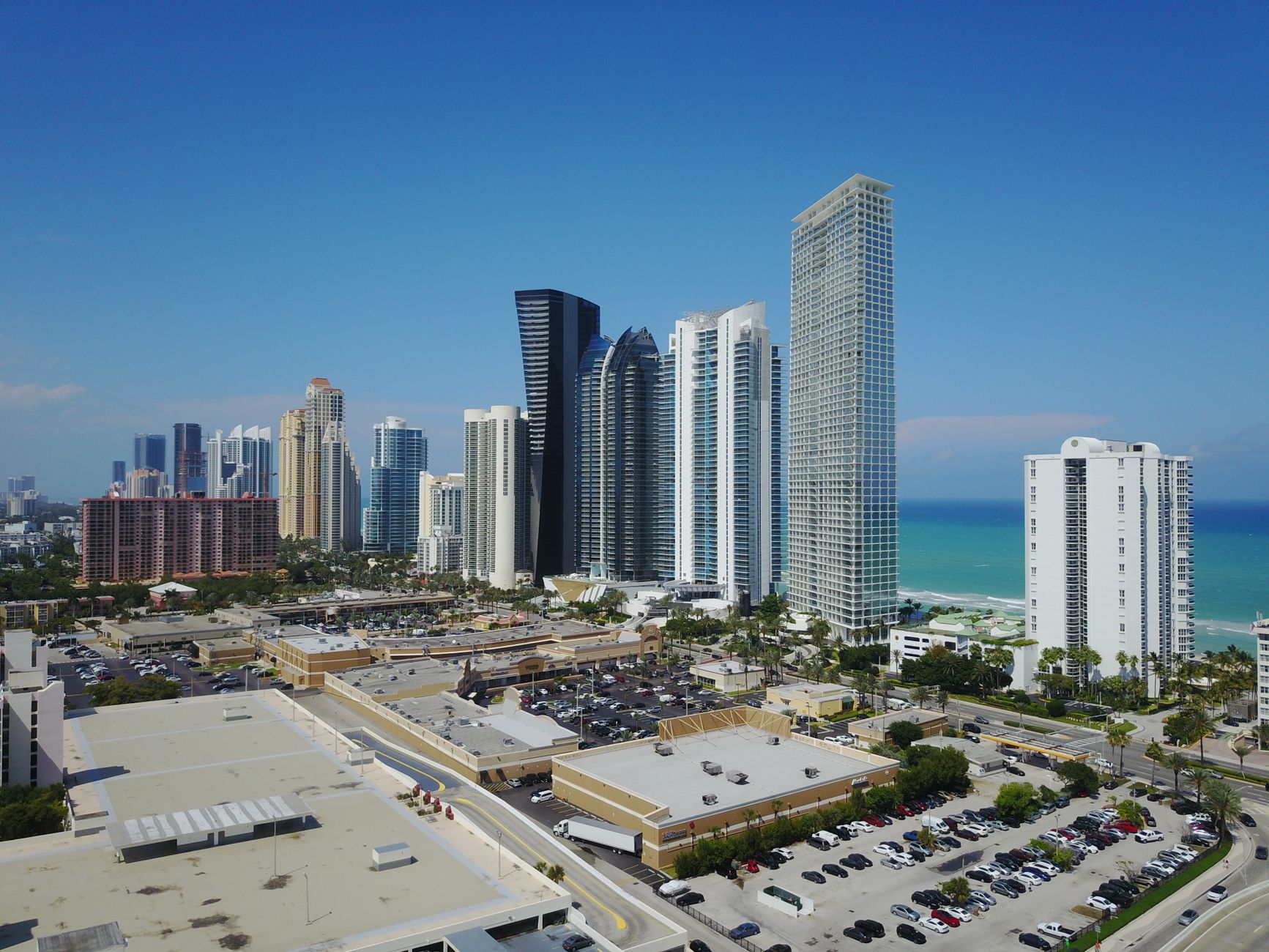
57 Ocean — Mid-Beach, Miami.
A comprehensive guide for cryptocurrency founders, tech executives, and digital-asset investors navigating Miami's new-construction luxury market — from understanding neighborhood tradeoffs to closing a deal with non-traditional capital.
Why Miami Is the Default Destination for Crypto and Tech Wealth
Over the past several years, Miami has undergone a structural shift rather than a cyclical boom. The city's combination of zero state income tax, a growing density of venture capital and crypto-native firms, and an internationally minded culture has made it the preferred relocation destination for founders, fund managers, and technology executives who have generated significant liquidity through digital assets. Unlike other sunbelt cities that attracted remote workers, Miami attracted decision-makers — people writing checks, not just cashing them — and the luxury real estate market has reorganized around their preferences.
For buyers whose net worth is concentrated in Bitcoin, Ethereum, or equity in private technology companies, the purchasing process in Miami carries unique considerations: asset-class liquidity timing, the mechanics of crypto-to-cash conversion or direct crypto settlement, developer appetite for non-traditional financing, and the long-term store-of-value thesis that underpins the decision to park capital in trophy real estate. Miami new-construction developers have increasingly structured their preconstruction deposit schedules and closing processes to accommodate these realities, and a growing number of transactions in the city now involve some form of digital-asset consideration.
Understanding which neighborhood aligns with a particular lifestyle and investment thesis is the first critical decision. The three submarkets most relevant to this buyer profile — Brickell, Edgewater, and Mid-Beach — each offer a fundamentally different proposition, and conflating them is one of the most common and costly mistakes a first-time Miami luxury buyer can make.
Brickell vs. Edgewater: Choosing the Right Urban Base
Brickell is Miami's financial district and the neighborhood most likely to feel immediately legible to a buyer relocating from Manhattan, San Francisco, or Singapore. Its skyline is dense, its walkability is high by Miami standards, and its infrastructure — from Michelin-recognized restaurants to coworking campuses to the Brickell City Centre retail corridor — is built for people who want an urban vertical lifestyle. New-construction towers in Brickell tend to command among the highest per-square-foot prices on the mainland, and the buyer pool skews toward finance professionals, Latin American wealth, and international executives who want a primary or secondary residence with maximum convenience.
Edgewater occupies a different emotional register entirely. Situated on Biscayne Bay just north of downtown and directly adjacent to Wynwood, it has become the neighborhood of choice for buyers who prioritize water views, lower density, and proximity to Miami's creative and tech ecosystem without the corporate formality of Brickell. New developments in Edgewater are typically glassier, more architecturally expressive, and more likely to feature private marina access or bay-facing terraces. The price-per-square-foot tends to be meaningfully lower than comparable Brickell product, which appeals to buyers who are optimizing for value rather than address prestige.
Denis Smykalov, broker at Wolsen Developments, points out that 'for crypto and tech buyers specifically, the Brickell vs. Edgewater question almost always comes down to whether the buyer is primarily anchored by business activity or by lifestyle — Brickell buyers are usually traveling internationally and want a high-service lock-and-leave building, while Edgewater buyers tend to be the ones who are actually living in Miami full-time and want to feel connected to the city's energy without being inside a corporate tower.' The distinction matters because both neighborhoods have strong new-construction pipelines, but the product types, management structures, and resale audiences are quite different, and choosing incorrectly creates friction that is difficult and expensive to unwind.
Mid-Beach: The Quiet Power Move for Serious Buyers
If Brickell is Miami's Wall Street and Edgewater is its Brooklyn, then Mid-Beach — the stretch of Miami Beach roughly between 26th and 63rd Streets — is its equivalent of the Upper East Side or Mayfair: established, private, architecturally refined, and deliberately insulated from the noise of South Beach tourism. Mid-Beach has historically been the province of ultra-high-net-worth buyers who have already done South Beach and are now optimizing for quality of life over social visibility. The residential density is lower, the buildings are newer or substantially renovated, and the oceanfront product is genuinely world-class.
What makes Mid-Beach particularly compelling for crypto and tech wealth buyers is the combination of asset defensibility and lifestyle flexibility. The submarket has a smaller total inventory than Brickell or Edgewater, which tends to support price stability. It sits far enough from South Beach's transient population to feel genuinely residential, while remaining close enough to the Design District, Wynwood, and Brickell for professional and social activity. For buyers who want an oceanfront residence rather than a bay-view high-rise — and who understand that direct Atlantic access is an inherently finite commodity — Mid-Beach represents a fundamentally different asset class than anything available on the mainland.
The buyer profile in Mid-Beach skews international and multigenerational. You are as likely to find a Brazilian tech founder as a European family office manager or a domestic hedge fund principal. The neighborhood rewards buyers who are thinking in decade-long time horizons, not quarterly ones — a disposition that aligns naturally with the long-term conviction investing mentality common among serious cryptocurrency holders who have already converted speculative gains into tangible assets.
57 Ocean: Mid-Beach New Construction Built for Discerning Buyers
57 Ocean is among the most carefully considered new-construction offerings in Mid-Beach, positioned at the intersection of architectural integrity and oceanfront living. Developed by MSD Partners — the family office of Michael Dell — with design by the internationally recognized firm Arquitectonica, 57 Ocean occupies a direct oceanfront site at 5775 Collins Avenue and delivers a scale and finish level that is rare even by Miami Beach standards. The building's relatively intimate unit count is a deliberate design choice that produces a resident experience closer to a private club than a conventional luxury condominium.
For crypto and tech buyers specifically, 57 Ocean's developer pedigree is a meaningful signal. MSD Partners is a sophisticated institutional capital allocator; the building is not a speculative development vehicle but a long-duration asset built to hold and appreciate. The interiors, designed by Brazilian architect Debora Aguiar, feature a palette of natural materials — travertine, teak, bleached oak — that reads as genuinely timeless rather than trend-dependent. Residences feature private elevator access, expansive oceanfront terraces, and ceiling heights that allow natural light to penetrate deep into the floorplate. These are not cosmetic amenities; they are structural quality signals that protect resale value.
For buyers evaluating 57 Ocean as part of a broader portfolio construction exercise, the relevant comparison set is not other condominiums in the same price band but rather the alternative uses of capital at comparable risk-adjusted return expectations. Oceanfront land in Mid-Beach is not being replenished; the supply constraint is permanent. Combined with Miami Beach's institutional status as a global wealth destination and the building's institutional sponsorship, 57 Ocean occupies a position in the market that is difficult to replicate and relatively straightforward to underwrite.
Closing with Crypto: What Miami New-Construction Buyers Need to Know
The mechanics of using cryptocurrency proceeds to purchase Miami new construction have evolved considerably since the first deals closed circa 2017 and 2018. Today, the most common path for crypto-wealthy buyers involves converting digital assets to USD through a regulated exchange or OTC desk and then proceeding with a conventional cash transaction. This approach offers the widest access to developer inventory and the simplest title and escrow process. However, a small but growing number of Miami developers and individual sellers have demonstrated willingness to accept cryptocurrency directly, typically Bitcoin or Ethereum, often with legal structures that include price adjustment provisions to manage volatility during the closing period.
Buyers should be aware that the tax implications of using appreciated cryptocurrency to purchase real estate are material and jurisdiction-specific. In the United States, converting crypto to fiat or using crypto directly in a transaction is generally treated as a taxable disposition of the digital asset. Preconstruction purchases — where a buyer pays a deposit today and closes potentially two to four years in the future — create additional complexity around the timing of gain recognition and the base price used for real estate depreciation. Engaging a tax attorney and a CPA with specific cryptocurrency and real estate transactional experience before executing any purchase agreement is not optional for serious buyers; it is foundational.
For buyers whose wealth is primarily in equity rather than crypto — founders pre- or post-liquidity event, executives with concentrated stock positions — the Miami new-construction market offers parallel flexibility through structured financing, margin lending against brokerage positions, and in some cases developer financing programs designed for high-net-worth buyers with illiquid but substantial balance sheets. The key is working with a brokerage team that understands how these structures interact with developer deposit schedules and can facilitate conversations between the buyer's financial advisors and the developer's legal team before any documents are signed.
How to Evaluate a Miami New-Development Purchase as a Wealth Preservation Asset
Crypto and tech buyers who approach Miami new construction purely as a lifestyle purchase often underperform relative to those who apply the same analytical rigor they would to any capital allocation decision. The most important variables are: land scarcity and replacement cost (oceanfront and bayfront are categorically different from inland product), developer track record and financial strength, the ratio of investor-owned units to owner-occupied units in the building (which affects both community quality and short-term rental performance), and the building's position in the broader submarket supply cycle. A tower that delivers into an oversupplied market faces years of price compression regardless of intrinsic quality.
Mid-Beach, relative to Brickell and Edgewater, tends to benefit from lower new supply additions simply because developable oceanfront parcels are genuinely scarce. New towers in Mid-Beach compete against an existing stock of pre-war and mid-century buildings that, while iconic, cannot match the amenity packages and structural specifications of contemporary product. This dynamic tends to concentrate demand for new construction among buyers who understand the distinction, which in turn supports premium pricing and faster absorption relative to comparable mainland projects.
The final consideration is management and rental optionality. Many crypto and tech buyers do not intend to occupy their Miami residence more than sixty to ninety days per year initially, and the ability to generate income through short-term or seasonal rentals during periods of non-occupancy can materially affect the economics of the hold. Building rules around rental frequency, minimum stay requirements, and management company exclusivity vary substantially across Miami Beach and should be reviewed in detail before purchase — ideally with the guidance of a broker who has direct experience with how those rules are enforced in practice rather than simply how they read on paper.
Frequently Asked Questions
Can I use Bitcoin or Ethereum to buy a new-construction condo in Miami?
Some Miami developers and private sellers have accepted cryptocurrency directly, but the most common approach is converting digital assets to USD through an exchange or OTC desk before closing. A small number of transactions have settled in crypto, typically with legal provisions managing price volatility during the closing period.
What are the tax implications of using cryptocurrency to buy real estate in Miami?
In the United States, using appreciated cryptocurrency to purchase real estate is generally treated as a taxable disposition of the digital asset, triggering capital gains recognition. Buyers should consult a CPA and tax attorney with specific cryptocurrency and real estate experience before executing any purchase agreement.
Is Mid-Beach or Brickell a better investment for a crypto or tech wealth buyer?
Mid-Beach offers genuine oceanfront scarcity and a quieter, more residential character that appeals to buyers with long time horizons. Brickell offers urban density, walkability, and a larger pool of international buyers. The best choice depends on whether the buyer prioritizes lifestyle immersion or lock-and-leave convenience.
What makes Mid-Beach different from South Beach for luxury condo buyers?
Mid-Beach sits between roughly 26th and 63rd Streets and is primarily residential, with lower tourist density than South Beach. The buildings tend to be newer or substantially renovated, the streets are quieter, and the buyer profile skews toward long-term residents and multigenerational wealth rather than the nightlife-oriented South Beach crowd.
Who developed 57 Ocean in Miami Beach?
57 Ocean was developed by MSD Partners, the family office of Michael Dell, and designed by the internationally recognized architecture firm Arquitectonica. Interior design was led by Brazilian architect Debora Aguiar.
What is the key difference between Brickell and Edgewater for new-construction buyers?
Brickell is Miami's financial district, with higher density, more retail infrastructure, and a buyer profile oriented toward business travelers and international executives. Edgewater is lower density, more architecturally expressive, directly on Biscayne Bay, and appeals to buyers who want to live in Miami full-time and connect with the city's creative and tech community.
What should crypto and tech buyers look for when evaluating a Miami new-construction building?
Key variables include land scarcity and replacement cost, developer financial strength and track record, the ratio of investor-owned to owner-occupied units, supply cycle timing for the specific submarket, and building rules around short-term rentals if income generation during non-occupancy periods is part of the investment thesis.
Are preconstruction deposits in Miami new-development projects compatible with crypto-wealth buying timelines?
Preconstruction purchases typically involve staggered deposit payments over a construction period of two to four years, which can align well with crypto buyers who need time to convert digital assets to fiat. However, buyers should model the tax consequences of each conversion event and work with advisors familiar with both crypto taxation and real estate closing mechanics.
Why do tech and crypto buyers prefer Miami over other US real estate markets?
Florida has no state income tax, Miami has a growing concentration of venture capital and crypto-native firms, and the city's international culture and infrastructure appeal to globally mobile buyers. These factors combine to make Miami a compelling long-term hold market rather than simply a lifestyle relocation.
What is the short-term rental policy at 57 Ocean Miami Beach?
Short-term rental policies vary by building and can change over time; buyers should review the condo documents and rules and regulations directly and confirm current policy with the developer or their broker before purchase, as minimum stay requirements and management exclusivity arrangements can materially affect investment returns.
Ready to Take the Next Step?