South Beach · New Construction Condominiums · Family Office Real Estate · Miami Luxury Real Estate · Condo Financing · Miami Beach Investment
Miami New-Construction Condo Buying Guide for Family Offices: South Beach Acquisitions, Financing Strategies, and The Residences at 1428
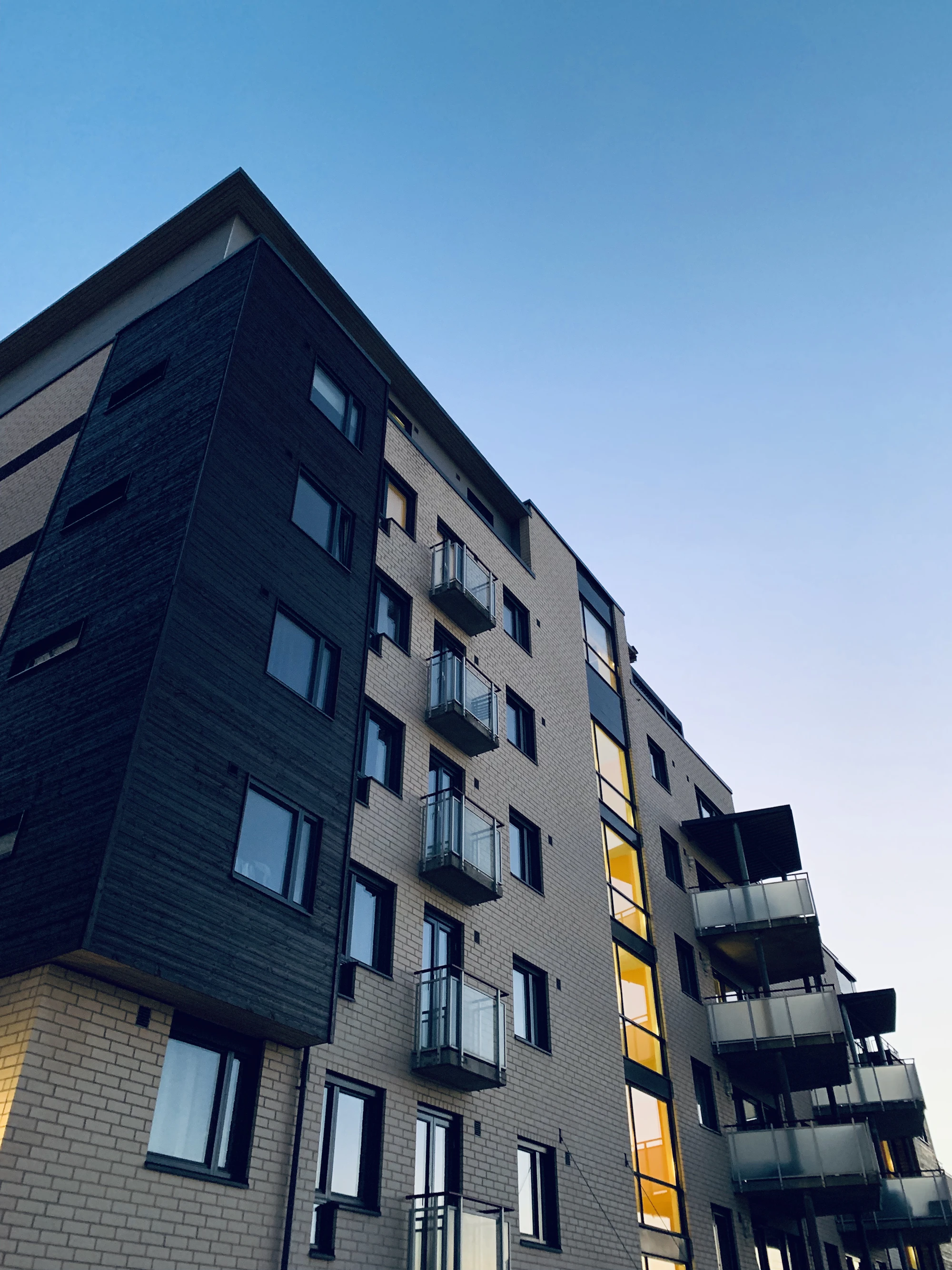
The Residences at 1428 — South Beach, Miami.
For family offices deploying capital into Miami's luxury new-construction market, South Beach represents one of the most defensible and appreciating asset classes in the Americas. This guide covers every dimension of a sophisticated acquisition — from pre-contract due diligence and developer escrow structures to institutional financing, tax positioning, and the specific opportunity at The Residences at 1428 — written for decision-makers managing generational wealth.
Why South Beach New Construction Belongs in a Family Office Real Estate Allocation
Family offices managing diversified real estate portfolios have increasingly recognized South Beach as a distinct micro-market within the broader Miami luxury ecosystem — one with supply constraints, cultural cachet, and international demand drivers that insulate values from cyclical corrections more effectively than suburban or even mainland Miami submarkets. The barrier to entry for new construction in South Beach is not merely financial; it is geographic and regulatory. The Art Deco Historic District, Miami Beach's notoriously strict zoning code, and the limited footprint of available land parcels make new ground-up development an extraordinarily rare event. When a new luxury residential tower receives approvals and breaks ground in South Beach, it is, in the most literal sense, a finite opportunity.
From a portfolio construction standpoint, South Beach luxury condominiums exhibit characteristics that align well with a family office's typical objectives: long-term capital preservation, inflation-hedged rental income, and a hard asset that retains liquidity in secondary markets. The rental market in South Beach — driven by high-net-worth short-term visitors, international executives, and a growing permanent resident class of relocated finance and tech professionals — generates gross rental yields that, while not venture-capital territory, provide meaningful income against acquisition cost, particularly when units are held in tax-efficient structures. The combination of appreciation potential and income generation is precisely what distinguishes this asset from purely speculative plays.
The post-2020 migration of wealth from New York, Chicago, San Francisco, and Latin American capitals has fundamentally altered the demand side of Miami's luxury market. South Beach, in particular, has attracted a buyer profile that includes Brazilian, Argentine, Colombian, and Venezuelan ultra-high-net-worth families who view Miami real estate not merely as an investment but as a geopolitical hedge — a stable, dollar-denominated safe harbor for wealth that might otherwise be exposed to currency devaluation, capital controls, or political instability. For a domestic family office, acquiring alongside this international buyer class in a supply-constrained market creates a natural valuation floor that is difficult to replicate in other U.S. markets.
Family offices that have historically allocated to commercial real estate — office, retail, industrial — are increasingly rotating into luxury residential new construction as part of a broader shift toward assets that combine personal utility with investment return. A South Beach condominium can serve simultaneously as a family retreat, an executive accommodation resource, a brand asset for the family enterprise, and a pure-play appreciation vehicle. This dual-use characteristic is unique in the real estate asset universe and gives family office principals a level of flexibility and optionality that a REIT investment or a DST structure simply cannot replicate. The lifestyle dimension is not incidental; for many family office clients, it is the decisive factor that converts an allocation from consideration to commitment.
Understanding the South Beach New-Construction Supply Pipeline and Why It Is Structurally Constrained
To understand why new luxury construction in South Beach commands such premium pricing — and why that premium is likely to persist — you must first understand the supply-side mechanics. Miami Beach is a barrier island roughly 7.1 miles long and between half a mile and two miles wide, entirely surrounded by Biscayne Bay and the Atlantic Ocean. There is, in the most definitive sense, no more land. Every new luxury residential project must come from redevelopment of an existing parcel, demolition of an older structure, or — in exceptional cases — adaptive reuse of a historic building. Each of these pathways involves navigating Miami Beach's Planning and Zoning Department, the Miami Beach Architectural Review Board, the Florida Department of Environmental Protection, and, for historically designated structures, the State Historic Preservation Office.
The approval process for a new luxury tower in South Beach routinely takes three to five years from initial application to construction permit, and the political environment on Miami Beach has grown more restrictive, not less, in recent years. Voter initiatives, sea-level rise mitigation requirements, and neighborhood association opposition have all added friction to the development pipeline. The practical result is that in any given five-year window, the number of genuinely new, ground-up luxury residential buildings delivered to South Beach is countable on one hand. This is not hyperbole — it is the documented reality of the permitting history of the city. For a family office evaluating the durability of its investment thesis, this structural supply constraint is perhaps the most important single data point.
The contrast with other luxury markets is instructive. In Brickell or Edgewater, where developable land is more available and zoning more permissive, the pipeline of new luxury towers is robust, which creates pricing competition and compresses returns for individual projects. In South Beach, there is no such competitive supply response. When demand increases — as it has dramatically since 2020 — prices rise because new supply cannot respond proportionally. This supply-demand asymmetry is the fundamental reason that South Beach luxury condominiums have historically outperformed the broader Miami market on a long-term basis, and it is why family offices with a multi-decade investment horizon should weight South Beach more heavily than its absolute size might suggest.
Within this constrained supply environment, The Residences at 1428 represents exactly the kind of rare opportunity that the structural analysis predicts should command a premium. Located on Collins Avenue in the heart of South Beach, this project occupies a site and carries a development program that would be essentially impossible to replicate today given current land availability, construction costs, and permitting timelines. For family offices that understand the supply-side story, the acquisition logic is straightforward: you are buying one of a limited number of new luxury units that will ever exist in this specific geography, at a moment when international and domestic demand for exactly this product is at a generational high.
Pre-Contract Due Diligence: What Family Offices Must Examine Before Signing a New-Construction Purchase Agreement
The purchase agreement for a Miami new-construction condominium is not a standard residential real estate contract — it is a complex, developer-drafted legal instrument that can run 50 to 100 pages and contains provisions that are materially different from resale contracts and that vary significantly from one developer to the next. Family offices must engage Florida-licensed real estate counsel with specific new-construction condominium experience before signing any agreement. The most critical provisions to scrutinize include the developer's reservation of rights to modify the project, the conditions under which the developer can cancel and refund deposits without interest, the definition of substantial completion, and the dispute resolution clause — which, in most developer agreements, mandates arbitration and limits class actions.
The Florida Condominium Act requires developers to deliver a prospectus — also called the offering documents — to prospective buyers at least three business days before execution of a purchase agreement, and buyers have a three-business-day right of rescission after execution. This statutory right is non-waivable and represents the buyer's most important consumer protection in a new-construction transaction. However, three business days is an extremely short window for a family office to complete a thorough review of documents that may include hundreds of pages of declarations, bylaws, rules and regulations, budget projections, and engineering reports. Best practice is to obtain the offering documents well in advance, ideally during the sales preview phase, and have counsel complete the substantive review before the contract execution clock begins.
Beyond the legal documents, family offices should conduct independent due diligence on the developer's financial health, construction track record, and litigation history. In Florida, corporate records are publicly searchable, and court records for Miami-Dade County are accessible online. A developer with a pattern of construction defect litigation, mechanic's lien disputes, or undercapitalized entities warrants significant additional scrutiny. The financial structure of the development entity matters too: is the project being built by a well-capitalized LLC with a funded construction loan, or is it a thinly capitalized special-purpose vehicle that is entirely dependent on presale deposits to fund construction? The answer to that question has enormous implications for delivery risk.
For projects like The Residences at 1428, the due diligence process should include a review of the development team's previous completed projects, the identity and reputation of the general contractor, the quality of the architectural and interior design firms engaged, and the specifications of the mechanical, electrical, and plumbing systems. Family offices should also evaluate the proposed condominium association's governance structure, the projected operating budget relative to comparable buildings, and the developer's track record in funding reserve accounts at adequate levels. These operational details, while less glamorous than the design narrative, determine whether the building will be well-managed and well-maintained over the decades — which is ultimately what protects the investment.
Deposit Structures, Escrow Protections, and Managing Capital at Risk During Construction
In Miami's new-construction market, presale deposit structures are substantially more demanding than anything a buyer would encounter in a resale transaction. It is standard practice for luxury developers to require deposits totaling 30 to 50 percent of the purchase price, delivered in stages tied to construction milestones. A typical structure might require 20 percent at contract execution, 10 percent at groundbreaking, and an additional 10 percent at topping-off, with the balance due at closing. For a family office acquiring a unit at, say, $5 million, this means having $1.5 to $2.5 million in capital committed and at risk during a construction period that can span two to four years. Managing this capital exposure thoughtfully is a critical element of the acquisition strategy.
Florida law provides meaningful protections for condominium presale deposits through the Condominium Act's escrow requirements. Developers are generally required to hold buyer deposits in escrow with a Florida-licensed escrow agent, and the funds cannot be disbursed to the developer for construction purposes unless the developer has posted a surety bond or an alternative financial assurance acceptable to the state. The escrow agent is an independent party — typically a title company or a bank — whose fiduciary duty runs to both parties but whose primary function is to ensure that buyer funds are protected in the event the developer fails to complete the project. Family offices should confirm the identity and financial strength of the escrow agent and review the escrow agreement as a standalone document, not merely as an exhibit to the purchase agreement.
The interest accruing on escrowed deposits is a negotiating point that varies by developer. In some transactions, particularly for large, multi-unit family office acquisitions, the developer will agree to pass interest earned on deposits through to the buyer, which can be meaningful on a deposit of several million dollars held for two to three years. In other cases, the developer retains the interest as part of their cost of capital offset. Family offices should address this in contract negotiations, ideally with counsel who has negotiated multiple South Beach new-construction transactions and has a benchmark for what is achievable. The interest issue is one of several where the standard form developer agreement is negotiable — despite developers' frequent representations to the contrary.
Beyond the escrow mechanics, family offices should model the opportunity cost of capital committed to deposits across the construction timeline. If the total deposit represents $2 million committed for 36 months at an assumed 5 percent opportunity cost, the implicit carrying cost is approximately $300,000 — a meaningful number that should factor into the total acquisition economics. Some family offices partially offset this by investing deposits in short-duration fixed income instruments within an escrow structure that permits such investment, subject to the developer's and escrow agent's agreement. At The Residences at 1428, prospective buyers should engage their broker and legal counsel early to understand the specific escrow and deposit structure applicable to the project and to ensure that the family office's treasury function is prepared to manage the capital deployment schedule efficiently.
Financing New-Construction Condominiums in Miami: Institutional Lending Options for Family Offices
Financing a new-construction condominium in Miami involves a materially different process than financing a completed resale property, and the options available to a family office are both more complex and more flexible than those available to an individual retail buyer. The primary distinction is that conventional mortgage financing — the kind offered by consumer lenders — is generally unavailable until the condominium project receives its certificate of occupancy and the condominium association receives its FNMA or FHA certification. During the construction period, a buyer who wants leverage must either use a construction-to-perm loan, a portfolio loan from a private bank, or a bridge facility secured by other assets — each of which has distinct advantages, costs, and structural considerations.
For family offices with established private banking relationships, a portfolio loan or securities-backed lending facility is often the most efficient financing vehicle. Private banks including J.P. Morgan Private Bank, Goldman Sachs Private Wealth Management, Citi Private Bank, and a number of European and Latin American private banks active in the Miami market offer credit facilities that allow ultra-high-net-worth clients to borrow against their investment portfolios to fund real estate acquisitions, including new-construction deposits and eventual closing payments. These facilities typically carry floating interest rates tied to SOFR or the bank's internal benchmark, and the loan-to-value ratios against the collateral portfolio can reach 50 to 70 percent, depending on the composition of the portfolio. The advantage of this structure is that it avoids the DSCR and appraisal requirements associated with mortgage financing.
Conventional jumbo mortgage financing, while unavailable during construction, becomes an option at closing once the project is complete and the condo association receives its warranted status. At that stage, family offices that wish to add leverage to completed units can access the jumbo mortgage market through private bank portfolio programs or through wholesale lenders offering non-agency products. Loan sizes for South Beach luxury condominiums routinely exceed $5 to $10 million, and lenders in this space include regional banks with Florida-specific appetite for high-value condo collateral. Interest rates on these loans are typically priced at a spread to the 10-year Treasury or to term SOFR, and the borrower's overall relationship with the bank — assets under management, deposit balances, other credit facilities — is frequently as important as the property's appraised value in determining credit approval.
Family offices should also consider the tax implications of financing structure when evaluating leverage options. Mortgage interest on a primary or secondary residence is deductible up to the limits established by current tax law, but condominiums held in corporate structures — LLCs, limited partnerships, or trust entities, which are common in family office acquisition strategies — may have different deductibility profiles. Florida's intangible tax on new mortgages and the documentary stamp tax on both the deed and the note are meaningful closing costs that should be modeled in advance. For a family office acquiring through a Delaware LLC or a foreign corporation, the interaction of these taxes with the entity's overall tax posture should be reviewed by a CPA with specific expertise in Florida real estate and international tax, particularly if the family office has non-U.S. beneficial owners.
Entity Structuring and Tax Efficiency for Family Office Condo Acquisitions in Florida
The question of how to hold title to a Miami luxury condominium is not a decision to be delegated to the sales contract negotiation phase — it is a strategic decision that should be made before any offer is submitted and should be informed by the family office's existing entity structure, the beneficial owners' domicile and citizenship, the intended holding period, the anticipated exit strategy, and the family's broader estate planning objectives. The most common holding structures for family office condominium acquisitions in South Beach include single-member Delaware LLCs, multi-member family LLCs taxed as partnerships, Florida LLCs, revocable living trusts, irrevocable trusts with swap powers, and, for foreign buyers, U.S. corporations or foreign corporations holding through a U.S. blocker entity.
Each structure carries different implications for federal income tax, Florida documentary stamp tax, estate and gift tax, and FIRPTA withholding if the property is eventually sold by a foreign person. For domestic family offices, the LLC structure is often preferred because it provides liability protection, allows for pass-through taxation, and is flexible enough to accommodate future gifting of interests to younger generations. For foreign family offices — particularly those from Latin America, Europe, or the Middle East — the structure must address FIRPTA, the estate tax treaty position of the relevant country, and the reporting requirements under FBAR and FATCA if U.S. financial accounts are involved. Counsel experienced in both Florida real estate and international tax is not optional in these situations; it is essential.
Florida offers a unique advantage for family offices in the estate planning context: the state has no state income tax and no state estate or inheritance tax. For a domestic family office principal who is willing to establish Florida as their primary domicile — which requires physical presence, a Declaration of Domicile filed with the county clerk, and the surrender of the prior state's domicile — the estate tax savings on a large luxury real estate portfolio can be substantial. The homestead exemption, which provides both a cap on assessed value increases and a constitutional protection against forced sale to satisfy most creditors, is available for primary residences and represents a meaningful benefit for family office principals who intend to use their South Beach condominium as their primary residence.
When evaluating a specific acquisition like The Residences at 1428, the family office's tax and legal advisors should be engaged in the entity structuring conversation from the earliest stage of the acquisition process — not after the purchase agreement is signed. Changing the title-holding entity after execution of a purchase agreement can trigger documentary stamp tax, require lender consent if financing is involved, and create complications with the developer's KYC and AML compliance process, which has become significantly more rigorous in South Florida following federal beneficial ownership reporting requirements. The developers of premium South Beach projects increasingly require disclosure of beneficial ownership at contract execution, and the family office should be prepared to provide this documentation in a complete and accurate form.
The Residences at 1428 South Beach: Product Analysis for Institutional Buyers
The Residences at 1428 occupies a genuinely distinctive position within the South Beach new-construction market — a position that is defined not merely by its address on Collins Avenue but by its development program, design philosophy, and the specific combination of architectural quality, amenity offering, and unit configuration that distinguishes it from both the boutique Art Deco-era residential conversions that dominate the neighborhood's housing stock and from the older generation of conventional Miami Beach high-rises. For a family office evaluating this project, the starting point of the analysis should be a rigorous comparison of the product against the universe of competing luxury inventory in South Beach — both new construction and premier resale — to establish a defensible view on relative value.
The building's design represents a specific architectural thesis about luxury living in South Beach: that the neighborhood's unique combination of indoor-outdoor living, walkability to cultural institutions, proximity to the beach, and access to world-class dining and nightlife should be physically embedded in the building's program, not treated as external amenities that residents access by leaving the building. This is reflected in the unit plans, which are designed around natural light, cross-ventilation, and seamless transitions between interior living spaces and terraces or balconies. For a family office principal accustomed to the programmatic sophistication of New York or European luxury residential product, the architectural ambition of The Residences at 1428 will register as a meaningful departure from the commodity luxury product that has historically dominated the Miami new-construction market.
From an investment perspective, the key metrics to analyze for any South Beach new-construction unit include the price per square foot relative to recently closed comparable transactions, the projected capitalization rate if the unit is leased, the quality and financial health of the condominium association's projected budget, the developer's track record on delivery timelines, and the depth of the resale market for similar units in the building and in comparable buildings nearby. For The Residences at 1428, the combination of a constrained supply environment, a differentiated design program, and a location that captures South Beach's lifestyle premium without the noise exposure of Ocean Drive creates a compelling value proposition that holds up well against these metrics.
Family offices acquiring at The Residences at 1428 should also evaluate the building's management structure and the identity of the property management company that will operate the building post-delivery. In the luxury South Beach market, the quality of day-to-day building management — concierge service, maintenance responsiveness, common area standards, security protocol — has a direct and measurable impact on both rental rates and resale values. Buildings managed by hospitality-grade operators command meaningful premiums over comparable buildings with conventional condominium association management, and this premium is reflected consistently in the transaction data. The management structure is therefore not merely an operational detail but a core element of the investment thesis.
Rental Income Strategies, Short-Term Rental Regulations, and Yield Optimization in South Beach
Family offices that intend to generate rental income from their South Beach condominium acquisition must navigate a regulatory environment that has become significantly more complex in the past five years. Miami Beach has enacted a series of ordinances that substantially restrict short-term vacation rentals — defined as rentals of less than six months and one day — in most residential zoning districts. The regulations are enforced aggressively, with fines that can reach tens of thousands of dollars per violation, and the city has invested in technology to identify unpermitted rental listings on platforms like Airbnb and VRBO. Before committing to a rental income strategy that assumes short-term rental capability, family offices must confirm both the zoning status of the specific parcel and the condominium association's rental restrictions, which may be more limiting than the city's baseline regulations.
For buildings that are permitted for short-term rentals — typically those with hotel-zoned parcels or those that obtained grandfathered STR licenses — the rental economics in South Beach are exceptional. During peak season (December through April), nightly rates for well-appointed two- and three-bedroom luxury units in South Beach can reach levels that generate annualized gross rental revenues that compare favorably with the acquisition cost, particularly when occupancy is managed by a professional short-term rental operator with an established distribution network and dynamic pricing capability. However, the operating expenses associated with short-term rental management — property management fees, platform commissions, housekeeping, maintenance, insurance, and the not-insignificant cost of furnishing and equipping a unit to luxury standards — must be modeled carefully to arrive at net operating income.
For properties that are restricted to long-term rentals — six months and one day or longer — the South Beach market still offers compelling lease terms driven by the high-net-worth tenant base that has relocated to Miami in large numbers since 2020. Annual rents for premier luxury units in South Beach have increased substantially, and the tenant quality in this submarket — often senior finance, technology, or legal professionals with strong income and impeccable credit — reduces collection risk significantly compared to broader rental markets. Family offices managing long-term rental units in South Beach should engage a local luxury property management firm with a documented track record in the submarket, as the quality of tenant screening, lease negotiation, and ongoing management directly impacts both yield and asset preservation.
The Residences at 1428 and its specific rental permissions should be reviewed in the offering documents and confirmed with the developer's sales team and the family office's legal counsel. The condominium declaration will specify the minimum lease term, any restrictions on the number of leases per year, any approval requirements for tenants, and any short-term rental permissions or prohibitions. These provisions are established at the developer level and embedded in the declaration recorded with Miami-Dade County, and they govern the building permanently — they cannot be materially changed without a supermajority vote of unit owners, which is an extremely high bar in practice. Understanding the rental regulatory framework before acquisition is therefore a prerequisite, not an afterthought.
Closing Process, Title Insurance, and Post-Closing Administrative Essentials for New-Construction Condominiums
The closing of a Miami new-construction condominium is substantially more complex than a resale closing, and family offices should allocate adequate time, attention, and professional resources to the closing process. The developer will typically issue a closing notice 30 to 60 days before the anticipated closing date, at which point the buyer's financing must be in place, title insurance must be ordered and underwritten, and the closing agent must confirm that the certificate of occupancy has been issued, the condominium has been properly recorded with the county, and the unit's certificate of completion has been delivered to the buyer. Each of these steps involves multiple parties — the developer's counsel, the buyer's counsel, the lender's counsel, the title company, and the local government — and any one of them can delay the closing if not managed proactively.
Title insurance for a new-construction condominium in Florida serves a somewhat different function than in a resale transaction. Because the property is newly constructed and the developer's chain of title is generally clean, the primary title risks are mechanic's liens — claims filed by contractors or subcontractors who have not been paid for work on the project — and survey exceptions. Florida's construction lien law is robust, and a general contractor, subcontractor, or material supplier who has not been paid has the right to file a claim of lien against the property that can survive closing and attach to the buyer's title if not properly discharged. The developer is required by contract to provide lien releases, but the buyer's title insurance company should confirm that all potential lienors have been properly noticed and that the title is clean before issuing the policy.
Closing costs for a new-construction condo in Miami-Dade County include Florida documentary stamp tax on the deed (currently 0.70 percent of the purchase price), Florida documentary stamp tax on the note if there is a mortgage (currently 0.35 percent of the loan amount), the intangible tax on the mortgage (0.002 percent of the loan amount), the owner's title insurance premium, the lender's title insurance premium if applicable, recording fees, and any homeowners association transfer fees or working capital contributions required by the condominium declaration. These costs can total 1.5 to 2.5 percent of the purchase price at the buyer's level, and they should be modeled in the acquisition budget from the outset. Family offices acquiring through entities should also confirm that their entity is in good standing and is registered to do business in Florida, as a closing cannot proceed with an entity that is not properly authorized.
Post-closing, the family office should establish a systematic administrative framework for the condominium unit that includes property tax monitoring and appeal rights (the first assessment of a newly constructed unit can be aggressive, and a timely appeal can generate meaningful savings), homestead exemption filing if applicable, insurance placement at appropriate coverage levels for a luxury unit, and enrollment in the building's management and communication systems. Condominium association assessments — both monthly operating assessments and any special assessments for capital improvements — must be tracked and paid on schedule to avoid late fees and, ultimately, the lien rights that Florida law grants condominium associations against delinquent owners. The administrative details of ownership are unglamorous but are a genuine component of asset management that a family office office manager or property administrator should own explicitly.
Long-Term Asset Management, Exit Strategies, and Generational Transfer of South Beach Real Estate
Family offices that acquire South Beach luxury condominiums as part of a generational wealth strategy must think from the outset about the full lifecycle of the asset — acquisition, holding period optimization, and eventual disposition or inter-generational transfer. The holding period for a luxury condominium in a supply-constrained market like South Beach has historically rewarded patience: the transaction costs of acquisition and disposition are meaningful (on the order of 5 to 8 percent of value in aggregate), and the capital appreciation that justifies those costs tends to materialize over a five-to-ten-year or longer horizon rather than in the short term. Family offices with a long investment horizon are structurally advantaged over institutional funds with defined hold periods and fiduciary pressure to exit.
For family offices with estate planning objectives, a South Beach luxury condominium held in an LLC or limited partnership can be a vehicle for transferring value to the next generation through a gifting program that takes advantage of applicable annual gift exclusions and the lifetime exemption. A real estate holding entity allows the senior generation to gift minority interests — which may qualify for valuation discounts for lack of control and lack of marketability — to children or trusts for their benefit, effectively transferring a portion of the economic value of the property at a discounted tax value. This strategy requires careful compliance with the IRS's substance requirements for the business entity and should be implemented with the advice of estate tax counsel who specializes in real property holding structures.
When the family office is ultimately ready to exit — whether through an outright sale, a 1031 exchange into another property, or a charitable vehicle such as a charitable remainder trust — the liquidity of the South Beach luxury market is an important consideration. The market for well-priced, well-maintained luxury condominiums in South Beach is genuinely international and genuinely deep, with buyer demand flowing from Latin America, Europe, the Middle East, and domestic sources simultaneously. This breadth of demand provides pricing support and a reasonable expectation of a timely exit at market value, assuming the property has been maintained to a standard consistent with the building's peer group. Buildings that are well-managed and where the condominium association has maintained adequate reserves consistently generate better exit outcomes for individual unit sellers.
The 1031 exchange strategy — which allows a seller to defer capital gains tax by reinvesting the proceeds into a like-kind property within the statutory timeline — is available to family offices holding real property in non-corporate entities but requires careful advance planning, particularly in a new-construction context where the replacement property may not be immediately available. A reverse exchange or a build-to-suit exchange may be appropriate for family offices that are acquiring a new-construction unit as the replacement property in a 1031 exchange, and the qualified intermediary must be engaged before any exchange funds are constructively received. Given the complexity of 1031 exchanges involving new construction and entity-held property, family offices should initiate the tax planning dialogue well in advance of any disposition — not in the weeks before closing. Properties like The Residences at 1428 can serve as excellent replacement properties in a 1031 exchange strategy precisely because their supply-constrained characteristics and long-term appreciation profile align with the objectives of a taxpayer seeking to deploy exchange proceeds into a high-quality, durable asset. If you have questions about current pricing or availability in South Beach, Denis Smykalov at Wolsen Developments is available for a direct consultation — no obligation, just straight answers about what is actually on the market.
Frequently Asked Questions
What legal protections does a buyer have if a Miami new-construction developer fails to complete the project?
Under the Florida Condominium Act, buyer deposits for new-construction condominiums must be held in a federally insured escrow account or secured by a surety bond acceptable to the state, which means that in most properly structured transactions, a buyer's deposit is recoverable if the developer fails to deliver. If the developer cancels the project, the escrow agent is obligated to return the funds plus any accrued interest (depending on the escrow agreement terms) to the buyer. Additionally, buyers have a rescission right of at least three business days after executing the purchase agreement, during which they can cancel for any reason and receive a full deposit refund. Beyond the statutory protections, buyers should also confirm that their purchase agreement contains a clear longstop date — a date by which the developer must deliver the unit or the buyer has the right to cancel and recover all deposits — as this provision is not always included in standard developer form agreements and must be negotiated. Family offices should retain Florida-licensed real estate counsel before signing any new-construction purchase agreement in order to fully understand and, where possible, strengthen these protections contractually.
Can a foreign family office acquire a Miami new-construction condo through a foreign corporation, and what are the FIRPTA implications at sale?
Yes, a foreign corporation can hold title to Florida real property, including new-construction condominiums, but doing so has significant tax implications that must be modeled in advance. The Foreign Investment in Real Property Tax Act (FIRPTA) requires a buyer purchasing property from a foreign person or entity to withhold 15 percent of the gross sale price and remit it to the IRS, which creates a withholding obligation that can create friction at resale and reduce the effective net proceeds to the seller unless a withholding certificate reducing the amount is obtained from the IRS in advance. Additionally, a foreign corporation holding U.S. real property is subject to the branch profits tax, which imposes an additional layer of tax on earnings repatriated to the foreign parent — a tax that applies on top of the corporate income tax and can significantly erode returns. Many advisors recommend that foreign family offices use a U.S. blocker corporation or a carefully structured trust arrangement to hold Florida real property, as these structures can mitigate some of the adverse FIRPTA and branch profits tax consequences, though no structure eliminates all U.S. tax exposure. The interaction of FIRPTA, estate tax treaties, and the specific country of domicile of the beneficial owners requires analysis by a U.S. tax attorney with international real estate experience before any acquisition structure is finalized.
How does the Miami-Dade County property tax assessment process work for newly constructed condominiums, and can the initial assessment be appealed?
When a newly constructed condominium unit is first assessed by the Miami-Dade County Property Appraiser, the assessment is typically based on the just value of the property as of January 1 of the tax year in which the construction is completed, which in practice often means the assessment reflects the purchase price or a value derived from comparable sales — a figure that can be aggressive relative to the unit's income-producing or income-theoretical value. Florida law provides property owners the right to challenge the Property Appraiser's assessment through the Value Adjustment Board (VAB), which is an independent quasi-judicial body that hears assessment disputes. The VAB petition must be filed by a statutory deadline — generally September 18 of the tax year — and the hearing process involves submission of evidence including comparable sales data, income capitalization analyses, and any appraisal reports the owner wishes to present. For high-value new-construction condominiums where the assessed value may differ significantly from a defensible market value calculation, a successful VAB challenge can produce meaningful annual tax savings that compound over the holding period. Family offices should engage a Florida-licensed property tax consultant or attorney to evaluate the initial assessment upon delivery and file a timely petition if the assessment appears excessive.
What are the key differences between a portfolio loan from a private bank and a conventional jumbo mortgage for a South Beach luxury condo acquisition?
A portfolio loan from a private bank is a credit product held on the bank's balance sheet rather than sold into the secondary mortgage market, which means the bank has full discretion over underwriting criteria, documentation requirements, and loan terms — resulting in a product that can be far more flexible than a conventional jumbo mortgage subject to agency or investor guidelines. For a family office where income is irregular, held in multiple entities, or primarily derived from investment returns rather than W-2 employment, the portfolio loan's flexibility in income documentation is particularly valuable, as private banks will often underwrite on the basis of assets under management and overall relationship balance rather than a conventional debt-to-income ratio. Conventional jumbo mortgages, by contrast, must meet the guidelines of the secondary market buyers or guarantors, which typically include strict debt-to-income requirements, standard appraisal protocols, and for condominium projects, a warrantability review that assesses the project's conformance with FNMA or FHLMC condo guidelines — a process that can delay or complicate financing for a new-construction project that has not yet accumulated sufficient owner-occupancy and association financial history. The interest rate on a portfolio loan may be higher or lower than a conventional jumbo depending on the borrower's relationship economics with the bank and the rate environment at the time of execution. Family offices should compare both options at the time of financing and evaluate total cost of credit including relationship pricing, covenants, prepayment terms, and the administrative burden of ongoing compliance.
What condominium association financial metrics should a family office review before closing on a new-construction unit?
The financial health of a condominium association is a critical determinant of both the quality of the living experience and the long-term preservation of unit values, and family offices should treat the association's financial documents as seriously as any other element of their investment due diligence. The most important documents to review are the proposed operating budget for the first year of operation, the projected reserve fund schedule, the developer's disclosure of any special assessments contemplated in the near term, and the association's insurance program including the master policy, windstorm coverage, and flood insurance. Florida law requires condominium associations to conduct a reserve study and to fund reserves at a level adequate to address anticipated capital expenditures for the building's major components, and for new buildings, the developer's initial budget should be evaluated against benchmarks from comparable luxury buildings to assess whether the proposed assessment levels are realistic or whether buyers should anticipate early increases. The reserve funding adequacy question has taken on new urgency following the Surfside condominium collapse of 2021 and the subsequent passage of Florida Senate Bill 4D, which mandated more rigorous structural inspections and reserve funding requirements for condominium buildings statewide — requirements that will have ongoing financial implications for all South Florida condominium associations. Family offices should have their counsel or a qualified property manager review the association documents with these new requirements in mind.
How do Miami Beach's short-term rental restrictions apply to luxury condominiums on Collins Avenue, and are there any exceptions?
Miami Beach's short-term vacation rental ordinance, which has been in effect in various forms since 2010 and has been strengthened through subsequent amendments, generally prohibits rentals of less than six months and one day in residentially zoned areas of the city, including most of South Beach. Collins Avenue north of approximately 23rd Street includes a mix of residential and hotel-zoned parcels, and buildings on hotel-zoned parcels may be permitted for short-term rentals depending on their specific zoning designation and any applicable conditional use approval. However, even within hotel-zoned buildings, the condominium association's declaration may impose additional restrictions on rental frequency or minimum lease terms that are more restrictive than the city's baseline rules — and these private restrictions are legally enforceable against individual unit owners. The city enforces its short-term rental prohibitions through a combination of code compliance inspectors, automated monitoring of online rental platforms, and a complaint-driven enforcement process, and the fines for violations have been increased to levels that represent a genuine financial deterrent. Family offices that acquire South Beach condominiums with rental income as a component of the investment thesis must obtain written confirmation from the developer, the condominium association, and their legal counsel regarding the specific rental permissions applicable to the unit before relying on any short-term rental income projections.
What construction quality standards should a buyer insist on specifying in the purchase agreement for a South Beach luxury condo?
A standard developer form purchase agreement describes the unit's specifications at a high level, often with language reserving the developer's right to make substitutions of equal or comparable quality — a provision that can result in material deviations from the specifications presented during the sales process if it is not properly constrained. Family offices should negotiate specific specifications schedules as exhibits to the purchase agreement, including the exact brands and models of appliances, the specific stone and tile materials, the mechanical system specifications, the window and door system performance ratings, and the smart home technology platform. Florida's hurricane and wind load requirements for new construction are among the most demanding in the United States, and buyers should confirm that the building's impact windows and doors are specified to meet or exceed the current Miami-Dade Product Control approval requirements, which represent the industry standard for wind resistance in South Florida. The quality of the structural and mechanical systems is equally important: buyers should inquire about the building's concrete mix design and rebar specifications, the HVAC system's energy efficiency and dehumidification capability (critical in Miami's humid climate), and the plumbing system's resistance to the aggressive municipal water chemistry that affects many Miami buildings over time. A pre-closing walkthrough inspection conducted by a licensed building inspector or structural engineer is a non-negotiable step before signing the closing certificate of completion, as it is the buyer's last formal opportunity to document and require remedy for any construction defects before taking title.
What is the typical timeline from purchase agreement execution to closing for a South Beach new-construction condo, and what are the most common causes of delay?
The timeline from purchase agreement execution to closing for a South Beach new-construction condominium depends entirely on where the buyer enters the sales process relative to the construction schedule: a presale buyer who contracts before groundbreaking may face a three-to-four-year timeline, while a buyer who contracts during construction might close in 12 to 24 months. The most common causes of delay in Miami new-construction projects include permitting and inspection delays caused by backlog at the Miami Beach Building Department, supply chain disruptions affecting delivery of imported finishes, mechanical, and electrical components, weather-related construction stoppages during hurricane season, and financing delays if the developer's construction loan requires modifications or extensions. Subcontractor labor availability has been a persistent constraint in the Miami construction market since 2021, and projects that require highly specialized trades — custom metalwork, stone installation, smart home integration — have experienced extended completion timelines. Buyers should ensure that their purchase agreement specifies a longstop date with clear consequences for the developer if that date is not met, and should model a conservative timeline in their financial projections to account for the real probability of schedule variance. For family offices with liquidity constraints or parallel real estate transactions that depend on the closing, building timing flexibility into the financial plan is essential.
How should a family office evaluate the lifestyle and cultural amenities of South Beach as part of the investment and residential decision?
South Beach's lifestyle offering is genuinely world-class and is a non-trivial driver of both the residential demand and the investment returns in the luxury condo market — buyers who discount the lifestyle dimension because they are primarily investment-oriented miss an important part of the pricing story. The neighborhood is home to the Bass Museum of Art, the New World Symphony at the Frank Gehry-designed New World Center, the Art Deco Historic District (the largest concentration of Art Deco architecture in the world), and a culinary and hospitality scene that includes both legacy institutions and consistently rotating high-profile restaurant concepts. For family office principals who will use the property as a primary or secondary residence, the walkability of South Beach — the ability to access the beach, restaurants, cultural venues, and medical services without a car — is a distinctive quality of life advantage relative to other luxury residential submarkets in South Florida. The neighborhood's international character means that Spanish, Portuguese, French, Hebrew, and other languages are routinely spoken in South Beach's retail and hospitality establishments, which is a meaningful comfort factor for non-English-speaking family principals. The proximity to Miami International Airport (approximately 30 to 40 minutes by car) and Fort Lauderdale-Hollywood International Airport (approximately 45 minutes) provides genuine private and commercial aviation access that supports the global mobility requirements of family office principals with international business interests.
What due diligence should a family office perform on the developer and general contractor before committing to a South Beach new-construction purchase?
Evaluating the developer and general contractor is one of the most consequential elements of new-construction due diligence, and it requires active research rather than reliance on the developer's marketing materials. For the developer, the minimum review should include an examination of all previously completed condominium projects in Florida — specifically looking at delivery dates relative to promised timelines, the quality of construction and finishes relative to presale representations, the track record of the condominium association's financial health in the years following delivery, and any litigation involving construction defects, warranty claims, or deposit disputes. Florida court records are publicly searchable, and a litigation search of the developer entity, its principals, and any affiliated development entities will often reveal patterns that are not visible in the developer's curated project history. For the general contractor, the Florida Department of Business and Professional Regulation maintains a searchable database of licensed contractors that includes complaint and disciplinary history, and the contractor's bonding capacity and insurance certifications should be confirmed as adequate for the scope of the project. Family offices should also speak directly with residential buyers in the developer's previous projects — not just the ones the developer volunteers as references — to get an unvarnished assessment of the construction quality, the developer's responsiveness to punch list and warranty claims, and the quality of the transition to owner-controlled condominium association governance. This qualitative due diligence is time-consuming but is genuinely differentiated intelligence that is not available in any document and that can be decisive in distinguishing a best-in-class developer from one whose marketing presentation exceeds their actual delivery capability.
Ready to Take the Next Step?