1031 Exchange Miami · Foreign National Seller Miami · Midtown Miami Luxury Real Estate · FIRPTA Miami · Miami Luxury Seller Guide · Faena House
Miami Luxury Seller's Guide: 1031 Exchange Into Midtown Miami — Tax, Legal & Strategy for Foreign Nationals
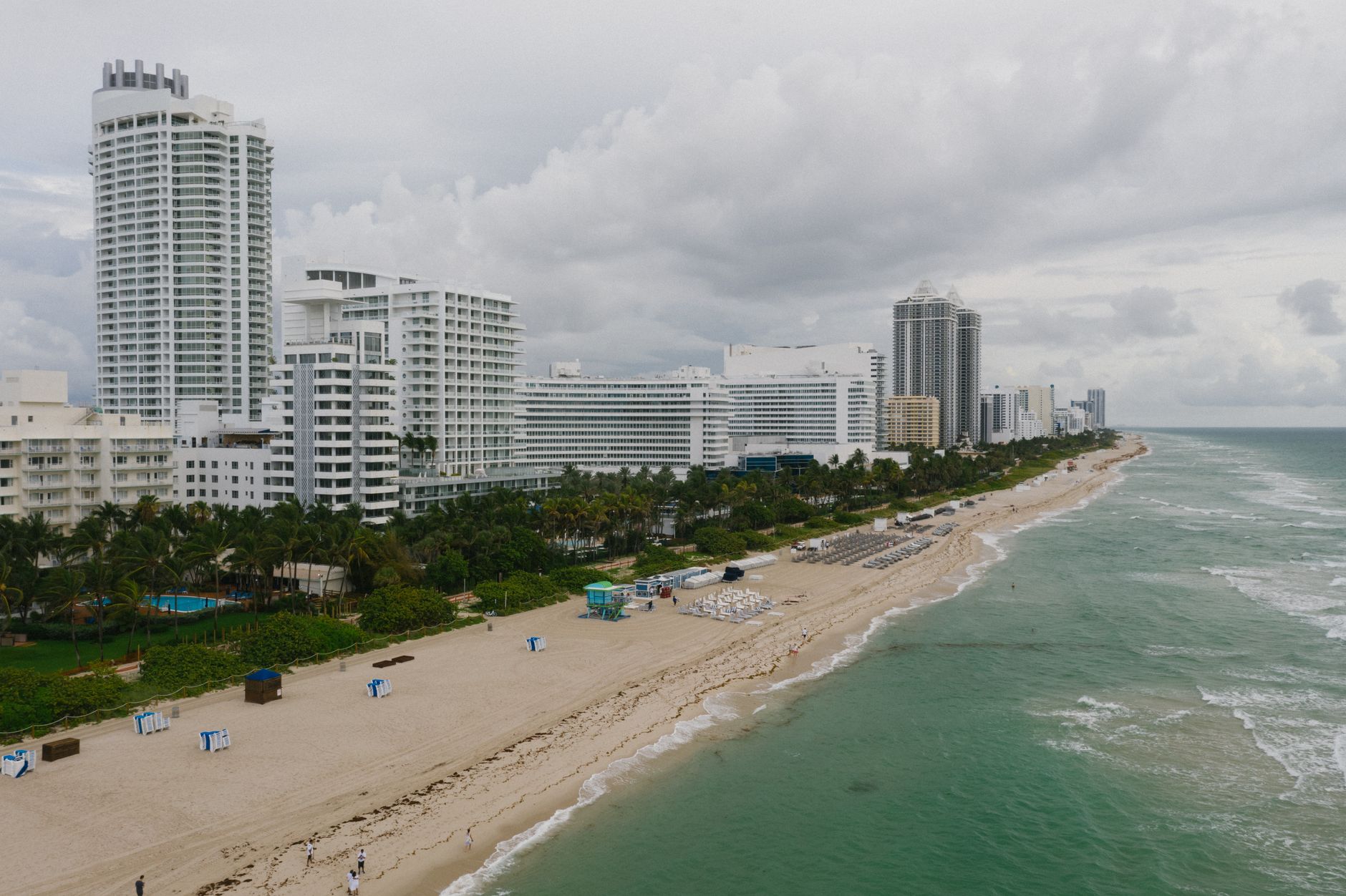
Faena House — Midtown Miami, Miami.
Selling a luxury Miami property and reinvesting through a 1031 exchange into Midtown Miami requires precise tax planning, FIRPTA compliance, and a clear exit strategy. This guide covers everything foreign national sellers need to know — from withholding rules to identifying replacement properties in one of Miami's fastest-evolving luxury corridors.
Why Midtown Miami Is Attracting 1031 Exchange Capital From Luxury Sellers
Midtown Miami has quietly matured from an arts-district underdog into one of the city's most compelling luxury real estate corridors. Positioned between Wynwood and Edgewater, it offers walkability, cultural density, and proximity to Biscayne Bay — a combination that increasingly attracts buyers who once looked exclusively at Brickell or South Beach. For sellers completing a 1031 exchange, identifying a replacement property in a neighborhood with genuine long-term appreciation fundamentals is critical, and Midtown Miami checks that box with growing consistency.
The neighborhood's luxury residential pipeline has deepened meaningfully, with developers targeting the design-forward buyer who values lifestyle infrastructure as much as square footage. For a seller exiting a high-value asset — whether a beachfront condo at Faena House or a waterfront estate in another Miami micro-market — Midtown Miami offers a credible, IRS-compliant replacement property universe that satisfies both investment and lifestyle objectives. Understanding how to navigate the exchange rules while managing the legal obligations specific to foreign nationals is where most high-net-worth sellers lose significant value.
A well-executed 1031 exchange allows a seller to defer capital gains taxes by reinvesting proceeds into a like-kind property. In the Miami luxury context, this typically means moving from one income-producing residential asset into another. The IRS requires the replacement property to be identified within 45 days of closing and acquired within 180 days — timelines that demand advance preparation, especially for foreign nationals coordinating across time zones and jurisdictions.
FIRPTA Withholding: The Foreign National Seller's Most Consequential Tax Obligation
Foreign nationals selling U.S. real estate are subject to the Foreign Investment in Real Property Tax Act — commonly known as FIRPTA. Under FIRPTA, the buyer's closing agent is required to withhold a percentage of the gross sales price and remit it to the IRS as a prepayment against potential capital gains tax owed by the foreign seller. For luxury properties, this withholding rate is currently 15 percent of the gross sales price — not the net gain. On a $4 million condo, that represents $600,000 held in IRS escrow, which is why proactive planning is non-negotiable.
Foreign sellers who are executing a 1031 exchange face a specific challenge: FIRPTA withholding obligations do not automatically disappear simply because the proceeds are being reinvested. There are mechanisms to request a withholding certificate from the IRS that can reduce or eliminate the withholding amount, but this application must be filed well before closing and the IRS can take 90 days or more to respond. Sellers who fail to apply in time risk having their exchange proceeds locked in IRS withholding for months — potentially jeopardizing the 180-day reinvestment deadline.
Working with a qualified intermediary (QI) is required for any 1031 exchange, and for foreign nationals, the QI must also coordinate with a tax attorney experienced in international U.S. tax law. The interaction between FIRPTA, state income tax obligations, and IRS exchange rules creates a compliance matrix that is genuinely complex. Florida has no state income tax, which is one structural advantage Miami sellers enjoy over counterparts in New York or California, but federal obligations remain substantial and must be managed with precision.
The Legal Framework for Foreign Nationals Selling Miami Luxury Real Estate
Beyond FIRPTA, foreign national sellers must account for how their U.S. property is held — whether in personal name, a foreign corporation, a domestic LLC, or a trust — because each ownership structure carries different tax and reporting implications at the point of sale. Properties held through foreign corporations, for example, may trigger additional withholding considerations and reporting requirements under FBAR and FATCA. Sellers who established their ownership structure years ago for asset protection or estate planning purposes should have a U.S. tax attorney review the entire chain of title before listing.
Estate tax exposure is another dimension that surprises many foreign nationals. Unlike U.S. citizens and permanent residents who benefit from a substantial federal estate tax exemption, non-resident aliens have a dramatically smaller U.S. situs asset exemption — currently $60,000. For a foreign national holding a $5 million penthouse in their personal name, the estate tax exposure in the event of death can be catastrophic to heirs. Restructuring ownership before a sale — or as part of a broader estate plan — is often advisable, though it must be done well in advance of any transaction to avoid constructive sale or step-transaction issues.
Foreign sellers should also understand that closing attorneys in Florida are required to verify and comply with FIRPTA obligations, and any attempt to structure a sale in a way that circumvents withholding creates legal risk for all parties. The IRS has significantly increased scrutiny of luxury real estate transactions involving foreign persons, particularly in Miami, which has long been a destination for international capital. Transparency, proper documentation, and experienced legal representation are the non-negotiables for a clean close.
1031 Exchange Strategy: Timing, Identification Rules, and Replacement Property Selection in Midtown Miami
A successful 1031 exchange is won or lost in the preparation phase — before the relinquished property closes. The 45-day identification window begins the moment title transfers, and sellers who have not already toured replacement properties, analyzed financials, and made preliminary offers routinely find themselves scrambling. In a supply-constrained luxury market like Miami, the best Midtown Miami properties — particularly pre-construction assignments that allow for extended closing timelines — are often identified and optioned by sophisticated buyers long before they appear on MLS.
The IRS permits sellers to identify up to three potential replacement properties under the 'three-property rule,' or any number of properties whose combined fair market value does not exceed 200 percent of the relinquished property's value. For a luxury seller exiting a high-value asset, the three-property rule is typically the simpler path. Midtown Miami's evolving luxury inventory — including boutique condo towers, mixed-use residential developments, and multi-family assets — can accommodate multiple identification candidates across different price points and risk profiles.
Pre-construction assignments in Midtown Miami deserve special attention for 1031 exchange buyers. Purchasing a pre-construction unit as the replacement property is permissible under 1031 rules, but only if title actually transfers within the 180-day exchange window. Assigning a contract — buying the developer's purchase agreement from another investor — may or may not qualify, depending on the specific structure and whether the underlying asset constitutes real property in the eyes of the IRS. Qualified intermediaries and tax counsel should review any pre-construction replacement property strategy before the identification deadline passes.
Faena House and the Relinquished Property Profile: What Sells, What It's Worth, and When to Time Your Exit
Faena House represents one of Miami Beach's most distinctive luxury assets — a Philippe Starck-designed tower within the Faena District that commands some of the highest per-square-foot prices on the Florida coast. Sellers exiting a Faena House residence are entering the market with a genuinely rare asset, and the pricing strategy must reflect that scarcity. Unlike a commodity condo tower where comparable sales are abundant, Faena House has a limited number of units, highly individualized floor plans, and a brand premium that is difficult to replicate — all of which demand a bespoke sales approach rather than a standard MLS listing.
The optimal timing for a luxury exit in Miami's high-end segment has historically aligned with periods of strong international buyer activity — a dynamic that tracks with favorable currency exchange rates, geopolitical stability in key feeder markets including Brazil, Argentina, Colombia, Venezuela, and Europe, and the broader U.S. economic cycle. Miami's luxury market has demonstrated resilience through multiple cycles, but the delta between a well-timed, well-positioned listing and a reactive one can be measured in hundreds of thousands of dollars on assets of this magnitude.
For foreign national sellers holding a Faena House unit or comparable trophy asset who are simultaneously planning a 1031 exchange into Midtown Miami, the sequencing of decisions matters enormously. FIRPTA withholding certificate applications take time. Replacement property identification requires advance groundwork. And the pricing, marketing, and negotiation of the relinquished property should be driven by the exchange timeline, not the other way around. Denis Smykalov at Wolsen Developments represents sellers across Miami's luxury market — a seller's consultation covers current pricing, timing, and the right off-market vs listed strategy for your property in Midtown Miami. Contact: denis@wolsenre.com or (305) 333-1122.
Frequently Asked Questions
What is FIRPTA and how does it affect a foreign national selling a luxury condo in Miami?
FIRPTA requires the buyer's closing agent to withhold 15 percent of the gross sales price when a foreign national sells U.S. real estate. On a luxury Miami property, this can represent a very large sum held by the IRS as a prepayment against capital gains taxes, regardless of the seller's actual profit. Foreign sellers should apply for an IRS withholding certificate well in advance of closing to potentially reduce this amount.
Can a foreign national do a 1031 exchange when selling Miami real estate?
Yes. Foreign nationals are eligible to use a 1031 exchange to defer U.S. capital gains tax when selling U.S. investment real estate, provided they follow all IRS rules — including the 45-day identification and 180-day acquisition deadlines. However, FIRPTA withholding obligations do not automatically disappear in an exchange, so coordination between a qualified intermediary and a tax attorney experienced in international U.S. tax law is essential.
What is the 45-day identification rule in a 1031 exchange?
Under IRS rules, a seller completing a 1031 exchange must identify potential replacement properties in writing within 45 calendar days of closing on the relinquished property. This window cannot be extended for any reason, making advance preparation — including touring and evaluating replacement properties before the sale closes — critical.
Can a 1031 exchange replacement property be a pre-construction condo in Midtown Miami?
It can, but with important conditions. The replacement property must qualify as real property under IRS rules, and title must actually transfer within the 180-day exchange window. Purchasing a developer's purchase contract through an assignment may not qualify unless specific criteria are met, so any pre-construction replacement property strategy should be reviewed by qualified tax counsel before the identification deadline.
What are the U.S. estate tax risks for a foreign national owning Miami luxury real estate?
Non-resident alien individuals have a U.S. situs asset estate tax exemption of only $60,000 — far below the exemption available to U.S. citizens. A foreign national holding a multi-million dollar Miami property in personal name could expose their heirs to a significant estate tax bill. Restructuring ownership through an appropriate legal entity, ideally before any sale, is a common strategy to mitigate this risk.
How does property ownership structure affect a foreign national's tax obligations at the time of sale?
Whether a property is held in personal name, a domestic LLC, a foreign corporation, or a trust affects FIRPTA withholding rates, capital gains treatment, and reporting obligations under FBAR and FATCA. Sellers who established their ownership structure years ago should have a U.S. international tax attorney review the structure before listing the property.
Why is Midtown Miami an attractive 1031 exchange replacement property market?
Midtown Miami offers a growing luxury residential inventory positioned between Wynwood and Edgewater, with strong lifestyle infrastructure and long-term appreciation fundamentals. For 1031 exchange buyers seeking Miami luxury assets that satisfy IRS like-kind requirements while offering genuine investment merit, Midtown Miami provides a credible universe of replacement property candidates at various price points.
What is a qualified intermediary and why is one required for a 1031 exchange?
A qualified intermediary is a third-party entity that holds the exchange proceeds between the sale of the relinquished property and the acquisition of the replacement property. IRS rules prohibit the seller from having actual or constructive receipt of the funds during the exchange period, making the use of a qualified intermediary mandatory. Choosing an experienced QI is especially important for foreign nationals navigating FIRPTA simultaneously.
Does Florida's lack of a state income tax benefit foreign nationals selling Miami luxury real estate?
Yes. Florida has no state income tax, which means foreign nationals selling Miami real estate are not subject to a state-level capital gains tax on top of federal obligations. This is a structural advantage compared to high-tax states like California or New York, though federal capital gains tax and FIRPTA withholding still apply fully.
What makes Faena House a unique asset to sell compared to other Miami Beach luxury condos?
Faena House is a Philippe Starck-designed tower with a limited number of highly individualized residences within the curated Faena District on Miami Beach. Its scarcity, brand premium, and distinctive architecture mean it trades differently from commodity luxury towers — comparable sales are limited, and pricing strategy requires a bespoke approach rather than a standard MLS analysis.
Ready to Take the Next Step?