Brickell · Miami new construction · remote worker real estate · Nobu Residences Brickell · condo rental yield · pre-construction Miami
Miami Brickell New-Construction Buyer Guide for Remote Workers: Rental Yields, Lifestyle, and Why Nobu Residences Brickell Belongs on Your Shortlist
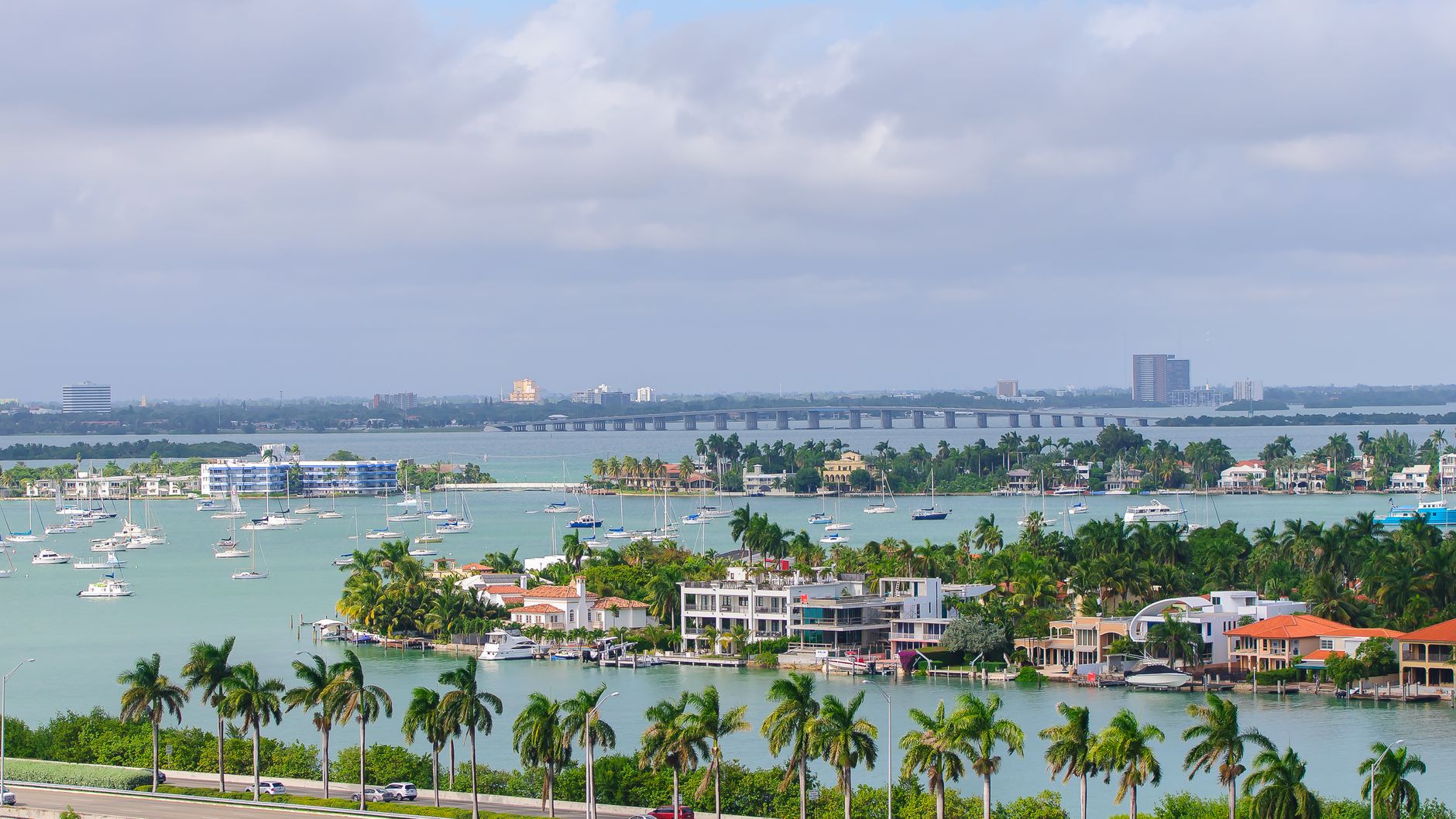
Nobu Residences Brickell — Brickell, Miami.
If you work remotely and are weighing Miami as your permanent home base, Brickell offers a rare combination of urban walkability, tax advantages, and condo rental yields that can offset your carrying costs. This guide breaks down everything a location-independent buyer needs to know before signing a purchase contract.
Why Remote Workers Are Choosing Brickell Over Every Other Miami Neighborhood
Brickell has quietly evolved from a Monday-through-Friday financial district into one of Miami's most livable 24-hour neighborhoods. For remote workers, that distinction matters enormously. When you no longer need to be near a specific office campus, your real estate calculus shifts entirely toward quality of life, connectivity, and long-term asset value. Brickell checks all three boxes: fiber-optic internet infrastructure is standard in virtually every new-construction tower, the Metromover gives car-free access to Wynwood, the Design District, and Miami International Airport connections, and the neighborhood sits at the geographic and cultural center of one of the fastest-growing metros in the United States.
Florida's zero state income tax is the most-cited reason location-independent professionals relocate to Miami, but Brickell specifically adds a layer of financial logic that other neighborhoods don't. Because the submarket has a deep, liquid short-term and long-term rental pool driven by finance professionals, Latin American business travelers, and seasonal residents, a remote worker who travels frequently can activate their unit as a short-term rental during absences without sacrificing market positioning. That optionality — live in it when you're home, earn yield when you're not — is a structural advantage Brickell has over beachfront neighborhoods that impose stricter rental minimums or have lower transient demand.
Beyond the financial case, Brickell's walkability score routinely ranks among the highest in Florida. Mary Brickell Village, Brickell City Centre, and the emerging Brickell Bay Drive restaurant corridor put groceries, dining, co-working spaces, and fitness studios within a five-to-ten-minute walk of most residential towers. For a remote worker accustomed to urban density, this environment can feel closer to a Manhattan or Chicago lifestyle than most people expect from Miami.
Understanding Miami's New-Construction Condo Market: What Remote Buyers Need to Know Before They Sign
Buying a new-construction condo in Miami is fundamentally different from a resale transaction, and remote buyers face an additional layer of complexity: they are often making six- or seven-figure decisions based on renderings, model units, and developer reputations rather than a finished product. The standard Miami pre-construction contract typically requires a deposit schedule — commonly 10% at signing, 10% at groundbreaking, 10% at top-off, and the balance at closing — spread over a construction timeline that can range from two to four years. Remote buyers should budget for capital to be tied up without generating rental income during that period.
Developer reputation and financial strength are the most important variables to evaluate before committing capital. In South Florida's new-construction market, project delays and, in rarer cases, cancellations do happen, and your deposit protection depends heavily on the escrow structure written into your purchase agreement. Reputable developers hold buyer deposits in Florida-regulated escrow accounts, but the terms governing refundability in the event of material changes to the project vary. Always have a Florida-licensed real estate attorney review the purchase agreement before executing — this is non-negotiable for out-of-state and international buyers.
Financing a pre-construction unit as a remote worker adds another layer of nuance. Many foreign-national buyers and self-employed U.S. residents with non-traditional income documentation find that conventional Fannie Mae financing is difficult to secure on new-construction condos, particularly in buildings that permit short-term rentals. Portfolio lenders, DSCR (Debt Service Coverage Ratio) loans, and bank statement programs are common alternatives. Engaging a Miami-based mortgage broker who specializes in non-warrantable condos early in your search — before you sign a contract — can save significant time and prevent surprises at closing.
Brickell Condo Rental Yield Analysis: What the Numbers Actually Look Like
Rental yield in Brickell is best understood in two separate frameworks: gross yield on long-term annual leases and net yield on short-term or hybrid rental strategies. On the long-term side, Brickell has historically commanded among the highest per-square-foot rents in Miami proper, driven by the concentration of financial services firms, international law offices, and Latin American corporate headquarters in the immediate vicinity. One-bedroom units in newer luxury towers have consistently attracted professional tenants willing to pay premiums for proximity to the financial corridor without the commute variability of living in Edgewater or Coral Gables.
Gross rental yields on new-construction Brickell condos have generally trended in the 4% to 6% range on an annual lease basis, though this figure is highly sensitive to the specific building's rental restrictions, the unit's floor, view, and finish level, and broader interest-rate conditions that affect both buyer demand and competing inventory. Remote workers who intend to use their unit as a primary residence most of the year but rent it during extended travel periods should model a hybrid scenario: conservative occupancy assumptions of 60% to 70% short-term occupancy during absences, minus HOA fees, management fees typically ranging from 20% to 30% of gross rental revenue, and property taxes, which in Miami-Dade County are calculated on assessed value with a Homestead Exemption available only to Florida primary residents who file by March 1 of the tax year.
Net yield after all expenses is where many buyers get surprised. A unit generating strong gross short-term rental revenue can see net margins compressed significantly by HOA assessments, which in luxury Brickell towers can run from $1,500 to well over $3,000 per month depending on building amenities, reserve funding requirements, and utilities structure. The due diligence process should include a review of the condominium's most recent budget, reserve study, and any pending special assessments before purchase. Buildings with underfunded reserves are a known risk in the Miami market, and special assessments for structural repairs, elevator replacements, or insurance shortfalls can materially alter your yield projections.
Nobu Residences Brickell: A Case Study in Branded Luxury New Construction
Nobu Residences Brickell represents one of the most compelling new-construction opportunities in the submarket for buyers who want the dual benefit of a globally recognized hospitality brand and a Brickell address. The project brings the Nobu brand — best known for its globally acclaimed restaurant and hotel portfolio — into the residential space, creating a living environment where residents have curated access to Nobu hospitality services, dining, and the broader lifestyle infrastructure the brand has spent decades cultivating. For a remote worker whose professional identity and social life intersect with high-caliber hospitality — client entertainment, international colleagues visiting Miami, personal enrichment — this kind of branded amenity layer is not a luxury add-on but a functional asset.
From a yield perspective, branded residences in Miami have historically commanded a pricing premium at the point of sale and, critically, a rental premium over comparable unbranded units in the same submarket. Academic and market research tracking branded residence performance globally suggests premiums ranging from 20% to 35% over comparable non-branded product, though Miami-specific performance depends on the individual brand's recognition in the South American and European feeder markets that drive significant Brickell rental demand. Nobu Residences Brickell benefits specifically from the Nobu brand's extraordinarily strong recognition among affluent Latin American travelers and business visitors, a demographic that represents a meaningful share of Brickell's short-term and furnished monthly rental pool.
For the remote worker evaluating Nobu Residences Brickell as a primary residence with rental optionality, the key due diligence questions are: What are the building's specific short-term rental policies? What services are delivered by the hotel management arm versus the HOA? And how are hotel-style amenities — concierge, in-residence dining, spa access — structured for permanent residents versus transient guests? These distinctions shape both the living experience and the operational cost structure, and they should be thoroughly understood before executing a purchase agreement. For current pre-construction pricing, availability, and access to off-market units in Brickell, contact Denis Smykalov at Wolsen Developments — denis@wolsenre.com or (305) 333-1122.
Tax, Legal, and Residency Considerations for Location-Independent Buyers in Florida
One of the most powerful financial levers available to a remote worker relocating to Brickell is establishing Florida as their state of domicile for tax purposes. Florida imposes no personal income tax, no capital gains tax at the state level, and no estate tax — a trifecta that can represent tens of thousands of dollars in annual savings for high-income remote professionals coming from states like California, New York, or Massachusetts. However, establishing Florida domicile is a legal process with specific requirements: you must spend more than 183 days per year in Florida, update your driver's license and voter registration, execute a Declaration of Domicile with Miami-Dade County, and be prepared to demonstrate Florida as your primary home if your former state audits the change. Working with a Florida-based tax attorney or CPA who specializes in domicile transitions is essential.
The Homestead Exemption deserves special attention for remote workers purchasing a Brickell condo as a primary residence. Florida's Homestead Exemption reduces your property's assessed value by up to $50,000 for property tax purposes, and the Save Our Homes cap limits annual assessed value increases to 3% or the CPI, whichever is lower, after the first year. For a luxury condo in a rapidly appreciating market like Brickell, the long-term tax savings from Homestead can be substantial — and the protection from aggressive reassessments gives long-term holders meaningful cost predictability. The caveat: you must have Homestead status to qualify, meaning the unit cannot be classified as an investment property or rented on a short-term basis as the primary use.
Foreign national buyers — a significant segment of Brickell's new-construction purchaser profile — face additional legal considerations, including FIRPTA withholding on future resale proceeds, potential estate tax exposure on U.S.-sited real property, and visa implications if the purchase is intended to support an EB-5 or E-2 immigration pathway. These are complex intersecting areas of law, and the stakes are high enough that engaging both a U.S. immigration attorney and an international tax advisor in parallel with the real estate transaction is strongly advisable. Miami-Dade has a deep ecosystem of professionals who specialize in exactly these cross-border transactions.
Building Your Brickell Buying Strategy: Timelines, Negotiation, and Long-Term Exit Planning
The strategic timeline for a remote worker targeting Brickell new construction should begin at least 18 to 24 months before desired occupancy — and ideally earlier if you want access to the best unit selections and earliest-adopter pricing. Developers in Miami's pre-construction market typically offer the most favorable pricing and greatest unit availability in the earliest sales phases, before the project has received significant press coverage or international marketing exposure. Buyers who enter during the VIP or broker-exclusive launch phase often secure units at 10% to 20% below the pricing offered to the general public six months later, with the trade-off being a longer wait until occupancy and somewhat greater uncertainty about the final product.
Negotiation in Miami's new-construction market is more nuanced than in a resale transaction. Developers rarely discount the headline price on hot projects, but there is often room to negotiate on upgrade packages, storage unit or parking allocations, closing cost contributions, and leaseback arrangements that allow the developer to use completed units as model homes in exchange for a credit or early closing incentive. Remote buyers who work with an experienced Miami pre-construction specialist have a structural advantage here: developers cultivate relationships with high-volume brokers and are more likely to offer preferential treatment — earlier access, better unit positioning, more flexible terms — through those channels than to buyers who approach directly.
Long-term exit planning is the final, often overlooked component of a sound Brickell new-construction strategy. Miami's luxury condo market is deep and liquid by Florida standards, but it is not immune to cycle risk. Buyers who purchase at peak-cycle pricing with the expectation of a quick flip in a rising market have historically been disappointed; the Miami market rewards patient holders more than short-term speculators. For a remote worker who genuinely intends to use Brickell as a long-term home base, the holding period needed to absorb transaction costs and generate meaningful appreciation is typically five to seven years minimum. Underwriting your purchase at that horizon, rather than assuming a two-year hold, produces a much more realistic picture of the investment's total return profile.
Frequently Asked Questions
Is Brickell a good neighborhood for remote workers to live in Miami?
Yes. Brickell combines walkability, high-speed internet infrastructure, proximity to Miami International Airport, and a deep restaurant and co-working ecosystem, making it one of Miami's most practical neighborhoods for location-independent professionals. The Metromover provides free rail transit connecting Brickell to Wynwood, the Design District, and the Omni corridor without a car.
What is the average rental yield for a Brickell luxury condo?
Gross rental yields on Brickell new-construction condos have generally ranged from 4% to 6% on annual lease structures, depending on the building, unit size, and current market conditions. Net yields after HOA fees, management costs, and property taxes are typically lower and should be modeled carefully during due diligence.
Can I rent out my Brickell condo short-term on Airbnb or VRBO?
It depends on the individual building's condominium documents and rental policies. Some Brickell luxury towers permit short-term rentals of 30 days or less, while others impose minimum lease terms of six or twelve months. Always review the Declaration of Condominium and association rules before purchasing if short-term rental income is part of your financial model.
What makes Nobu Residences Brickell different from other new-construction condos in Brickell?
Nobu Residences Brickell is a branded residence project tied to the globally recognized Nobu hospitality and restaurant brand, offering residents hotel-style services, dining access, and a hospitality-grade amenity program. Branded residences in Miami have historically commanded rental and resale premiums over comparable unbranded product in the same submarket.
How does Florida's Homestead Exemption work for a remote worker who buys in Brickell?
Florida's Homestead Exemption reduces a primary residence's assessed value by up to $50,000 for property tax purposes and caps annual assessment increases at 3% or the CPI, whichever is lower. To qualify, the unit must be your primary residence as of January 1 of the tax year, and you must file by March 1. Buyers who rent their unit on a short-term basis as the primary use may be disqualified.
How do I establish Florida domicile to take advantage of the state's zero income tax?
To establish Florida domicile, you must spend more than 183 days per year in Florida, update your driver's license and voter registration to a Florida address, file a Declaration of Domicile with Miami-Dade County, and be prepared to demonstrate your primary ties are in Florida if audited by your former state. Working with a Florida-based tax attorney or CPA is strongly recommended.
What deposit schedule is typical for a Miami pre-construction condo purchase?
Miami pre-construction condos commonly require deposits in stages: typically 10% at contract signing, 10% at groundbreaking, 10% at building top-off, and the remaining balance at closing. The exact schedule varies by developer and project, and deposits are generally held in Florida-regulated escrow accounts.
How long should I plan to hold a Brickell new-construction condo to see meaningful appreciation?
Most market analysts and experienced Miami brokers suggest a minimum five-to-seven-year holding period to absorb transaction costs and generate meaningful net appreciation in Brickell's luxury condo market. The market historically rewards patient long-term holders over short-term speculators, particularly during periods of elevated supply from new construction deliveries.
Are there financing options for self-employed or remote workers buying a new-construction condo in Brickell?
Yes. Self-employed buyers and remote workers with non-traditional income documentation often use DSCR loans, bank statement programs, or portfolio lender financing rather than conventional Fannie Mae mortgages, which can be difficult to obtain on new-construction condos — especially in buildings that permit short-term rentals. Engaging a Miami-based mortgage broker who specializes in non-warrantable condos before signing a contract is advisable.
What should foreign national buyers know before purchasing a Brickell condo?
Foreign national buyers should be aware of FIRPTA withholding requirements on future resale proceeds, potential U.S. estate tax exposure on U.S.-sited real property, and any visa or immigration implications of the purchase. Engaging both a U.S. international tax advisor and an immigration attorney in parallel with the real estate transaction is strongly recommended.
Ready to Take the Next Step?