Bay Point · Miami Luxury Real Estate · Waterfront Estate Investment · Long-Term Appreciation · New Development Miami · Mandarin Oriental Residences
Bay Point Miami Long-Term Appreciation Guide: Luxury Estate Investment in One of Miami's Most Coveted Enclaves
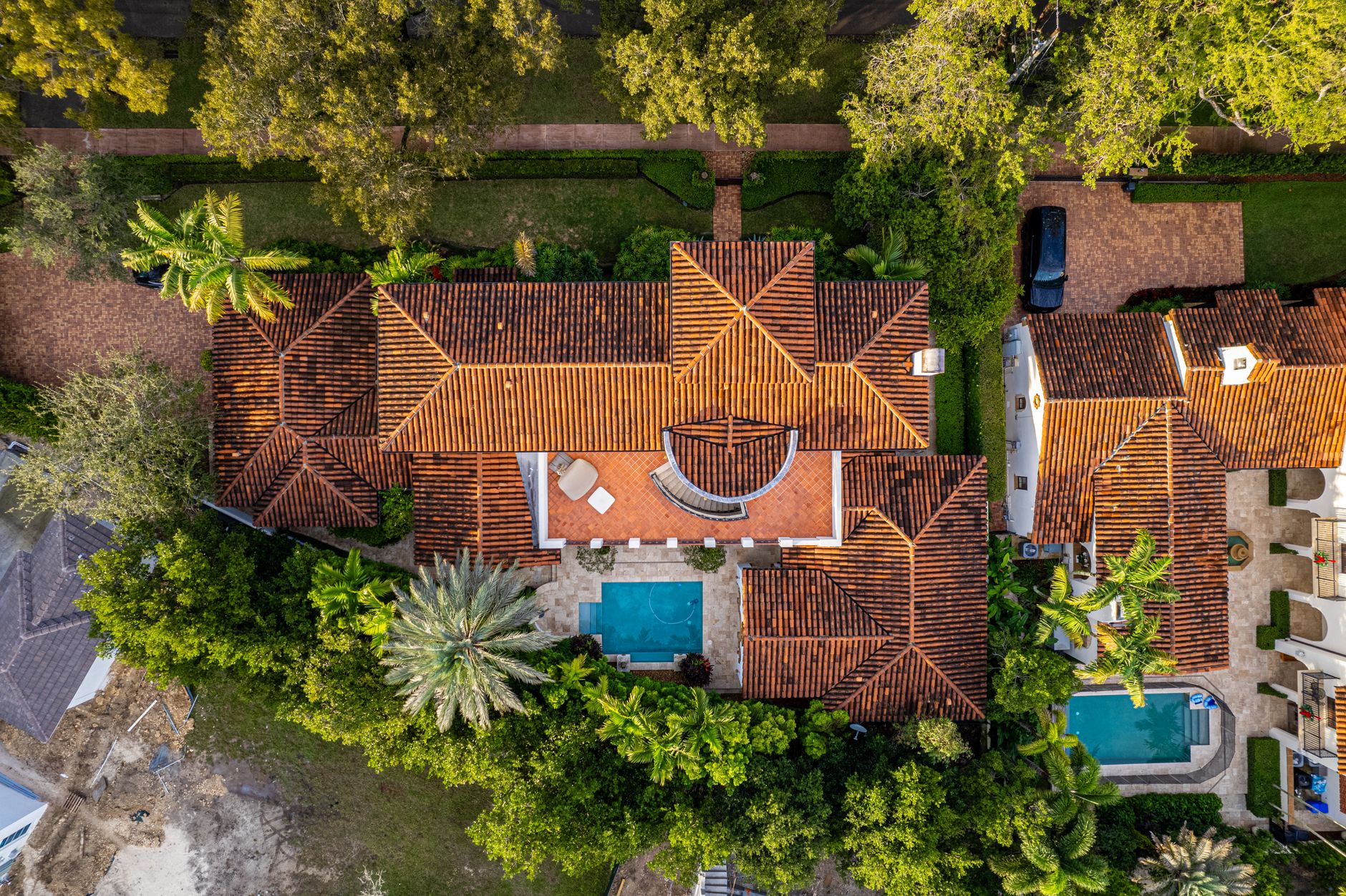
Mandarin Oriental Residences — Bay Point, Miami.
Bay Point stands apart as one of Miami's rarest gated waterfront communities, where land scarcity and trophy-home demand converge to create a compelling case for long-term capital appreciation. This guide walks serious investors through the neighborhood's market dynamics, comparable luxury benchmarks, and how branded residences like Mandarin Oriental are reshaping Miami's high-net-worth landscape.
Why Bay Point Commands a Premium: Understanding Miami's Rarest Gated Waterfront Enclave
Bay Point occupies a unique position in Miami's residential hierarchy. Located off Biscayne Boulevard between Midtown and the Upper Eastside, this private, deed-restricted island community of roughly 100 homesites sits on Biscayne Bay and remains entirely inaccessible to the general public. That combination — a guarded gate, direct bay exposure, deep-water dockage for large vessels, and proximity to the Design District and downtown — creates the kind of address that simply cannot be replicated elsewhere in the city. Unlike condominiums that add units to the supply, Bay Point's lot count is effectively fixed, which is the foundational driver of long-term price appreciation.
Historically, Bay Point attracted old Miami money and a handful of international buyers seeking primary or seasonal estates at relatively modest price points for the scale of property involved. Over the past decade, that buyer profile has shifted materially. The neighborhood now regularly draws tech entrepreneurs, hedge fund principals, Latin American family offices, and European buyers who specifically want fee-simple land, deep-water dockage, and the security of a private street environment — attributes that no high-rise tower can provide. When demand from a broadening, wealthier buyer pool meets a supply ceiling, the long-run price trajectory is structurally supported.
Bay Point Luxury Estate Market Analysis: Price Drivers, Recent Trends, and Appreciation Benchmarks
Bay Point estate values are influenced by a layered set of variables that investors must understand before modeling long-term returns. Lot size, linear bay frontage, dock depth, construction quality, and interior square footage all carry significant weight, but the neighborhood's overall scarcity premium is the most durable factor. Homes with more than 100 feet of waterfront and the ability to accommodate a yacht of 80 feet or more consistently trade at the top of the range, while interior lots — though still gated and private — price meaningfully lower, reflecting the Miami market's persistent waterfront premium.
In broader market terms, Miami's ultra-luxury single-family segment has outperformed most comparable gateway cities over the 2018–2024 cycle. The post-pandemic migration of high-income households from high-tax northern states accelerated a demand surge that Bay Point absorbed faster than it could absorb new supply, because there is no new supply. Seasoned observers note that even during periods of national market cooling, Bay Point experienced only modest price compression before recovering, a pattern consistent with supply-constrained trophy markets globally. For investors with a five-to-ten-year horizon, the supply-demand imbalance remains structurally intact.
Denis Smykalov, broker at Wolsen Developments, points out that 'Bay Point functions more like a private island than a traditional neighborhood — the gates, the water, and the absolute cap on buildable lots mean that every cycle, the floor price resets higher because there is simply no mechanism for meaningful new supply to enter the market, and the buyer profile competing for those homes keeps getting wealthier and more international.' That observation is particularly relevant when comparing Bay Point's appreciation trajectory to other Miami luxury submarkets where condominium oversupply has periodically weighed on returns.
Branded Luxury Residences as Market Context: What Mandarin Oriental Residences Signal for Miami's High-End Buyer
To appreciate where Bay Point sits in Miami's luxury hierarchy, it is useful to understand the broader branded-residence market that now defines the city's premium segment. Mandarin Oriental Residences, positioned on Brickell Key, represents the convergence of institutional hospitality brand equity, curated amenity programming, and a condominium ownership structure designed for buyers who want turnkey luxury without the operational complexity of an estate. At its price point, the Mandarin Oriental Residences targets a buyer who values services, brand recognition, and a lock-and-leave lifestyle above all else.
For the investor evaluating Bay Point, the Mandarin Oriental Residences serves as a useful pricing benchmark rather than a direct competitor. Buyers who tour flagship branded-residence projects and then pivot to Bay Point are often doing so because they have determined that land ownership, privacy, and waterfront estate living offer a different and more durable form of asset protection. Branded condominiums in Miami have appreciated strongly, but their supply can — and does — increase as new towers are approved and delivered. Bay Point's supply constraint is categorical and permanent, which is why sophisticated capital allocators view the two asset classes as complementary rather than interchangeable within a diversified real estate portfolio.
The prominence of projects like Mandarin Oriental Residences also raises the ambient price ceiling for Miami luxury real estate broadly, which tends to lift comparable expectations in adjacent asset classes. When global buyers internalize that a single-floor residence in a trophy Brickell building commands eight-figure pricing, the valuation logic for a private waterfront estate in a gated community with equivalent or greater scarcity becomes easier to defend at similar or higher price points.
Long-Term Appreciation Strategy: How to Structure a Bay Point Investment for Maximum Capital Growth
Investors approaching Bay Point with a long-term appreciation thesis should think in three distinct time horizons. In the near term — one to three years — the primary risk is overpaying on entry, which can be mitigated by anchoring to recent per-square-foot and per-linear-foot-of-waterfront comparables rather than seller aspirational pricing. In the medium term — three to seven years — the key value lever is thoughtful capital improvements. Bay Point's older housing stock presents significant opportunities to demolish and rebuild to contemporary standards, or to execute institutional-quality renovations that compress the cap rate and appeal to a broader, more liquid buyer pool at exit.
Over a ten-year-plus horizon, the appreciation case rests on three pillars: continued in-migration of high-net-worth households to Miami-Dade County, the structural impossibility of adding meaningful inventory in Bay Point, and the secular global trend toward private, security-oriented residential environments among ultra-high-net-worth families. Each of these pillars is independently strong; together they create a compounding dynamic that has historically made irreplaceable waterfront land in gateway cities among the most reliable long-term stores of wealth available to private investors.
Investors should also consider currency dynamics. A meaningful share of Bay Point buyers transact in non-US dollars, and Miami's status as the capital of Latin American wealth means that political or economic volatility in the region often accelerates rather than dampens demand for stable US-dollar-denominated trophy assets. This counter-cyclical demand characteristic adds a layer of resilience to Bay Point values that is difficult to find in purely domestic residential markets.
Due Diligence Essentials for Bay Point Estate Buyers: What Luxury Investors Must Verify Before Closing
Because Bay Point transactions typically occur at eight-figure price points and involve significant land, waterfront rights, and existing structures, due diligence requirements are materially more complex than a standard residential purchase. Buyers should commission an independent marine survey of dock infrastructure and seawall condition before submitting offers, as seawall replacement in Miami can run into the hundreds of thousands of dollars and represents a negotiating variable that unsophisticated buyers frequently overlook. Similarly, flood zone designation and current flood insurance availability under FEMA's evolving Risk Rating methodology should be understood before, not after, signing a purchase agreement.
Title review in Bay Point requires particular attention to deed restrictions, HOA covenants, and any encumbrances related to the neighborhood's private gate and shared infrastructure. The homeowners association governs access, exterior modifications, and guest entry protocols, and prospective buyers should obtain and review the full set of governing documents as part of their inspection contingency period. An attorney experienced in Miami luxury residential transactions — distinct from a general real estate attorney — is not optional at these price levels; it is a baseline requirement.
Finally, investors should engage a broker with specific Bay Point transaction history, not simply general Miami luxury experience. The neighborhood's small size means that off-market and pocket-listing opportunities represent a disproportionate share of available inventory, and relationships within the community — with existing owners, their advisors, and the HOA — are often the difference between accessing the best properties and competing for whatever happens to reach the open market.
Working With a Miami New-Development Specialist: Integrating Bay Point Into a Broader Luxury Portfolio Strategy
For investors building a diversified Miami luxury portfolio, Bay Point estates and branded new-construction residences like Mandarin Oriental Residences can serve complementary roles. The estate provides irreplaceable land, privacy, and the deepest waterfront access available in the city; the branded residence provides liquidity, services, and the ability to participate in Miami's ongoing high-rise luxury development cycle without the operational demands of estate ownership. Many of Miami's most sophisticated repeat buyers hold both categories simultaneously, treating them as different instruments within the same asset class rather than substitutes.
Engaging a brokerage that operates across both segments — new-construction condominiums and waterfront single-family estates — gives investors a structural advantage when assembling this kind of portfolio. A specialist can model total-return scenarios, identify off-market opportunities in Bay Point before they are formally listed, and ensure that capital is allocated between categories at the right point in each product's market cycle. In a market as information-asymmetric as Miami luxury real estate, having a single trusted advisor who can speak fluently across asset types is not a convenience; it is a material competitive edge that translates directly into acquisition and exit pricing.
Frequently Asked Questions
Why is Bay Point considered one of Miami's best neighborhoods for long-term real estate appreciation?
Bay Point is a private, gated community with a fixed number of homesites on Biscayne Bay, meaning new supply cannot meaningfully enter the market. Combined with growing demand from high-net-worth domestic and international buyers seeking waterfront estates with deep-water dockage and genuine privacy, this supply constraint creates structural upward pressure on values over time.
How many homes are in Bay Point Miami?
Bay Point contains approximately 100 homesites, making it one of the smallest and most exclusive gated communities in Miami. The limited inventory is a primary driver of the neighborhood's sustained price premium relative to other Miami waterfront addresses.
What price range should investors expect for Bay Point estates?
Bay Point estate pricing varies considerably based on lot size, linear waterfront footage, dock capacity, and construction quality, with properties trading across a wide range from the low millions for smaller interior lots to well above $20 million for premium bayfront estates. Investors should work from recent comparable sales rather than asking prices to establish a credible acquisition basis.
How does Mandarin Oriental Residences relate to Bay Point as an investment?
Mandarin Oriental Residences and Bay Point estates are complementary rather than competing asset classes. The branded residence offers services, liquidity, and turnkey ownership, while Bay Point provides irreplaceable waterfront land and absolute privacy. Many sophisticated Miami luxury investors hold both as distinct instruments within a diversified real estate portfolio.
Is Bay Point Miami a good investment for international buyers?
Yes. Bay Point has historically attracted significant international capital, particularly from Latin American and European buyers seeking stable US-dollar-denominated assets in a tax-favorable jurisdiction. The neighborhood's privacy, waterfront access, and scarcity make it particularly resilient to the demand fluctuations that affect more commodity-like residential products.
What are the most important due diligence items for a Bay Point estate purchase?
Key due diligence areas include seawall and dock condition surveys, FEMA flood zone designation and current insurance availability, title review for deed restrictions and HOA covenants, and a full review of homeowners association governing documents. Given transaction sizes, retaining an attorney with Miami luxury residential experience is strongly recommended.
Does Bay Point Miami have a homeowners association?
Yes. Bay Point operates under a private homeowners association that governs gate access, exterior modifications to properties, guest entry protocols, and maintenance of shared infrastructure. Prospective buyers should obtain and review all HOA governing documents before completing a purchase.
What is the best holding period for a Bay Point real estate investment?
Most advisors working in the Miami ultra-luxury single-family market suggest a minimum five-year horizon to allow market cycles to normalize and capital improvement value to be fully recognized at exit. Ten-year-plus holders have historically captured the strongest appreciation, particularly those who invested in structural renovations or ground-up construction on acquired lots.
How does Bay Point compare to other Miami luxury neighborhoods like Indian Creek or Coral Gables Waterfront?
Bay Point offers closer proximity to downtown Miami, Brickell, and the Design District compared to Indian Creek Village or the Gables, and its price points have historically been lower than Indian Creek's ultra-trophy tier while still delivering strong appreciation. The neighborhood occupies a distinct value position: gated, waterfront, and proximate to urban amenities in a way that more southerly or northerly enclaves are not.
Can a Bay Point home be used as a rental investment property?
While Bay Point estates can generate rental income when not in owner use, the neighborhood's buyer pool is almost exclusively owner-occupier or second-home oriented, and the HOA governing documents should be reviewed carefully for any restrictions on short-term rentals. The primary investment thesis for Bay Point is long-term capital appreciation rather than current yield.
Ready to Take the Next Step?