1031 Exchange · Hollywood Florida · Miami New Construction · Luxury Condos · St. Regis Residences · Investment Property
1031 Exchange Into Miami New Construction: A Complete Buyer Guide for Hollywood, FL — With St. Regis Residences and Beyond
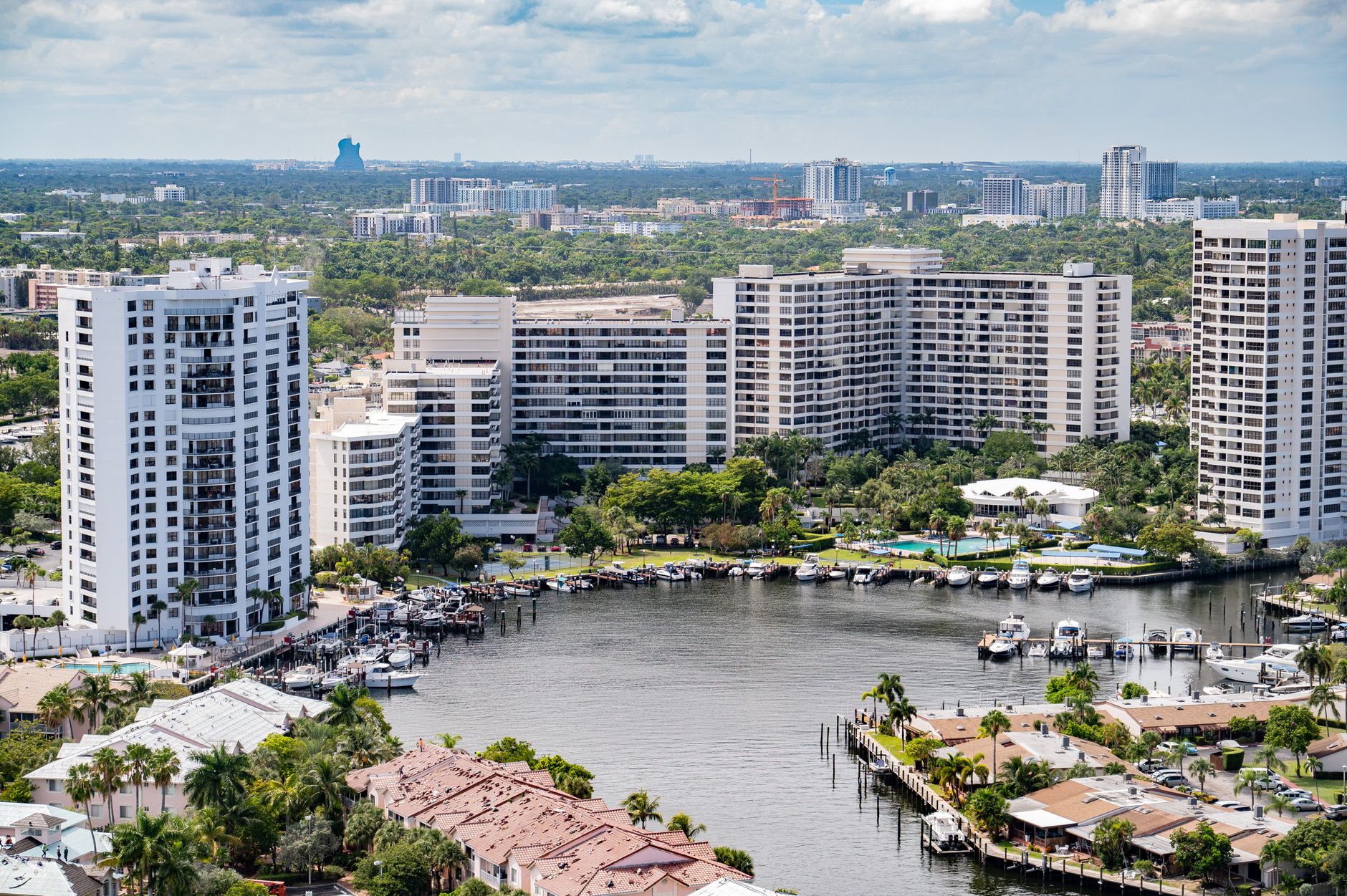
St. Regis Residences — Hollywood, Miami.
Completing a 1031 exchange into Miami's luxury new-development market requires precise timing, the right neighborhood match, and properties that meet IRS like-kind rules. This guide walks you through every step, with a focused lens on Hollywood, Florida and nearby flagship developments.
Why Miami New Construction Is a Smart 1031 Destination — And Who This Guide Is For
This guide draws on the market expertise of Denis Smykalov, Founder of Wolsen Developments, who has guided buyers through Miami's luxury new-construction market since 2012 and completed more than $500M in transactions — including some of the city's earliest cryptocurrency-settled deals. Denis has worked directly with investors executing 1031 exchanges into pre-construction and newly delivered condominiums across Miami-Dade and Broward counties, navigating the nuances that make new development both an opportunity and a structural puzzle for exchange buyers.
Miami's new-construction pipeline is one of the most robust in the United States, and for investors relinquishing appreciated property elsewhere — whether a rental home in California, a commercial building in Texas, or a multifamily asset in the Northeast — South Florida presents a compelling reinvestment destination. Low state income taxes, strong short-term and long-term rental demand, and a steady influx of high-net-worth residents have supported values even through national market corrections. For buyers focused on the Hollywood corridor specifically, the appeal is compounded by direct oceanfront access, proximity to Fort Lauderdale-Hollywood International Airport, and a comparatively lower price-per-square-foot than Miami Beach or Sunny Isles Beach — while still commanding premium rents.
This guide is written for the investor who is mid-exchange or planning one: someone who has already sold or is under contract to sell a held investment property and is exploring where to reinvest the proceeds. It is not a tax guide — you must work with a qualified intermediary and a 1031-experienced CPA or attorney — but it is designed to give you the real estate intelligence you need to make a confident, well-matched property decision before your 45-day identification window closes.
How 1031 Exchange Rules Interact With Miami Pre-Construction Purchases
The core challenge of pairing a 1031 exchange with new construction is timing. IRS rules require the exchange investor to identify replacement property within 45 days of closing the relinquished property and to close on that replacement property within 180 days. Pre-construction condominiums in Miami — particularly in the luxury segment — are frequently sold 24 to 36 months before their projected delivery date. If the building has not yet received its certificate of occupancy and title cannot transfer within your 180-day window, a direct purchase contract on a pre-construction unit typically will not satisfy exchange requirements on its own.
There are legitimate structures that sophisticated exchange investors use to bridge this gap. One approach is purchasing an already-delivered unit in a newly constructed building — one that was pre-sold but where the original buyer is reselling their contract or completed unit shortly after closing. Another approach involves exchange-parking arrangements, sometimes called exchange accommodation titleholders, in which an intermediary holds title to a property being built while the exchange clock runs. These structures are complex and must be set up correctly from the beginning; they are not retrofit solutions. A third approach is identifying multiple properties within the 45-day window, including at least one that can close within 180 days, giving you flexibility if your preferred new-construction unit delivers on time.
In the Hollywood and greater South Florida market, developers have increasingly recognized the demand from exchange investors and some work with buyers to structure closings or assignments in ways that accommodate exchange timelines — though this varies by project and legal counsel on both sides must confirm the structure. The key takeaway: begin your property search before you close on your relinquished asset, not after. A pre-identified target property, even tentatively, gives your qualified intermediary and attorney time to design the right exchange structure.
Hollywood, Florida: Neighborhood Match Guide for the 1031 Exchange Investor
Hollywood sits between Miami and Fort Lauderdale, and that position is part of its investment thesis. The city has historically traded at a discount to its neighbors, but recent years have seen meaningful appreciation driven by infrastructure investment, a revitalized Broadwalk, and new luxury hotel and residential product entering the market. For exchange investors replacing a moderate-to-large investment property, Hollywood offers the ability to acquire oceanfront or Intracoastal-adjacent real estate at equity levels that might not stretch as far in Miami Beach or Bal Harbour.
Hollywood's rental market is notably diversified. The city attracts seasonal snowbirds, corporate relocators using Fort Lauderdale Airport, and leisure travelers drawn to the beach and the growing restaurant and nightlife scene on the Broadwalk and Young Circle arts district. This diversity supports both short-term rental strategies (where local regulations permit) and annual lease programs. For the exchange investor comparing neighborhoods, Hollywood offers better gross yield potential than ultra-luxury Miami Beach while still qualifying for the asset class profile most exchange buyers need — a property held for investment or productive use in a trade or business.
Investors with a lifestyle component to their decision — who want to use the property for part of the year while still qualifying it as investment property — should work closely with their CPA on personal-use day limits. Hollywood's beachfront product skews toward the kind of large-format, amenity-rich condominiums that can support both modes, provided the investment intent and usage ratios are documented correctly from day one.
St. Regis Residences and the Case for Branded Luxury New Construction in a 1031 Strategy
For exchange investors seeking a replacement property that carries both lifestyle prestige and institutional-quality investment credentials, branded residences at the luxury tier represent a compelling category. The St. Regis Residences in Sunny Isles Beach — a short drive north of Hollywood along the A1A corridor — exemplifies the kind of asset that resonates with exchange buyers moving capital out of appreciated commercial or multifamily real estate. The St. Regis brand brings with it a global recognition that supports resale liquidity, an affluent renter and buyer pool, and white-glove service infrastructure that justifies premium pricing on both the purchase and rental side.
From a 1031 perspective, the investment logic for a branded luxury residence is grounded in its like-kind eligibility. Residential condominiums held for investment — not personal use — generally qualify as like-kind to other real property under Section 1031, meaning an investor relinquishing an apartment building or commercial property can exchange into a luxury condo, provided the intent to hold for investment is genuine and well-documented. The St. Regis Residences sits in a market corridor — Sunny Isles Beach — that has demonstrated sustained demand from ultra-high-net-worth domestic and international buyers, which is a meaningful liquidity signal for investors concerned about exit strategy.
Buyers using a 1031 exchange to step up into a branded residence like the St. Regis should model their exchange math carefully. The IRS requires the replacement property value to equal or exceed the relinquished property's net sale price to fully defer capital gains, and at luxury price points, it is often more prudent to acquire a single premium asset with strong appreciation and rental fundamentals than to diversify into multiple lower-priced units that introduce management complexity. The concentration in one high-quality, brand-supported asset can simplify both the operational and eventual disposition of the investment.
Identifying the Right Property Profile: Matching Your Exchange Equity to Hollywood-Area Developments
Exchange equity arriving from the sale of a $1M to $3M investment property will generally find Hollywood itself to be the most competitive market, where oceanfront and Intracoastal new construction delivers the most square footage and amenity depth per dollar. Buyers at the $3M to $6M equity level begin to access Sunny Isles Beach and Hallandale Beach, where tower product from established developers offers larger floor plans, stronger brand recognition, and deeper rental demand from international buyers. Above $6M, the Sunny Isles ultra-luxury corridor — where the St. Regis Residences is positioned — becomes the natural destination, with assets that compete for the same buyer and renter pool as Miami Beach at a relative geographic and pricing advantage.
Hollywood's Broadwalk-adjacent condo market has seen meaningful new development activity, and several buildings delivered in the past five years feature the kinds of amenities — resort pools, curated fitness centers, concierge programs — that support premium annual rents and attract quality long-term tenants. For exchange investors who have managed multifamily assets and want to simplify their lives while preserving income, a single luxury condo with on-site management can be a genuine lifestyle upgrade without sacrificing investment discipline.
Buyers should also evaluate parking, storage, and flex-use provisions in the condo documents, as these directly affect rental appeal and resale value. In new Miami-area construction, developers have increasingly incorporated electric vehicle charging, private storage units, and dedicated service elevators — amenities that matter to high-income renters and future buyers alike. These details are worth reviewing in the purchase contract and building's declaration of condominium well before exchange funds are committed.
Due Diligence, Timing, and Working With a Specialist in Miami New-Construction 1031 Deals
Due diligence on a Miami new-construction 1031 purchase operates on a compressed timeline compared to a standard acquisition. Once your relinquished property closes, the 45-day identification clock is running, and every day spent on incomplete financial reviews, title searches, or condo document analysis is a day lost. The most effective exchange buyers in Miami's market enter the identification period having already toured target properties, reviewed offering documents, and received preliminary title and financing guidance. This front-loading of due diligence is not optional — it is the practical precondition for a successful exchange in this market.
Working with a brokerage that specializes in Miami new construction — rather than a generalist resale agent — meaningfully improves your odds. New-construction specialists maintain direct developer relationships that provide early access to inventory, insight into actual delivery timelines (which differ from marketed timelines), and awareness of assignment opportunities from existing buyers. These relationships also enable frank conversations about which developers have historically honored their contracts, which buildings have seen construction delays, and which projects carry the strongest rental performance post-delivery.
Finally, coordinate your real estate team with your qualified intermediary and tax counsel from the outset — not after you have a contract signed. The exchange structure, the form of the purchase contract, and the escrow and closing timeline all have legal dimensions that must align before funds move. Miami's luxury new-construction market moves quickly; having a pre-approved, coordinated team means you can move with it rather than scrambling to catch up.
Frequently Asked Questions
Can I use a 1031 exchange to buy a pre-construction condo in Miami?
Buying a pre-construction condo with 1031 exchange proceeds is possible but structurally complex, because IRS rules require the replacement property to close within 180 days of the relinquished property closing. If the building will not deliver within that window, investors typically need an exchange accommodation titleholder structure, an assignment of an existing contract from a seller who can deliver quickly, or they must identify multiple properties and prioritize one that can close in time. Always confirm the structure with a qualified intermediary and 1031-experienced attorney before proceeding.
Does a luxury condo in Hollywood qualify as like-kind property for a 1031 exchange?
Yes, a residential condominium held for investment or productive use in a trade or business is generally considered like-kind to other real property — including commercial buildings, multifamily assets, or raw land — under Section 1031. The critical requirement is that the property must be held for investment or business use, not primarily for personal use. Document your investment intent clearly and discuss personal-use day limits with your CPA.
What is the 45-day identification rule and how does it affect my Miami property search?
After closing on your relinquished property, you have exactly 45 calendar days to formally identify replacement properties in writing with your qualified intermediary. You may identify up to three properties regardless of value, or more properties if they meet the 200% rule. Because the Miami new-construction market moves quickly, most advisors recommend beginning your property search before closing on the relinquished property so you are not rushing through due diligence under deadline pressure.
Why is Hollywood, Florida a good target for 1031 exchange investors compared to Miami Beach?
Hollywood generally offers lower price-per-square-foot than Miami Beach or Bal Harbour while still providing direct ocean and Intracoastal access, strong seasonal and annual rental demand, and proximity to Fort Lauderdale-Hollywood International Airport. For investors deploying exchange equity in the $1M to $3M range, Hollywood delivers more unit for the dollar and comparable yield dynamics, making it an efficient reinvestment market.
What makes the St. Regis Residences a strong choice for a 1031 replacement property?
The St. Regis Residences in Sunny Isles Beach carries a globally recognized hospitality brand that supports resale liquidity, attracts affluent renters, and justifies premium pricing. For exchange investors seeking a single replacement asset with strong appreciation fundamentals and a credible exit market, branded ultra-luxury residences in the Sunny Isles corridor offer both investment discipline and lifestyle quality.
How much equity do I need to access the Sunny Isles Beach luxury new-construction market via a 1031 exchange?
Exchange investors entering the Sunny Isles Beach market — where properties like the St. Regis Residences are positioned — typically need $3M to $6M or more in replacement property value to access the flagship buildings in that corridor. Investors with equity in the $1M to $3M range will generally find Hollywood's oceanfront and Intracoastal inventory to be the most competitive market for their capital.
Can I use the replacement property personally after completing a 1031 exchange?
Yes, but with important restrictions. The IRS expects the property to be held primarily for investment, and personal use must generally remain within defined limits — typically no more than 14 days per year or 10% of the days the property is rented at fair market value, whichever is greater. Exceeding personal-use thresholds can jeopardize the investment characterization of the property. Confirm the specific rules with your CPA before planning any personal occupancy.
Do Miami developers accommodate 1031 exchange buyers in their closing processes?
Some do, particularly in the luxury segment where developers are accustomed to sophisticated buyers with complex transaction structures. However, this varies by project and must be negotiated and confirmed in writing, with legal counsel on both sides reviewing the exchange-compatible language in the purchase contract. Never assume a developer's standard contract will accommodate exchange mechanics without review.
What are the biggest mistakes 1031 exchange buyers make when purchasing Miami new construction?
The most common mistakes are starting the property search after the relinquished property closes rather than before, underestimating pre-construction delivery timelines, failing to coordinate the real estate contract language with the qualified intermediary, and not confirming personal-use day limits with a CPA before occupancy. Front-loading due diligence and assembling a coordinated team — broker, QI, attorney, and CPA — before the exchange clock starts is the best mitigation strategy.
Is Hollywood, Florida's rental market strong enough to support a luxury condo as an investment property?
Yes. Hollywood attracts a diversified renter pool including seasonal residents from the Northeast and Midwest, corporate relocators using Fort Lauderdale-Hollywood International Airport, and leisure travelers drawn to the Broadwalk and beach. This demand supports both short-term and annual lease strategies, and newer luxury condo product with resort-quality amenities has demonstrated premium annual rents in the market.
Ready to Take the Next Step?