1031 Exchange · Sunset Islands · Miami Beach Luxury Real Estate · New Construction Miami · Waterfront Investment
1031 Exchange into Miami Luxury Real Estate: A Buyer's Guide to Sunset Islands I & II New Development
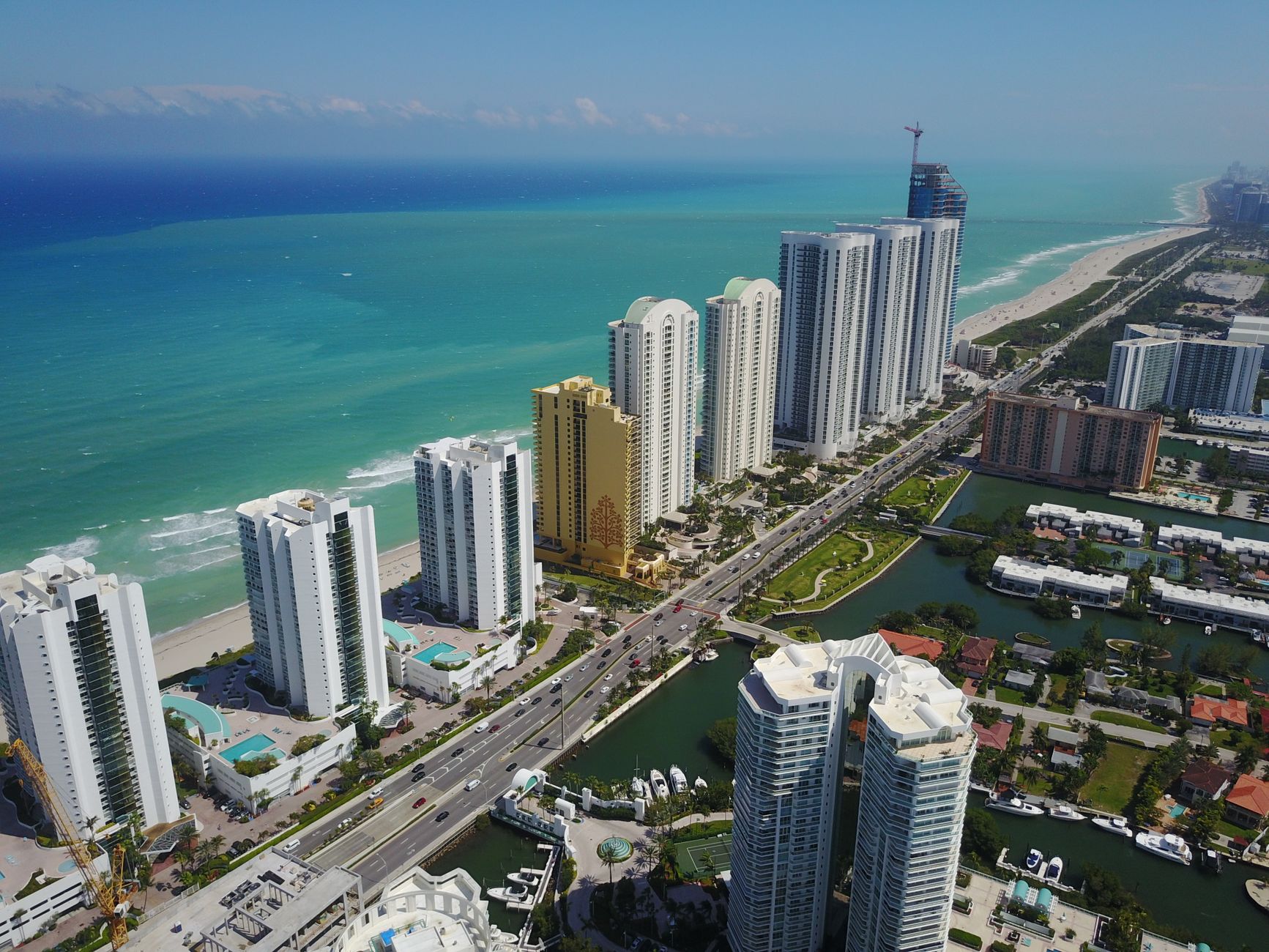
Una Residences — Sunset Islands I & II, Miami.
For investors completing a 1031 exchange, Sunset Islands I & II offer a rare combination of gated privacy, trophy-lot scarcity, and proximity to Miami's finest new construction — including waterfront opportunities that rarely surface on the open market. This guide explains how to structure your exchange, why these islands command enduring value, and what buyers should know before they close.
Why This Guide Exists — and Who It's For
This guide draws on the market expertise of Denis Smykalov, Founder of Wolsen Developments, who has guided buyers through Miami's luxury new-construction market since 2012 and completed more than $500M in transactions — including some of the city's earliest cryptocurrency-settled deals. The buyers who benefit most from this guide are typically high-net-worth investors exchanging out of appreciated commercial property, multifamily portfolios, or land in other U.S. markets, and who want to redeploy that capital into a Miami asset that performs on multiple levels: lifestyle, privacy, and long-run appreciation.
A 1031 exchange — formally a like-kind exchange under IRC Section 1031 — allows an investor to defer federal capital gains tax by reinvesting proceeds from the sale of one qualifying investment property into another. The rules are strict: you have 45 days from the closing of your relinquished property to identify up to three replacement properties, and 180 days total to close on at least one of them. Because Miami's most desirable neighborhoods move quickly and inventory in places like Sunset Islands is structurally limited, understanding the market before your identification window opens is not optional — it is essential.
What Makes Sunset Islands I & II Different from Every Other Miami Address
Sunset Islands I and II sit inside Biscayne Bay between Miami Beach and the mainland, reached by a single guarded causeway that has remained private since the islands were platted in the 1920s. There are fewer than 130 homes across both islands combined, and almost none of them change hands in any given year. That structural scarcity — combined with the fact that the islands cannot be meaningfully expanded — is precisely the supply constraint that long-term investors look for when deploying 1031 proceeds into a replacement asset. Unlike high-rise condominiums where a developer can simply add another tower, Sunset Islands I & II represent a genuinely finite inventory of land.
The lifestyle proposition is equally compelling. Residents enjoy deep-water dockage with direct Biscayne Bay access, no through-traffic, and a neighborhood scale that feels entirely removed from the energy of Miami Beach's commercial corridors — yet South Beach, the Venetian Causeway, and the Design District are all within minutes. For buyers exchanging out of income-producing property in dense urban markets, the contrast is often cited as a primary motivator: the ability to park long-term capital in an asset they actually want to live in or hold as a multi-generational estate.
From a zoning and building-regulation standpoint, Sunset Islands I & II fall within the City of Miami Beach, which enforces strict development controls on lot coverage, setbacks, and building height. This regulatory environment is not a limitation for buyers — it is a protection. It ensures that the low-density, single-family character of the islands is preserved for decades to come, reinforcing the long-term value thesis for any investor treating the replacement property as a hold, not a flip.
The 1031 Exchange Mechanics Every Miami Buyer Must Understand
Before a single property tour is scheduled, buyers completing a 1031 exchange need a qualified intermediary (QI) in place. The QI holds the proceeds from the relinquished sale and transfers them to the replacement closing; if you touch the funds at any point, the exchange is disqualified. Selecting a QI with experience in Florida real estate — particularly luxury transactions where earnest money deposits and closing timelines can be non-standard — matters more than most buyers initially appreciate. Your tax counsel and your QI should be communicating long before your relinquished property goes under contract.
For buyers targeting Sunset Islands I & II specifically, the 45-day identification window is the highest-stakes period. Because off-market inventory is common in this neighborhood and listed properties can go under contract in days, buyers who have not toured the market, established relationships with neighborhood specialists, and developed a clear price-per-square-foot framework before their clock starts will find themselves identifying properties they have never seen in person. The practical advice: begin your Miami market education at least 60 to 90 days before your anticipated relinquished-property closing.
One nuance specific to new construction in the 1031 context: purchasing a pre-construction condominium unit — where the building has not yet been delivered — can create complications because the replacement property must be 'received' within the 180-day window. Buyers drawn to both the island lifestyle and new-construction quality should therefore focus on delivered or near-delivery inventory, or explore whether a build-to-suit arrangement on a Sunset Islands lot can be structured in a way that satisfies exchange requirements. Both paths are navigable, but each requires specific legal and tax guidance that no real estate guide can substitute for.
Privacy, Lifestyle, and Long-Term Value: The Three Pillars of the Sunset Islands Investment Case
Privacy in Miami real estate is often claimed and rarely delivered. Most 'gated' communities in Greater Miami share perimeter walls with adjacent commercial zones or sit adjacent to high-density corridors. Sunset Islands I & II are categorically different: a single controlled entry point, water on three sides, and a resident population small enough that unfamiliar faces are noticed. For buyers whose relinquished assets generated significant wealth — and whose principal concern is security alongside appreciation — this level of genuine insularity is difficult to replicate anywhere else in South Florida.
The lifestyle assets surrounding the islands further the value case. Sunset Harbour, immediately adjacent to the causeway, has evolved into one of Miami Beach's most curated neighborhood retail districts, with chef-driven restaurants, boutique fitness studios, and specialty grocers within walking distance. The islands are equidistant between the cultural programming of the Bass Museum and the financial energy of Brickell, placing residents at an unusual crossroads of leisure and commerce. Buyers who have been looking in Palm Beach or Naples sometimes discover that Sunset Islands I & II offer the serenity of those markets without sacrificing the urban connectivity that their professional lives require.
Long-term value appreciation in this submarket has historically been driven by the same forces that drive any trophy-asset class: irreproducible location, finite supply, and sustained demand from a global pool of qualified buyers. Miami's emergence as a legitimate international financial center — with an influx of family offices, private equity principals, and technology founders that began accelerating around 2020 — has deepened the buyer pool for assets in this price tier. Investors completing 1031 exchanges are not speculating on a trend; they are acquiring a position in a market where the structural dynamics of supply and demand have consistently favored long-term holders.
How Una Residences Fits the Broader Miami Waterfront Conversation
Buyers who engage deeply with Miami's waterfront luxury segment inevitably encounter Una Residences, the architecturally distinguished tower on the Brickell waterfront designed by Adrian Smith + Gordon Gill. While Una Residences is not located on Sunset Islands — it sits in Brickell, on the Miami River at Biscayne Bay — it is frequently part of the same buyer conversation for a specific reason: the profile of buyer drawn to Sunset Islands I & II often begins their Miami search by evaluating the city's finest full-service new construction before concluding that the island's single-family scale better fits their long-term intentions.
Una Residences is notable in the 1031 context because delivered luxury condominium inventory with documented rental history or investment intent can qualify as like-kind replacement property when structured correctly. Buyers who want the optionality of a high-performing managed asset alongside a Sunset Islands estate sometimes consider a two-property identification strategy — using all three of their permitted identification slots carefully, in consultation with their QI and tax attorney, to preserve flexibility until the 45-day deadline. Understanding how buildings like Una Residences are positioned relative to comparable island product helps buyers make that allocation decision with confidence rather than urgency.
The broader lesson Una Residences illustrates is that Miami's luxury new-construction market has matured to a point where design quality, amenity depth, and long-term brand positioning are legitimately competitive with comparable product in New York, London, or Singapore. That maturation is directly relevant to 1031 exchange buyers, because the strength of an exit market — the depth of future demand when and if they eventually sell — is partly a function of whether Miami has established itself as a tier-one global city for wealth. The evidence across the past several years suggests it has.
Practical Steps for 1031 Buyers Targeting Sunset Islands I & II
The most important step a 1031 buyer can take before their relinquished property closes is to develop a clear written acquisition thesis: target price range, preferred lot size, dockage requirements, willingness to renovate versus acquire move-in-ready, and intended holding period. Sunset Islands I & II have transacted at a wide range of price points — from modest teardown lots to fully rebuilt modern estates — and without a clear thesis, buyers can waste critical identification-window days evaluating properties that were never genuinely suited to their goals.
Engage a Miami legal team experienced in both Florida real estate and 1031 exchange compliance well in advance. Florida is a closing-attorney state, and the mechanics of transferring QI-held funds into a Florida escrow account have nuances that generic exchange counsel may not anticipate. Similarly, if the replacement property involves any new-construction component — even a significant renovation of an existing Sunset Islands home — understanding how construction exchanges or improvement exchanges work under Treasury Regulation 1.1031 is critical reading for both buyer and counsel.
Finally, plan for the due diligence requirements specific to Miami Beach waterfront property: seawall inspection and certification, flood zone determination and FEMA map analysis, elevation certificate review, and a clear understanding of the city's current coastal resilience and sea-level adaptation programs. Miami Beach has invested more aggressively in flood mitigation infrastructure than virtually any U.S. coastal city, and buyers who understand that investment thesis — rather than being alarmed by it — are better positioned to hold confidently through the natural price volatility that affects all waterfront real estate markets.
Frequently Asked Questions
Can I use a 1031 exchange to purchase a single-family home on Sunset Islands I or II?
Yes, provided the replacement property is acquired and held for investment or productive use in a trade or business — not primarily for personal use. Many buyers structure the Sunset Islands property as a combination of personal use and rental or investment intent, but the precise qualification depends on the facts and circumstances reviewed by your tax advisor.
How many homes are there on Sunset Islands I and II, and how often do they sell?
Sunset Islands I and II together contain fewer than approximately 130 residential properties. Annual turnover is very low — typically single digits — which means buyers targeting this neighborhood for a 1031 exchange should begin market research well before their identification window opens.
What is the 45-day identification rule and why does it matter specifically for Sunset Islands buyers?
Under IRC Section 1031, you have 45 days from the closing of your relinquished property to formally identify up to three replacement properties. Because Sunset Islands I & II inventory is scarce and properties can go under contract rapidly, buyers who have not studied the market in advance risk identifying properties they have never toured or that are no longer available.
Does Una Residences qualify as a 1031 exchange replacement property?
A delivered Una Residences unit held for investment or rental purposes can qualify as like-kind replacement property in a 1031 exchange, subject to proper structuring and legal guidance. Pre-construction units not yet delivered may present timing complications within the 180-day exchange window, which should be reviewed with a qualified intermediary and tax counsel.
What makes Sunset Islands I & II a defensible long-term hold for 1031 investors?
The combination of a genuinely finite lot count, a single controlled entry point, deep-water bay access, strong regulatory protections on density and building height, and growing demand from a global pool of Miami buyers creates structural scarcity that has historically supported price appreciation. These conditions are difficult to replicate elsewhere in South Florida.
What is a qualified intermediary and do I need one for a Miami 1031 exchange?
A qualified intermediary (QI) is a neutral third party required by IRS rules to hold and transfer the proceeds from your relinquished property sale to your replacement property closing. You must have a QI in place before your relinquished property closes; if you receive the funds directly, the exchange is disqualified. Using a QI experienced with Florida real estate transactions is strongly recommended.
Are Sunset Islands I & II subject to flood risk, and how is Miami Beach addressing it?
Like all Biscayne Bay waterfront properties, Sunset Islands I & II fall within FEMA-designated flood zones, and buyers should obtain elevation certificates and flood insurance quotes during due diligence. Miami Beach has implemented one of the most substantial municipal flood-mitigation and stormwater infrastructure programs of any U.S. coastal city, which many long-term investors view as a meaningful risk-management factor.
Can I complete a 1031 exchange into a newly constructed home on Sunset Islands?
A build-to-suit or improvement exchange — where proceeds are used to construct or significantly improve a replacement property — is permitted under Treasury Regulation 1.1031(k)-1(e), but the rules are more complex than a standard exchange. All improvements must be completed and the enhanced property received within the 180-day window. This path requires experienced legal and QI guidance from the outset.
How does the lifestyle on Sunset Islands I & II compare to other Miami Beach neighborhoods?
Sunset Islands I & II offer a single-family residential environment with private, gated access, deep-water dockage, and virtually no commercial traffic — while remaining minutes from South Beach, Sunset Harbour's dining and retail district, and the Venetian Causeway to the mainland. It is widely regarded as among the most genuinely private residential settings on Miami Beach.
What role does Miami's emergence as a global financial center play in the 1031 investment thesis for Sunset Islands?
Miami's sustained influx of family offices, private equity firms, and technology principals since approximately 2020 has broadened and deepened the buyer pool for trophy residential assets. For 1031 investors concerned about exit liquidity when they eventually sell, a thicker future buyer pool — including international buyers — strengthens the long-term investment case for Sunset Islands I & II.
Ready to Take the Next Step?